
DOE targets diesel-free islands with green power auction

The Department of Energy (DOE) is pushing to reduce the high cost of generating electricity in the country’s remote islands through a dedicated green energy auction that will replace diesel-fired power with hybrid renewable energy systems.
The agency said Monday that the proposed auction for Small Power Utilities Group (SPUG) will attract private investments into off-grid communities.
Once launched, the government is expecting to reduce dependence on imported diesel, cut the Universal Charge for Missionary Electrification (UCME) subsidy, and deliver cheaper, more reliable electricity to consumers.
The DOE, together with the National Power Corp. (NPC) and the Energy Regulatory Commission (ERC), recently held a focus group discussion with prospective bidders as it prepares the first auction round covering 20 priority off-grid areas with a combined annual electricity demand of about 367,000 megawatt-hours.
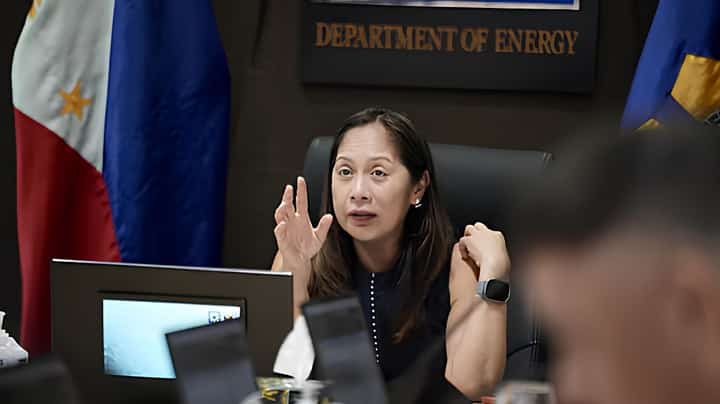
According to Undersecretary Rowena Cristina Guevara, the electricity generation in NPC-served islands currently costs about P18 per kilowatt-hour, far higher than the P5 to P8 per kilowatt-hour average generation cost in the country’s main grids.
“We have not started the computation yet, but to give you an idea, the true cost of generation in our islands under Napocor is P18 per kilowatt-hour. On-grid, the average generation cost is about P5 to P8 per kilowatt-hour,” Guevara said.
She acknowledged that deploying renewable energy projects with battery energy storage systems in remote islands entails higher logistics costs but noted the savings could be significant once the program is fully rolled out.
“The difference is about P12 per kilowatt-hour. There is a premium because of the logistics of putting up renewable energy facilities with batteries, or energy storage systems, on the islands.
We estimate that if all of these islands are equipped with these systems, the UCME could be cut by half. But our initial target is only 20 islands. Technically and logically, the UCME will really go down,” Guevara said.
The Green Energy Auction program, launched in 2022, is the government’s competitive procurement mechanism for accelerating renewable energy investments.
It supports the Philippine Energy Plan, which targets renewable energy to account for 35 percent of the country’s power generation mix by 2030 and 50 percent by 2050.