
Power, progress and public trust
For decades, one of the principal obstacles to reviving nuclear power in the Philippines was the absence of a modern and credible regulatory framework.

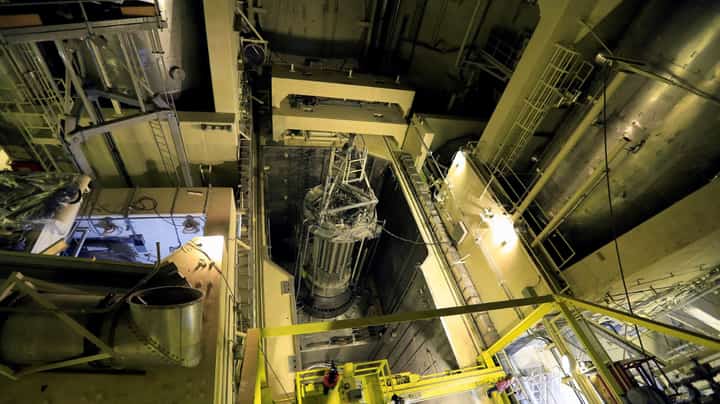
Ideas in public policy sometimes outlive the administrations that first proposed them. Few illustrate this better than nuclear power. Once shelved after the Bataan Nuclear Power Plant controversy, it has once again returned to the national conversation.
In his 2026 State of the Nation Address (SoNA), President Ferdinand Marcos Jr. declared that it may be “time for us to revisit nuclear energy production.” He noted that the country already harnesses nuclear technology in medicine, agriculture, water filtration, and plastic upcycling, and expressed confidence that nuclear power could strengthen the country’s energy security while helping reduce electricity costs.
At the same time, he assured the public that any pursuit of nuclear energy would be guided by safety and informed public participation.
That assurance finds legal support in Republic Act (RA) 12305, otherwise known as the Philippine National Nuclear Energy Safety Act, signed into law on 18 September 2025. Far from authorizing the immediate construction of nuclear power plants, the statute establishes the legal and regulatory foundation necessary should the Philippines eventually decide to pursue nuclear energy as part of its long-term energy strategy.
Central to the law is the creation of the Philippine Atomic Energy Regulatory Authority (PhilATOM), an independent quasi-judicial body vested with the sole and exclusive authority to regulate the peaceful, safe and secure use of nuclear energy.
Its independence is significant. Effective regulation of an industry as technically complex and potentially hazardous as nuclear power demands decisions anchored on science, professional competence, and public safety rather than political expediency or commercial interests.
The law likewise incorporates safeguards that reflect lessons learned from both domestic experience and international practice. Nuclear facilities are prohibited in areas identified as highly vulnerable to earthquakes, volcanic eruptions, flooding, and other recurring natural hazards.
Operators are likewise required to establish trust funds for radioactive waste management and eventual decommissioning, with the law expressly prohibiting these costs from being passed on to consumers. It also mandates consultations with local government units, civil society organizations, and affected indigenous communities before any project may proceed.
The unauthorized handling of nuclear or radioactive materials will be met with severe criminal and administrative penalties.
Collectively, these provisions demonstrate that Congress intended safety, accountability, and public confidence — not merely electricity generation — to be the cornerstone of any future nuclear program.
For decades, one of the principal obstacles to reviving nuclear power in the Philippines was the absence of a modern and credible regulatory framework. RA 12305 seeks to fill that gap by aligning Philippine regulations with internationally accepted standards and by providing investors, regulators, and the public with a more predictable legal environment.
Yet the law has not escaped criticism. Environmental advocates continue to question whether the Philippines, given its exposure to typhoons, earthquakes, and volcanic activity, is suited for nuclear power generation. Others caution against moving too quickly toward a technology whose long-term environmental and financial implications remain the subject of global debate.
These concerns deserve serious consideration, for public trust cannot be legislated; it must be earned through transparency, rigorous regulation, and consistent compliance with the law.
Nearly half a century after the Bataan Nuclear Power Plant was completed but never energized, the Philippines finds itself revisiting a familiar question under a very different legal landscape.
Whether nuclear energy ultimately becomes part of our energy mix remains a policy decision for the political branches. RA 12305 neither compels nor forbids that choice. It simply ensures that if the nation decides to embrace nuclear power, it does so within a legal framework founded on science, accountability and public safety.
The more important question, however, is not whether the Philippines should pursue nuclear energy. It is whether we possess the institutions, discipline, and political will to regulate it responsibly. Technology, no matter how advanced, is only as reliable as the laws that govern it and the people entrusted to enforce those laws.
As the Roman jurist Cicero aptly observed, “Salus populi suprema lex esto,” the welfare of the people shall be the supreme law.
That ancient principle remains as relevant today as it was centuries ago. In the debate over nuclear energy, economic growth, energy security, and environmental sustainability are undeniably important. But none of them should ever come at the expense of the safety and well-being of the Filipino people.
If RA 12305 is to leave a lasting legacy, it must not merely produce energy. It must inspire confidence that progress and public safety can, and must, go hand in hand.