
Rescued tarseetos returned to the wild

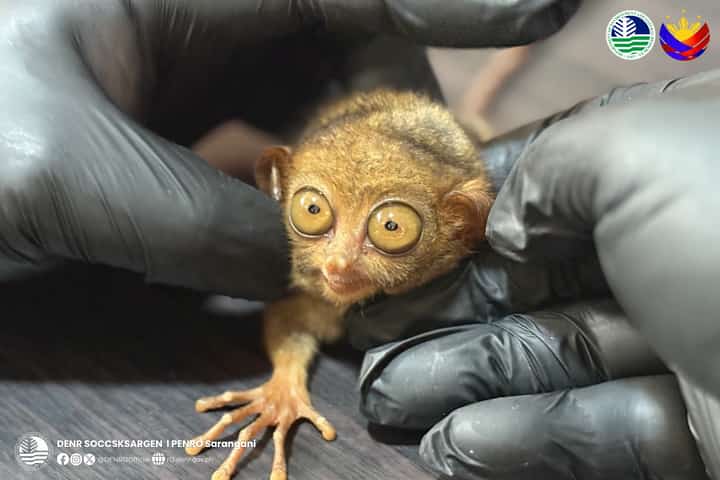
The Department of Environment and Natural Resources (DENR) Provincial Environment and Natural Resources Office (PENRO) of Sarangani released three Philippine tarsiers (Carlito syrichta) back into the wild on 14 July 2026.
According to PENRO Sarangani, concerned couple Jackyben Mangalon Jr. and Elizabeth Mangalon rescued the tarsiers after spotting them along a riverbank in the municipality on July 13 and securing the animals in their care.
The following day, the couple voluntarily turned over the wildlife to PENRO Sarangani for proper assessment and disposition.
A resident veterinarian conducted a thorough examination of the "Tarseetos," which were later identified as two adult males and one sub-adult male.
The assessment confirmed that all three were in good physical condition, with no visible injuries or signs of distress, making them fit for immediate release.
Later that day, personnel from PENRO Sarangani released the tarsiers into a suitable forest habitat, ensuring their safe return to the wild.
The Philippine tarsier is classified as Near Threatened by the International Union for Conservation of Nature (IUCN). Its population continues to face threats from habitat loss, human disturbance, and the illegal wildlife trade.
The rescue and release highlight the vital role of public vigilance and community participation in conserving the country's unique wildlife resources.