
Inflation worries grip 84% of Filipinos
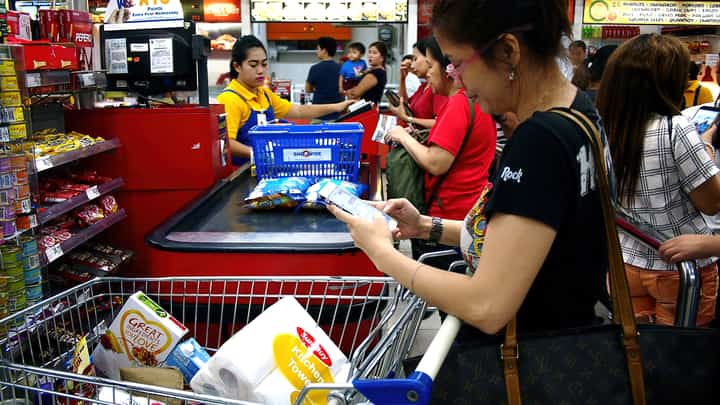
WHILE many economies built their growth models on exports and industrial production, the Philippines relied on households. Income sources may vary — OFW remittances, BPO workers' salaries, domestic wages, but ultimate, they all go to the same destination —consumer spending, with Filipino housewives spending the largest portion of their household budgets on food and other grocery items.
Photo courtesy of PNA
Eighty four percent of Filipino consumers cite rising inflation as their primary financial concern as the Middle East crisis continues to reshape domestic spending and saving habits, according to a recent survey by global credit reporting agency TransUnion.
In its Q2 2026 Consumer Pulse Study, the firm said inflation, which stood at 6.4 percent in June compared with 1.8 percent at the end of 2025, was cited by more than four out of five Filipinos as one of their top three sources of financial strain.
“Other key pressures on household finances include job security (54 percent), alongside recession and interest rates (both at 44 percent),” TransUnion said.
“Affordability pressures are evident, with TransUnion’s research showing nearly half of consumers (45 percent) expecting to be unable to fully pay at least one of their current bills or loans, slightly up from 44 percent in Q2 2025,” the firm added.
TransUnion noted that it expects second-round effects from the energy emergency to contribute to persistent consumer pessimism over the next six months.
Inflation has eased for two consecutive months, largely due to government-mandated fuel price rollbacks, easing geopolitical tensions and their reduced pass-through effects on transportation costs. However, the Philippine Statistics Authority reported that core inflation, which excludes volatile food and energy items, continued to accelerate in June. The Bangko Sentral ng Pilipinas has said this reflects broadening price pressures, second-round effects and rising inflation expectations.
TransUnion said household spending patterns have shifted as inflation expectations changed. About 55 percent of consumers reported reducing discretionary spending on dining out, travel and entertainment over the past three months, up from 47 percent in Q2 2025. Meanwhile, 49 percent said they increased their emergency savings, higher than the 45 percent recorded a year earlier.
“Across these behaviors—from trimming discretionary spending to building savings while leaning on credit more selectively—what stands out is how intentional these choices are,” said Weihan Sun, senior director of research and consulting for Asia Pacific at TransUnion.
“Filipino households are not simply responding to pressure, but prioritizing what matters and being deliberate with every peso, using credit with intention to smooth day-to-day cash flow and bridge spending gaps. This shift toward more active financial management is an encouraging sign of growing financial maturity,” he added.
Similar findings have been recorded domestically by Social Weather Stations (SWS), which found that Filipinos are most dissatisfied with the administration of President Ferdinand R. Marcos Jr. in its efforts to address inflation, rising fuel prices and corruption.
Released on June 19, the SWS survey showed a net satisfaction rating of -13, indicating that more respondents were dissatisfied than satisfied with the administration’s overall performance. Among the issues surveyed, the government’s handling of rising prices received the weakest rating at -5.
Despite these pressures, TransUnion reported that 74 percent of Filipinos remain optimistic about their incomes and household finances over the next year.