
Gov. Marcos pushes stronger counseling, anti-bullying measures to improve school safety

School safety should go beyond the deployment of security personnel and police officers, with greater emphasis also needed on counseling services, anti-bullying interventions, and stronger collaboration among schools, families, local governments, and mental health professionals, Governor Cecilia Araneta-Marcos said.
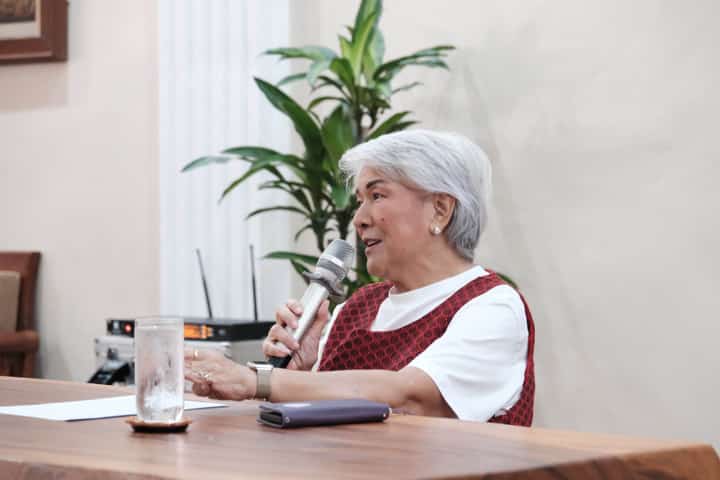
Speaking during a press conference, Araneta-Marcos said the provincial government is pursuing a two-pronged strategy to ensure the safety and well-being of learners by strengthening campus security while improving support systems that can identify and address behavioral, emotional, and social concerns before they escalate.
The governor commended the Ilocos Norte Police Provincial Office (INPPO) for its continued efforts in securing schools, including its response to bomb scare incidents and the deployment of K9 units whenever necessary.
“Right now, our top priority is the Ilocos Norte Police, our Philippine National Police, because they are tasked to guard all the schools,” Araneta-Marcos said, citing the police’s proactive role in addressing security concerns.
However, she stressed that maintaining peace and order alone is not enough to prevent violence in schools, saying issues such as bullying and student distress must also be addressed through early intervention.
Araneta-Marcos said the lack of dedicated guidance counselors in schools had been raised during discussions with the Provincial School Board, noting that teachers already carry heavy instructional responsibilities and may not be able to effectively serve as counselors at the same time.
She said having dedicated guidance counselors would allow schools to better monitor students’ mental and emotional well-being, respond to behavioral concerns, facilitate referrals to appropriate services, and enable teachers to focus on classroom instruction.
The governor also underscored the importance of stronger participation from Parent-Teacher Associations (PTAs), emphasizing that protecting learners requires the shared responsibility of families, schools, and communities.
“It really should be a concerted effort. I hope they can talk about guidance counselors,” she said.
Araneta-Marcos said creating a safe learning environment requires a comprehensive approach that combines security measures with preventive child protection programs, including counseling services, anti-bullying initiatives, parent engagement, and coordinated referral systems for students in need of support.
She added that by treating school safety as both a security and student welfare concern, the provincial government hopes to help schools become more responsive, supportive, and secure environments for learners.