
Resilience is not seasonal
Climate change no longer follows a season, and neither should our resolve. Preparedness is not an annual campaign or a weather bulletin.
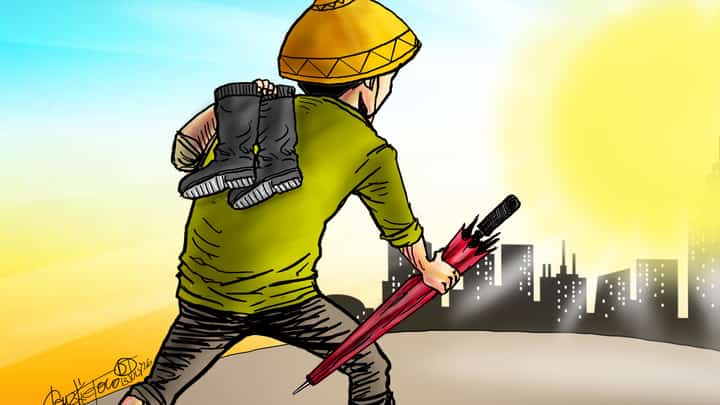
Sudden downpours recently have caught many of us unawares, drenching us or keeping us from leaving places until the rains have passed. Umbrellas, for some strange reason, are still something we forget at home, even though the weather bureau has already announced that the rainy season has begun.
We already know that the second half of the year brings rain, typhoons and, sometimes, disaster. We also know the Philippines is one of the world’s most disaster-prone countries. The Philippine Atmospheric, Geophysical and Astronomical Services Administration (PAGASA) says “an average of 20 tropical cyclones enter or develop within the Philippine Area of Responsibility every year, with about eight or nine crossing the country.”
But these days, that is not all we should be worrying about. As in other parts of the world, there has been more climate-related activity on land, with earthquakes, volcanic eruptions, droughts and extreme heat constantly making it to our news feeds.
That overused word, “resilience,” therefore, should logically be a year-round priority. A daily responsibility. Yet if umbrellas were a metaphor for our preparedness, we would not likely survive the season unscathed. In our country, preparedness often seems to begin only when PAGASA starts naming storms.
The reality we can no longer ignore is that climate change is increasing extremes in weather — not just typhoons. According to the Intergovernmental Panel on Climate Change, climate change is intensifying heavy rainfall, extreme heat, droughts and sea-level rise in many regions, including Southeast Asia.
In the Philippines, this means rain is no longer just rain. A quick downpour that once caused inconvenience can now overwhelm drainage systems and paralyze communities. Flash floods are an urban reality we have been seeing more frequently.
During the dry season this year, there were periods of intense heat that prompted the cancellation of in-person classes and the shortening of government work hours. This was not something that should have surprised us. Many cities in the country recorded “danger” heat index levels above 42 degrees Celsius last year. In other parts of the world, unfamiliar and intense heat became so unbearable that people died.
If it still has not dawned on us, we should now think of disaster preparedness in terms of all extreme weather, not just wind and rain. Weather, whether wet or dry, affects us more than we realize, beyond sweaty clothes, wet shoes or the annoyance of traffic jams caused by flooded streets.
Weather affects agriculture, which means the food supply is affected. When that happens, food prices rise. Consumers feel the pain.
Yet what we continue to see is a pattern of government response only after disaster strikes. When drought arrives, emergency action is launched: irrigation, the distribution of assistance and even discussions of cloud seeding. When floods come, the same rigmarole follows.
Do we have long-term investments that address the situations our farmers repeatedly experience, such as water storage, irrigation modernization, climate-resilient crops and watershed protection?
How sad it would be if we became known as a country of emergency shelters and emergency relief. Climate change demands that we stay ahead of these scenarios instead of simply responding to them.
In Metro Manila, flooding may already be expected in the same locations year after year. Yet why do we continue reporting on stranded commuters, submerged vehicles, suspended classes and flooded homes? A flood that surprises us once is a disaster. A flood that surprises us every year is a planning problem.
Do we really want to keep increasing budgets for disaster relief, evacuation and rehabilitation instead of channeling government resources toward preparedness measures such as drainage maintenance, watershed restoration, resilient infrastructure and early warning systems? Do we simply focus on saving lives when disaster strikes rather than preventing the loss of lives through advance preparation?
The real test of resilience is not how efficiently we respond to disasters but how consistently we prepare when the skies are clear.
Every rainy season, we are reminded to unclog waterways, inspect drainage systems and prepare for floods. But resilience should not be something we remember only when dark clouds gather on the horizon.
Climate change no longer follows a season, and neither should our resolve. Preparedness is not an annual campaign or a weather bulletin. It is a habit of governance, a discipline of communities and, ultimately, a way of life.
Our laws treat resilience as a year-round responsibility. Too often, however, our public attention treats it as a seasonal concern. Until we treat resilience as something we practice every day — not just when storms are approaching — we will remain vulnerable, not because nature is unpredictable, but because our attention is.