
DoST-PTRI, manufacturers showcase non-woven textile innovation


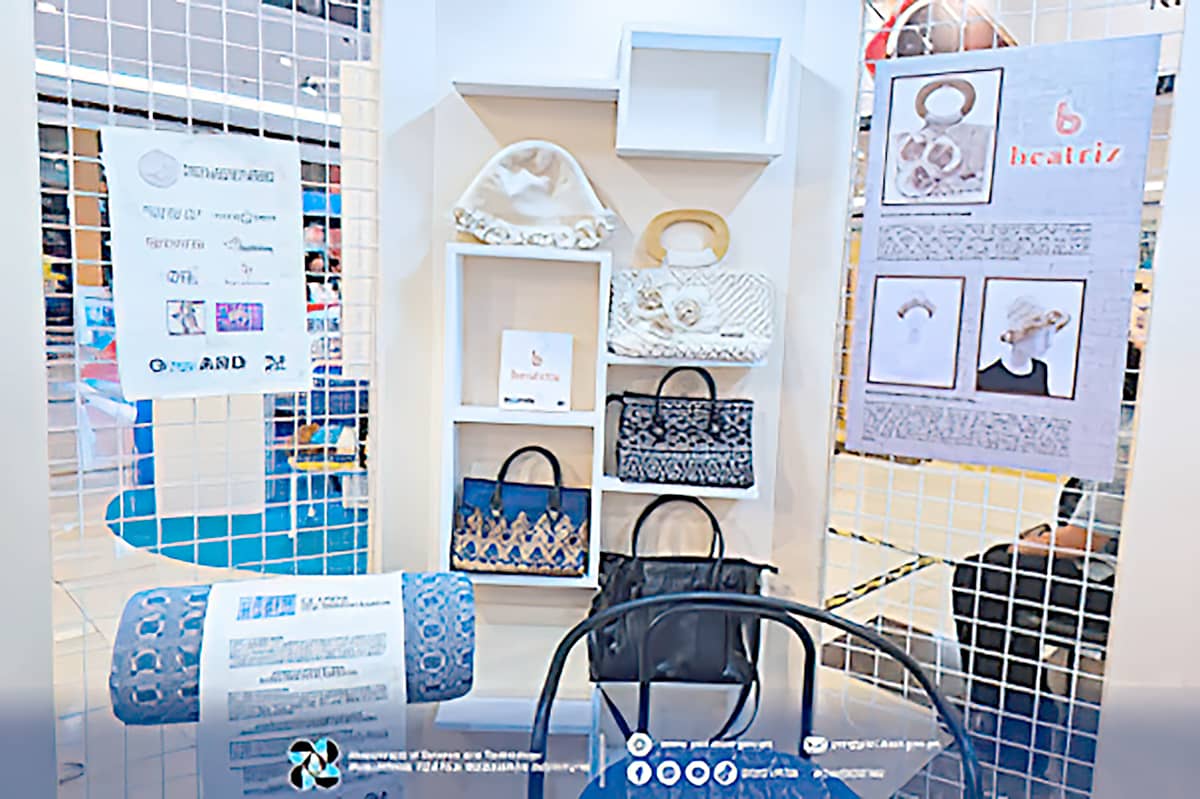
SOME of the applications of nonwoven textile materials made from Philippine natural fibers are shown during the ONWARD: Philippine Nonwoven Textile Innovation exhibition at the SM North EDSA on 1 July 2026.
PHOTOGRAPH COURTESY OF DOST-PTRI
The diverse applications of nonwoven textile materials made from Philippine natural fibers are set to unlock new opportunities for local manufacturers.
At the ONWARD: Philippine Nonwoven Textile Innovation exhibition of the Department of Science and Technology-Philippine Textile Research Institute (DoST-PTRI), nine local manufacturers and product development partners demonstrated how the innovation can be transformed into alternatives for synthetic-based materials for furniture, roofing systems, fashion and accessories, smart infrastructure, landscaping, outdoor living solutions, transportation, agriculture, footwear, and healthcare.
Jed Yabut Furniture & Design incorporated banana-based nonwoven materials into chair cushions, while pineapple-based nonwoven fibers were used as decorative twine. Its other products are table panels, lampshades and leather-like strips for chairs.
La Likha integrated nonwoven materials into sofa backings and is exploring their potential as alternatives to conventional foam and synthetic leather.
JunkNot showed chair cushions and various home furnishings and decor pieces with environmentally conscious designs.
Iconic Sarao Motors, one of the country’s most remarkable jeepney manufacturers reinforced upholstery and cushion seats with the non-woven fiber to improve durability and comfort. It is also exploring future applications of the fiber for jeepney dashboards, door panels and ceiling components.
Fivecent Global Corporation showed applications in agricultural packaging and mulching for plants and fruits.
Renz Reyes showed its application in apparel while Creative Definitions presented shoe uppers and insoles to underscore its functionality in the footwear industry.
Fashion Accessory Makers of the Philippines used it for bag linings, laptop and tablet sleeves, custom jewelry and hair accessories.
Base Bahay Foundation Inc. is exploring applications for construction.
DoST Secretary Dr. Renato U. Solidum Jr. said that the global market for nonwovens is estimated at $58 billion and a growing demand underscores the immense potential for Filipino-made nonwoven materials to create new industries, generate jobs, and expand opportunities for local manufacturers, designers, researchers and entrepreneurs.