
Saudis and Houthis: From arch-enemies to arch-friends
In 2022, both got tired of the never-ending war of attrition, so they forged a truce. It was an informal truce — no media, no fanfare — based more on ‘word of honor,’ and it worked.
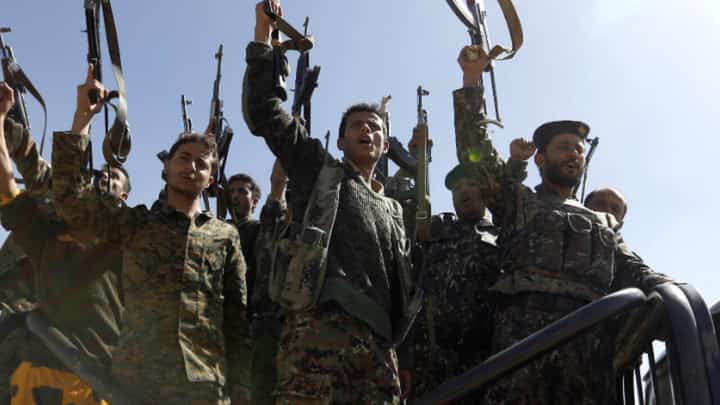
When arch-enemies become “arch-friends,” it is a rare historic alliance. We should analyze this case of the Saudi-Houthi alliance meticulously as a model seen by peace-loving geopolitical analysts as the way toward a true long-term peace — if hopefully it succeeds.
From the onset, geopolitical observers were wondering about a strange emerging alliance between Saudi Arabia and the Houthis of Yemen. For one, they had been at each other’s throats since 2015 in a protracted proxy war. The conflict between Muslim Sunnis (Saudi) and Shiites (Iran and Houthis) had been going on forever since the birth of Islam in the 7th Century AD.
In 2015, Saudi Arabia attempted to stop the Houthis from taking over Yemen, a fear triggered by the Houthis’ aggressiveness, well-armed with state-of-the-art missiles and drones, and well supported by “Mother Iran.” The Houthis were successfully firing missiles and drones deep into Israeli territory and attacking commercial vessels in the Red Sea. The Houthis said their moves were in protest against the massacre of Palestinians in Gaza.
Trump was so angered by this “puny tribe” that he sent warplanes on saturation bombings to destroy the Houthi enclaves in Yemen. The Houthis, especially innocent civilians, suffered losses but Trump failed to stop their resolve. The Houthis continued to attack Israeli cities and commercial vessels in the Red Sea.
So, in 2015, Saudi warplanes regularly bombed Houthi areas. In retaliation, the Houthis sent missiles and drones that destroyed energy infrastructure deep in Saudi turf. This happened for seven long years. The war was somewhat one-sided — Houthi lives for Saudi energy infrastructure.
In 2022, both got tired of the never-ending war of attrition, so they forged a truce. It was an informal truce — no media, no fanfare — based more on “word of honor,” and it worked.
Sometimes, an informal truce is better than a formal one, like those announced in the media prior to US, Israeli, and Iranian airstrikes.
So, in 2022, the Saudis and the Houthis forged an informal agreement to de-escalate things, which held. Both sides honored the truce, in spite of the Houthis continuing to attack commercial vessels in the Red Sea and in spite of the war the US waged against Iran.
But the Houthis never attacked Saudi Arabia, that was key to the emerging truce. After all, they were both Islamic nations. You don’t bother me. I don’t bother you.
As quiet permeated the “front,” Iran attempted to establish a commercial flight route to the Yemen capital, which was a red line to the Saudis.
Mahan Air, a “notorious” Iranian commercial airline sanctioned by the US for its alleged close ties to the Iran military, clandestinely acquired, using Gambian documents, 10 Boeing 777 commercial aircraft formerly owned by Saudi Arabia.
Iran’s initiative to have commercial flights to Yemen, the Saudi red line, failed to derail the Saudi-Houthi alliance.
Reactions to redgate77@gmail.com