
Anti-mining group decries TRO on Mankayan protest

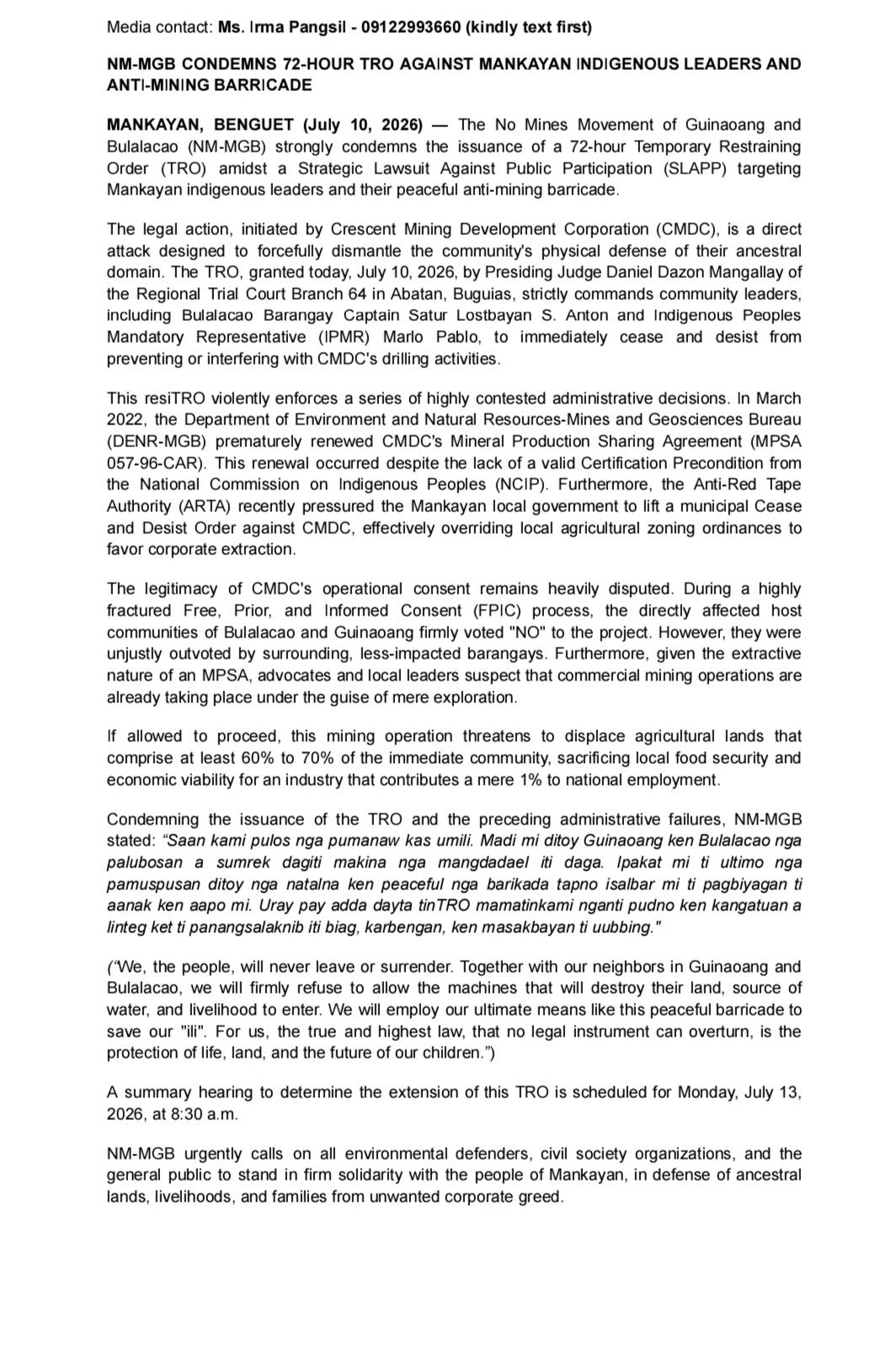
MANKAYAN, Benguet — An anti-mining group in Mankayan has condemned the issuance of a 72-hour temporary restraining order (TRO) against Indigenous leaders and protesters opposing a mining project, calling it an attempt to dismantle the community's resistance.
In a statement issued Friday, the No Mines Movement of Guinaoang and Bulalacao (NM-MGB) described the court action as a Strategic Lawsuit Against Public Participation (SLAPP) allegedly initiated by Crescent Mining Development Corporation.
Regional Trial Court Branch 64 Presiding Judge Daniel Dazon Mangallay issued the TRO on 10 July, directing community leaders, including Bulalacao Barangay Captain Satur Lostbayan S. Anton and Indigenous Peoples Mandatory Representative Marlo Pablo, to stop interfering with the company's drilling activities.
The movement said the order enforces what it described as disputed administrative actions, including the Department of Environment and Natural Resources-Mines and Geosciences Bureau's renewal of the company's Mineral Production Sharing Agreement in March 2022.
The group alleged the renewal was issued without a valid Certification Precondition from the National Commission on Indigenous Peoples.
It also claimed the Anti-Red Tape Authority pressured the Mankayan local government to lift a municipal cease-and-desist order against the company, overriding local agricultural zoning ordinances.
According to the movement, consent for the mining project remains contested after residents of Bulalacao and Guinaoang voted against the project during the Free, Prior and Informed Consent process but were outvoted by neighboring barangays.
The group further alleged that commercial mining activities are already taking place under the guise of exploration and warned that the project could affect agricultural lands comprising 60 to 70 percent of the surrounding communities, threatening local food security.
A summary hearing to determine whether the temporary restraining order should be extended is scheduled for 13 July 2026.