
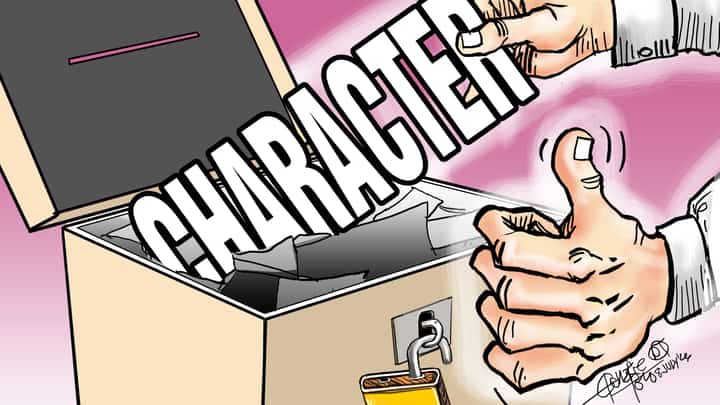
Character counts, in votes
The real trial, he argues, is not being conducted under the16-vote threshold at all but in the register of trust, the breach of which is written into the Constitution as a ground for removal.
The impeachment trial math should be simple enough for anyone to understand. Sixteen votes to convict, anything less acquits.
Senator Ronald “Bato” dela Rosa, wherever he is holed up, cannot function as a senator and so cannot be counted. Jinggoy Estrada can, for the moment, until he is convicted.
Add it up and the same conclusion is reached, former University of the East and political analyst Amado Valdez said in an interview at the DAILY TRIBUNE.
As things stand, the numbers favor Vice President Sara Duterte as the senator who declines to vote is, for practical purposes, a senator who votes to acquit.
Valdez, a consultant for the proceedings to the DAILY TRIBUNE, thinks the math is the least interesting part of the story.
The real trial, he argues, is not being conducted under the 16-vote threshold at all but in the register of trust, the breach of which is written into the Constitution as a ground for removal.
The term “betrayal of public trust” is deliberately broad, as it does not require a criminal conviction.
It, however, requires the senators and, eventually, the voters to decide whether a person entrusted with 32.2 million votes has lived up to the implied trust.
Thirty-two million people did not vote for Sara Duterte because they examined her temperament, but they did so on the faith, as voters generally do, that she would rise to the office rather than merely occupy it.
Valdez’s point is that this is the actual wager on the table now: Not whether she broke a specific rule, but whether she honored the wager itself.
People rarely vote for a candidate’s flaws, but they vote hoping the flaws will be outgrown.
Presiding Officer Escudero held that the conviction threshold stays at 16 and that only the Supreme Court can change it.
The Court is expected to stay clear of the dispute, as it did in a similar friction in 1949, content to call it a political question rather than invite a constitutional crisis.
But Valdez raises a subtler possibility: even a vote that falls short of conviction, if it splits the chamber closer to half, still sends a message.
If half the Senate, arguably a proxy for half the electorate, concludes that trust was betrayed, an acquittal on paper does not settle the matter in public opinion.
It simply extends the drama to the campaign trail, where the Vice President would have to make her own case for restored trust, this time directly to the voters rather than to twenty-four senators.
Valdez said that if he were defending the Vice President, he would not fight the rage video. He would admit what was said, stop the clip from being replayed as a stand-alone accusation, and insist that the full recording, however long, be played in context. Hence, the rant against President Ferdinand Marcos Jr., the First Lady and the Speaker will read as more than an isolated threat.
He flagged a procedural fight worth watching closely: The prosecution’s intent to call VP Duterte as a hostile witness.
Valdez calls this improper on its face as she is the respondent and not any witness the prosecution can compel — and her constitutional right against self-incrimination should attach regardless of the forum’s political character.
Whatever the vote count says in the end, Valdez’s larger argument is that impeachment proceedings function as a kind of public education that ordinary politics rarely manages, forcing morality, philosophy and constitutional design into the same conversation as vote-counting.
The senator-judges decide the numbers, and the public as the audience translates the numbers.