
Beloved beyond borders: An exhibit on Japanese and Southeast Asian queer comics
‘Sinta: Queer Stories Across Asia’ brings together about 30 artists whose comics explore love, identity, memory, and belonging across Japan and Southeast Asia, revealing the diverse ways queer lives are imagined, expressed and celebrated.


Comics have long served not only as popular art and entertainment but also as an effective medium for LGBTIQ+ stories. With roots in independent and underground publishing, the form has often given marginalized creators room to tell stories that conventional media have ignored, restricted, or censored.
In East Asia, comics have become a powerful vehicle for queer storytelling. Japan, in particular, has cultivated a vibrant tradition through shoujo manga, Boys’ Love (BL), yaoi, yuri, and Girls’ Love (GL), genres that opened spaces for imagining romance and identity beyond rigid norms. Manga has, in turn, influenced the growth of queer comics across Southeast Asia, including the Philippines.
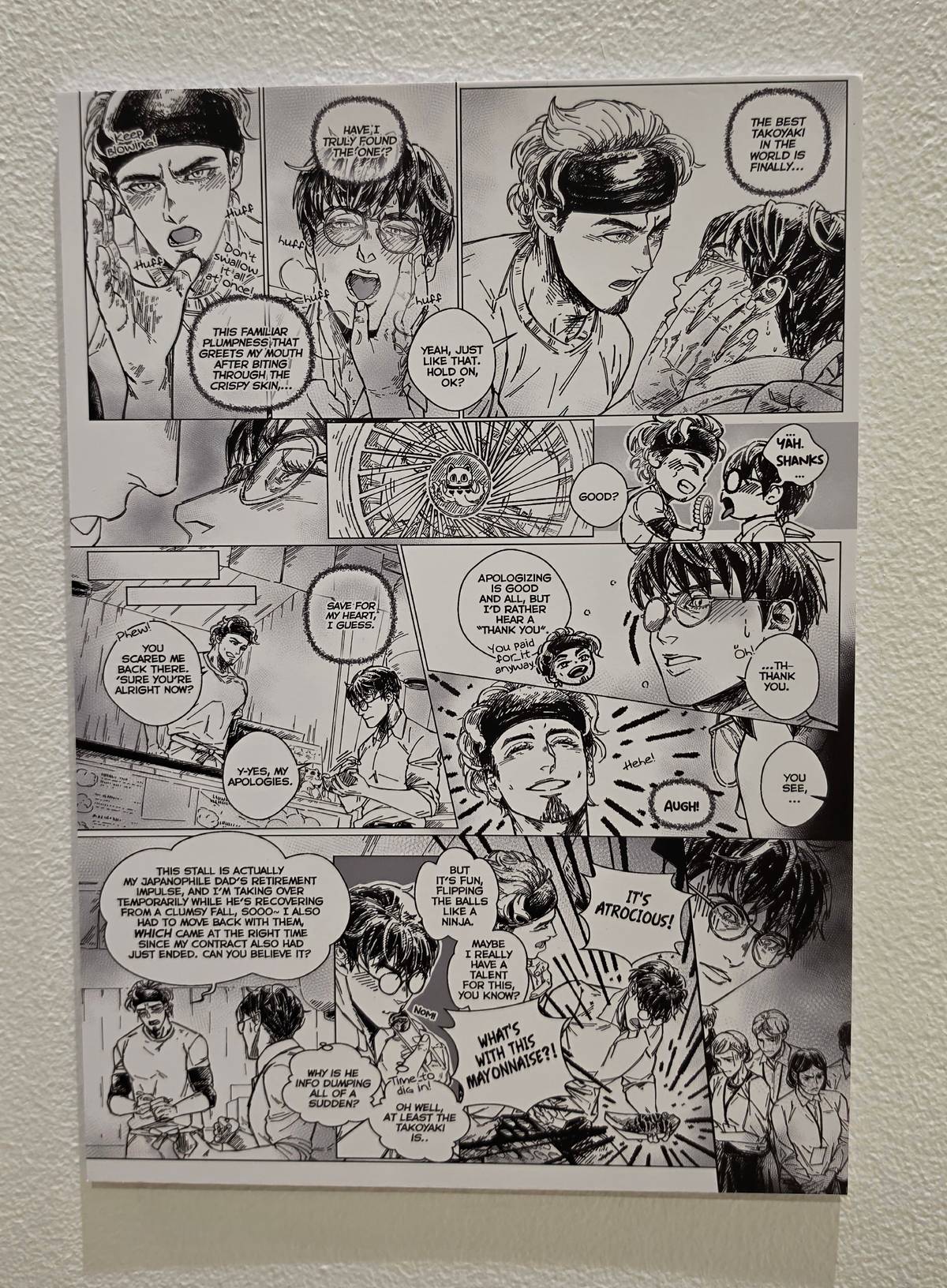
A panel from ‘Dumplings Over Flowers’ by Scottwm (Philippines).
The international exhibition Sinta: Queer Stories Across Asia, on view from 3 to 12 July at Ayala Malls The 30th in Pasig City, provides viewers with a sumptuous glimpse of how comics and sequential art have traveled, evolved and flourished across the region, becoming homes and vehicles for queer stories.
Taking its name from the Filipino and Tagalog word for “beloved,” Sinta brings together contemporary works from Japan and Southeast Asia in a cross-cultural dialogue. It also traces the legacy of BL, which emerged from Japanese girls’ comics more than five decades ago and has since become a global genre. More broadly, the exhibition reveals how queer narratives acquire distinct forms and meanings as they cross borders.
Curated by Kristine Michelle L. Santos, Sinta features more than 30 creators whose works range from quiet romance and domestic intimacy to speculative fiction, political struggle, grief, longing and self-discovery.
Among the Japanese artists are Masaomi Ito, whose Confessions of a Shy Baker and The Bathroom Between Us explore adult queer romance and self-acceptance through ordinary rituals, and Ayu Yamane, whose It’s Fine Even If It’s Just a Dream follows a man who retreats to the countryside after scandal and trauma, only to find solace in a local cook. Both artists portray intimacy as refuge and healing.
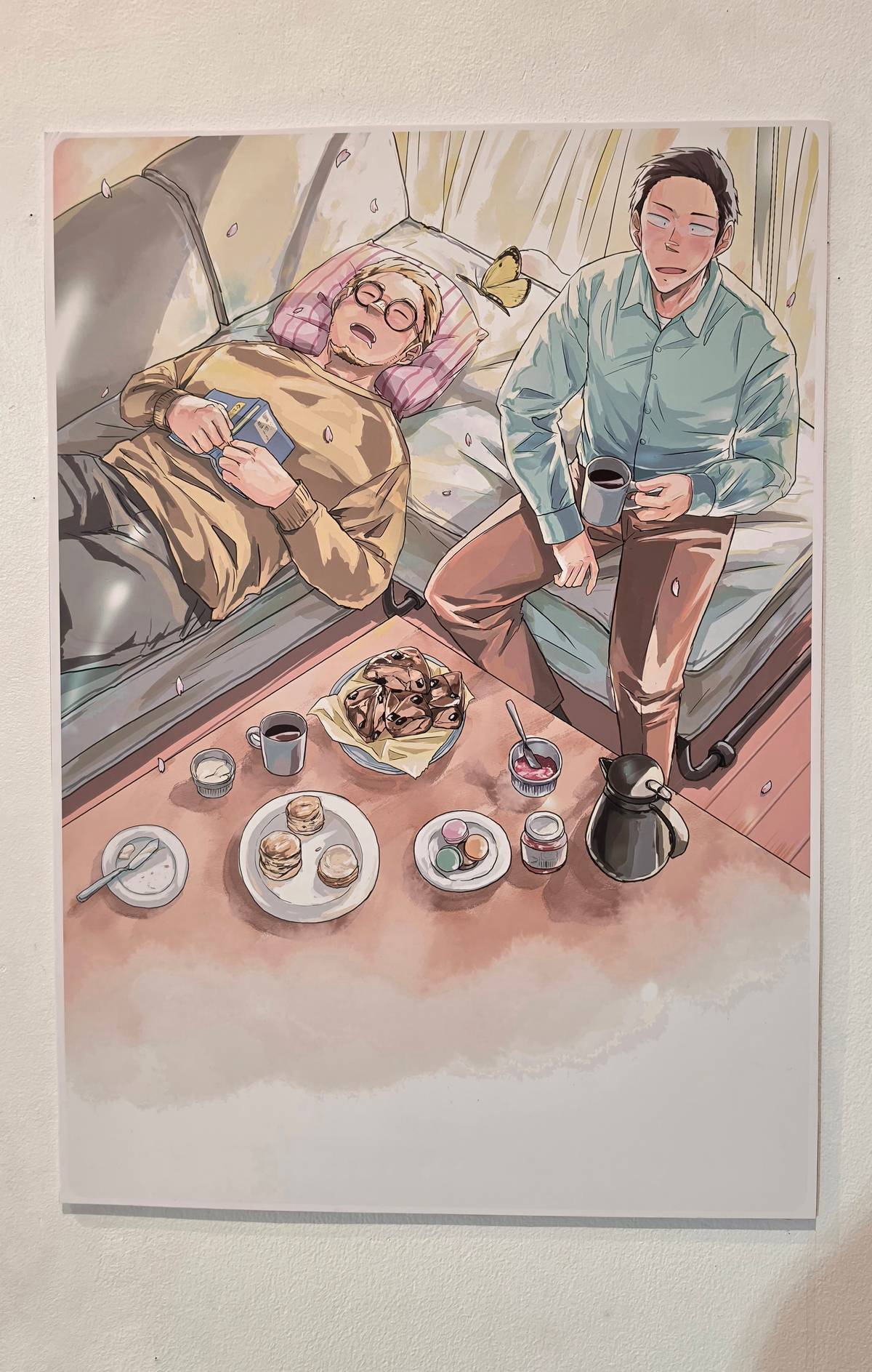
From Masaomi Ito’s ‘Confessions of Shy Baker and the Bathroom Between Us’ (Japan).
Elsewhere in Southeast Asia, Vietnamese artist antarcticbear presents love as something patiently cultivated in Adding You to My Cart, while scottyiscrying reflects on memory and a former beloved in Once Embraced by a Distant Wave. Indonesian artist Kayraa examines vulnerability and emotional safety in My Precious Cat. Singapore-based artist Isha Wang brings humor and cultural familiarity to In Love with the Cardboard Policeman, in which a man falls for a recognizable public-safety icon.
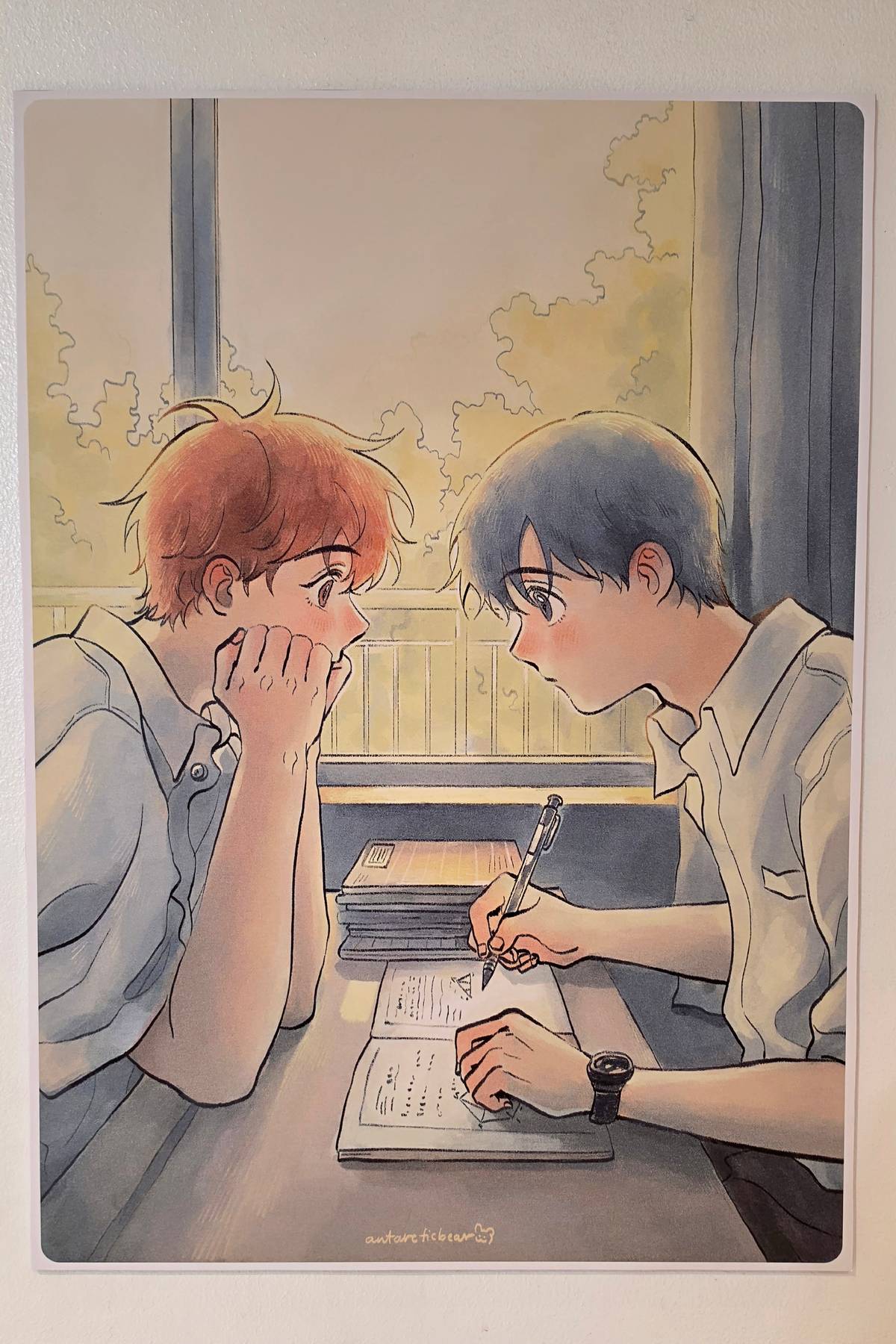
A work by Antarcticbear (Vietnam).
Other works engage directly with political realities. Thai artist Everwetscent/Sal situates Hand of Gold in a world shaped by authoritarianism and violence. Burmese artist Blue, now based in Singapore, reflects on concealed affection in Gardenia’s Whisper, drawing inspiration from the flowers worn by teachers in Myanmar while preserving tenderness and hope amid constraint.
The Philippine selection is especially extensive. Tagasaing’s Love Team reimagines the Filipino tradition of manufactured celebrity pairings by asking what it means for a public figure to conceal his identity for years. Tsambolero’s Ligaw captures the silence of queer adolescence, while Jess Montz’s Let Me Stay in Yesterday considers reassurance and intimacy in relationships burdened by social disapproval.
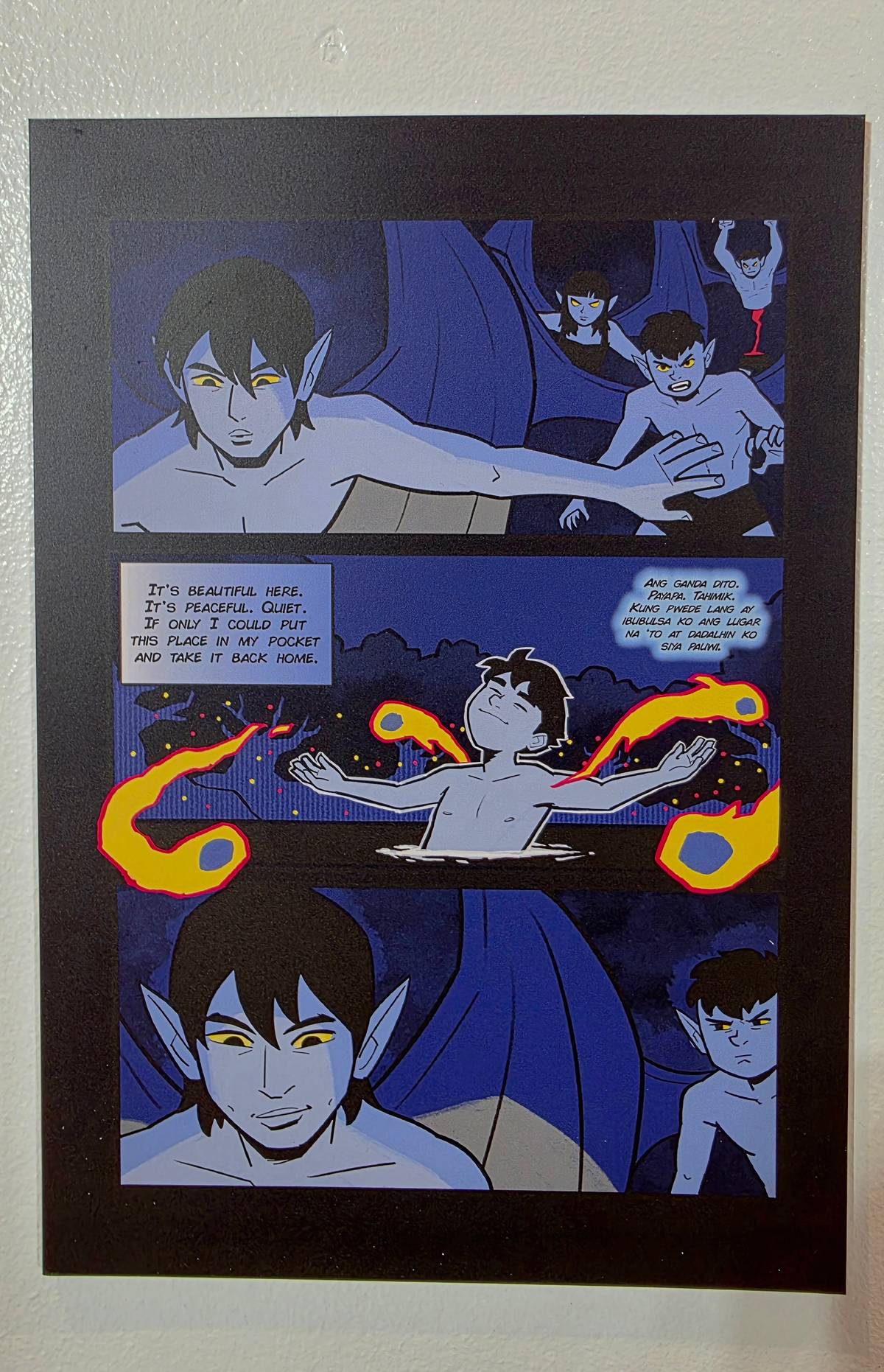
‘Ligaw’ by Tsambolero (Philippines).
Several Filipino artists locate queer love in familiar spaces and routines. Ruka’s Kape finds meaning in small acts of care. Nashenzo’s A Couple Series: Adlaw sa Amuang Kinabuhi portrays affection through the daily life of a Bisaya couple. Pannnco’s Byahe places queer adulthood in tricycles, cafés and workplaces, while Gigi Chan’s Somewhere in My Past, set in Davao City in the late 1980s, presents a coming-of-age story shaped by first love.
The exhibition also turns to memory and erasure. In Darkroom and Bright Flames, Chong Ardivilla draws from archival photographs of Filipino-American artist Alfonso Ossorio taken by George Platt Lynes in 1930s New York. Rather than defining their relationship, the work examines the intimacy of looking and forms of queer tenderness that history often leaves unnamed. In Revelations, alamangoes and Dakilang Diwata explore lesbian intimacy amid grief, Catholicism and erasure.
Fantasy and speculative fiction further expand the exhibition’s range. Color-LES presents Mage and Demon Queen, a romance in which love crosses gender, species, and war. Tintin Pantoja’s Poison Ocean combines ecological catastrophe, magic, adventure and attraction. Ube Becaro’s Parabiosis reflects on unrequited love, while F33shbol’s I Wish for the World’s End imagines longing in a society marked by judgment.
Sinta likewise makes room for identities that remain underrepresented even within queer communities. Speck of Dust’s Wired centers asexual experience and affirms love beyond romance. Sumikiyo and Munppence’s Cat in the Bag explores bisexuality and nonbinary identity through a playful sapphic story. Grovey Pascasio’s Emmy & the Second Chance follows two trans best friends whose relationship develops through online fandom and cosplay.
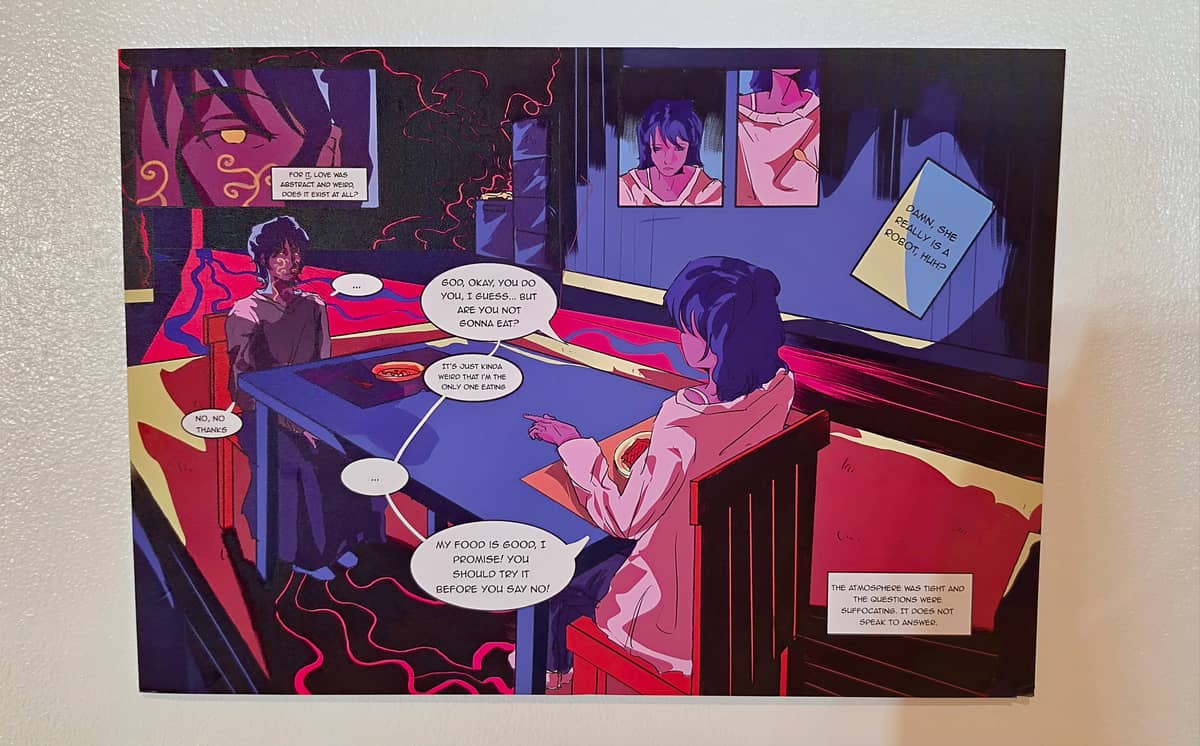
From ‘Wired’ by Speck of Dust (Philippines).
Across these works, sinta emerges not as a single form of love but as a shifting idea — romantic, platonic, remembered, unspoken, unrequited, hidden, domestic, or imagined. It may unfold in a bakery, a café, a tricycle, an online game, a battlefield, or a quiet room. Through these stories, the exhibition presents queer life in Asia as a constellation of experiences shaped by place, memory, culture, struggle and hope.
Sinta: Queer Stories Across Asia is mounted in celebration of the 70th anniversary of Philippines-Japan Friendship and forms part of the Next Generation Co-Creation Partnership — WA 2.0. It is also presented as part of the Philippine International Comics Festival 2026, to be held from 10 to 12 July at Ayala Malls The 30th, in partnership with Japan Foundation Manila, BLushCon and Komiket.