
Friday, 3 July 2026
Nasdaq -1.10%
Subscribe NowSupport Us

Daily TribuneDaily Tribune

Daily TribuneDaily Tribune
Subscribe
Friday, 3 July 2026
Nasdaq -1.10%
  • News
  • Page Three
  • Commentary
  • Business
  • Life
  • Show
  • Tech Talks
  • Sports
  • Global Goals
  • Dyaryo Tirada
Partner feature
Daily Tribune

The Philippines' leading digital newspaper.

News
  • Headlines
  • Metro
  • Nation
  • World
Commentary
  • Opinion
  • Editorial
  • Scuttlebutt
Business
  • Shipping
  • Portraits
  • Pep
  • Business Advisories
Life
  • Show
  • Food & Drink
  • Getaways
  • Arts & Culture
  • Social Set
  • Spaces
  • Fashion & Beauty
  • The Edit
  • Top Form
  • Next Gen
  • Sacred Space
  • Project Larawan
  • Snaps
Sports
  • Hoops
  • Volley
  • Golf
  • Goal
  • Boxing
  • Tennis
  • Esports
  • Blast

More

  • Page Three
  • Tech Talks
  • Global Goals
  • Dyaryo Tirada
  • Horoscope
  • Quips
  • Sudoku
  • Crossword
  • Photos
  • Embassy
  • Hotspot
  • Special Report
  • Innovation
  • Partnership
  • Remember Me
  • Environment
  • Natural Wonders
  • Earth

Company

  • About
  • Contact
  • Advertise
  • Privacy
  • Subscribe
  • Support Us

© 2026 Daily Tribune · tribune.net.ph · Powered by Quintype

EDITORIAL

Duterte was us

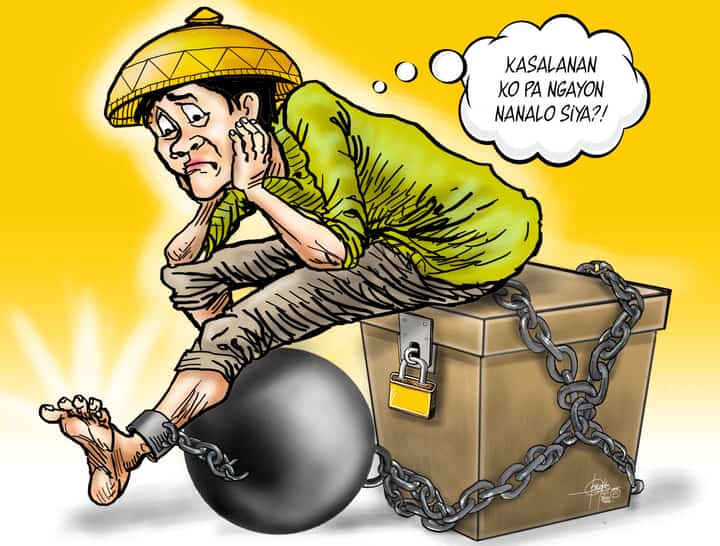
That is what makes this case so difficult. One side says humanity was violated. Another says humanity was being protected.

DT·3 July 2026, 12:43 am

Share

Google Preferred Sources

Get more Daily Tribune stories in your search results

Add Daily Tribune as a preferred source on Google Search.

Add to Google
Duterte was us
Partner feature

Share

Google Preferred Sources

Get more Daily Tribune stories in your search results

Add Daily Tribune as a preferred source on Google Search.

Add to Google
Partner feature

Ten years ago, the country asked one question. How do we stop drugs? Simple question. Very hard to answer.

Ten years later, we are asking a different one. What are we willing to own up to because we tried? That is the tragedy.

Operation Double Barrel turned 10 this week. Sold as the answer to the epidemic of drugs, remembered in bodies, defended as order, condemned as murder, and now stands before the world under the heaviest accusation the law can make: crimes against humanity.

Very big words.

Supposed to make everyone slow down before throwing them around. Because before we use words that big, we should ask a question just as big.

Crimes against humanity? Or crimes by humanity? Humanity did not vote. Filipinos did.

Duterte carried the name. The country supplied the appetite.

He did not sneak into Malacañang. Did not fool anyone.

He told Filipinos what kind of President he would be — again and again and again.

The country heard him. The country thought it understood him. It carried the Davao method all the way to the Palace.

If the charge is humanity, then include humanity. All of it. Not only the dead, the accused.

Also the frightened families who wanted the streets back. The people who believed, rightly or wrongly, that government had run out of gentle answers.

That is what makes this case so difficult. One side says humanity was violated. Another says humanity was being protected.

History is full of that.

People doing terrible things while believing, in their heart of hearts, they were preventing something even worse.

Then the law walks into the room and asks the terrible question: Should it follow the will of the people? Or stop the people from willing something they may one day regret?

Cases like this tempt us to believe they are about one man, rather than the country that produced him.

Every generation inherits a question it does not want to answer. Ours is simple.

What do we do when fear, crime, desperation become so heavy that ordinary government no longer feels enough?

History will decide many things about Rodrigo Duterte.

It will decide whether he was right, wrong, or if he went too far. Whether he saved lives, or he destroyed them.

There is one thing history must never allow us to do: forget that Duterte came from a “virgin.”

He came from us. From our fears. Failures. Hopes. Impatience.

But that does not excuse him. It does not condemn him.

Because in a democracy, unlike any other form of government, power is never born in a palace, but begins in the hands of ordinary people.

It is much easier to put one man on trial than to ask why millions thought he was the answer.

If the world remembers only him who held that power, but forgets the country that handed it to him, then we will have learned nothing. Not about him. Not about ourselves.

And if we learned nothing then, 10 years from now another man will stand where he stood.

No republic becomes wiser by remembering only its villains. It becomes wiser by remembering the road that led to them.Ten years ago, the country asked one question. How do we stop drugs? Simple question. Very hard to answer.

Ten years later, we are asking a different one. What are we willing to own up to because we tried? That is the tragedy.

Operation Double Barrel turned 10 this week. Sold as the answer to the epidemic of drugs, remembered in bodies, defended as order, condemned as murder, and now stands before the world under the heaviest accusation the law can make: crimes against humanity.

Very big words.

Supposed to make everyone slow down before throwing them around. Because before we use words that big, we should ask a question just as big.

Crimes against humanity? Or crimes by humanity? Humanity did not vote. Filipinos did.

Duterte carried the name. The country supplied the appetite.

He did not sneak into Malacañang. Did not fool anyone.

He told Filipinos what kind of President he would be — again and again and again.

The country heard him. The country thought it understood him. It carried the Davao method all the way to the Palace.

If the charge is humanity, then include humanity. All of it. Not only the dead, the accused.

Also the frightened families who wanted the streets back. The people who believed, rightly or wrongly, that government had run out of gentle answers.

That is what makes this case so difficult. One side says humanity was violated. Another says humanity was being protected.

History is full of that.

People doing terrible things while believing, in their heart of hearts, they were preventing something even worse.

Then the law walks into the room and asks the terrible question: Should it follow the will of the people? Or stop the people from willing something they may one day regret?

Cases like this tempt us to believe they are about one man, rather than the country that produced him.

Every generation inherits a question it does not want to answer. Ours is simple.

What do we do when fear, crime, desperation become so heavy that ordinary government no longer feels enough?

History will decide many things about Rodrigo Duterte.

It will decide whether he was right, wrong, or if he went too far. Whether he saved lives, or he destroyed them.

There is one thing history must never allow us to do: forget that Duterte came from a “virgin.”

He came from us. From our fears. Failures. Hopes. Impatience.

But that does not excuse him. It does not condemn him.

Because in a democracy, unlike any other form of government, power is never born in a palace, but begins in the hands of ordinary people.

It is much easier to put one man on trial than to ask why millions thought he was the answer.

If the world remembers only him who held that power, but forgets the country that handed it to him, then we will have learned nothing. Not about him. Not about ourselves.

And if we learned nothing then, 10 years from now another man will stand where he stood.

No republic becomes wiser by remembering only its villains. It becomes wiser by remembering the road that led to them.Ten years ago, the country asked one question. How do we stop drugs? Simple question. Very hard to answer.

Ten years later, we are asking a different one. What are we willing to own up to because we tried? That is the tragedy.

Operation Double Barrel turned 10 this week. Sold as the answer to the epidemic of drugs, remembered in bodies, defended as order, condemned as murder, and now stands before the world under the heaviest accusation the law can make: crimes against humanity.

Very big words.

Supposed to make everyone slow down before throwing them around. Because before we use words that big, we should ask a question just as big.

Suggested Articles

 Ship flounders; gone to Canada
EDITORIAL

Ship flounders; gone to Canada

Amid the massive protest rally, the Ombudsman’s office made its own quiet announcement of pursuing the case against…

DT·3 July 2026

Ban gadgets for children
EDITORIAL

Ban gadgets for children

The stranger does not have to wait outside the school anymore, just lurk inside the glowing rectangle in a child’s…

DT·2 July 2026

Caught flatfooted
EDITORIAL

Caught flatfooted

Room bookings and transport arrangements were locked in three days out — the kind of paper trail effective intelligence…

DT·2 July 2026

Protest season’s back
EDITORIAL

Protest season’s back

The demonstration, led by church groups, carried three core calls: an end to corruption, a genuine anti-political…

DT·1 July 2026

No relying on U.S.-Iran peace talks
EDITORIAL

No relying on U.S.-Iran peace talks

There is something to this — but taken too far, it becomes a convenient excuse for impunity. Poverty reduction without…

DT·1 July 2026

The parents are out
EDITORIAL

The parents are out

Children need love. They also need limits. Every ‘no’ uttered by a parent today may prevent a police officer from…

DT·30 June 2026