
Phl golf gets collegiate boost
A collegiate system allows players to compete regularly at a higher level, develop under experienced coaches, experience pressure-filled tournament situations and build the strategic and mental skills necessary for life as a professional golfer.


The Philippines has long enjoyed a thriving junior golf scene and a steadily growing professional circuit, but for years one major piece of the development system has been missing — a structured collegiate platform where young players can compete in serious tournament-level golf before making the jump to the professional ranks.
That long-standing gap is finally being addressed, with both of the country’s biggest university leagues — the University Athletic Association of the Philippines (UAAP) and National Collegiate Athletic Association (NCAA) — now introducing golf into their respective competitions.
The UAAP officially included golf as a demonstration sport for Season 88, staging its inaugural tournament from 11 to 14 May at Tagaytay Midlands in Talisay, Batangas.
Five universities took part in the historic first tournament, competing in both individual and team formats. De La Salle University made history by sweeping all four championship titles in the inaugural competition.
At the same time, the NCAA also debuted golf as a demonstration sport for Season 101, marking the first time the league has staged golf competitions.
The move by both collegiate leagues signals a major shift in the development of Philippine golf and creates a long-awaited bridge between junior competition and the professional level.
For decades, the pathway for Filipino golfers has remained relatively simple but deeply flawed. Young players begin their journey through junior golf tournaments, typically designed for players under 19 and focused heavily on development, learning, and experience-building. From there, many talented golfers are forced to immediately transition to professional tours.
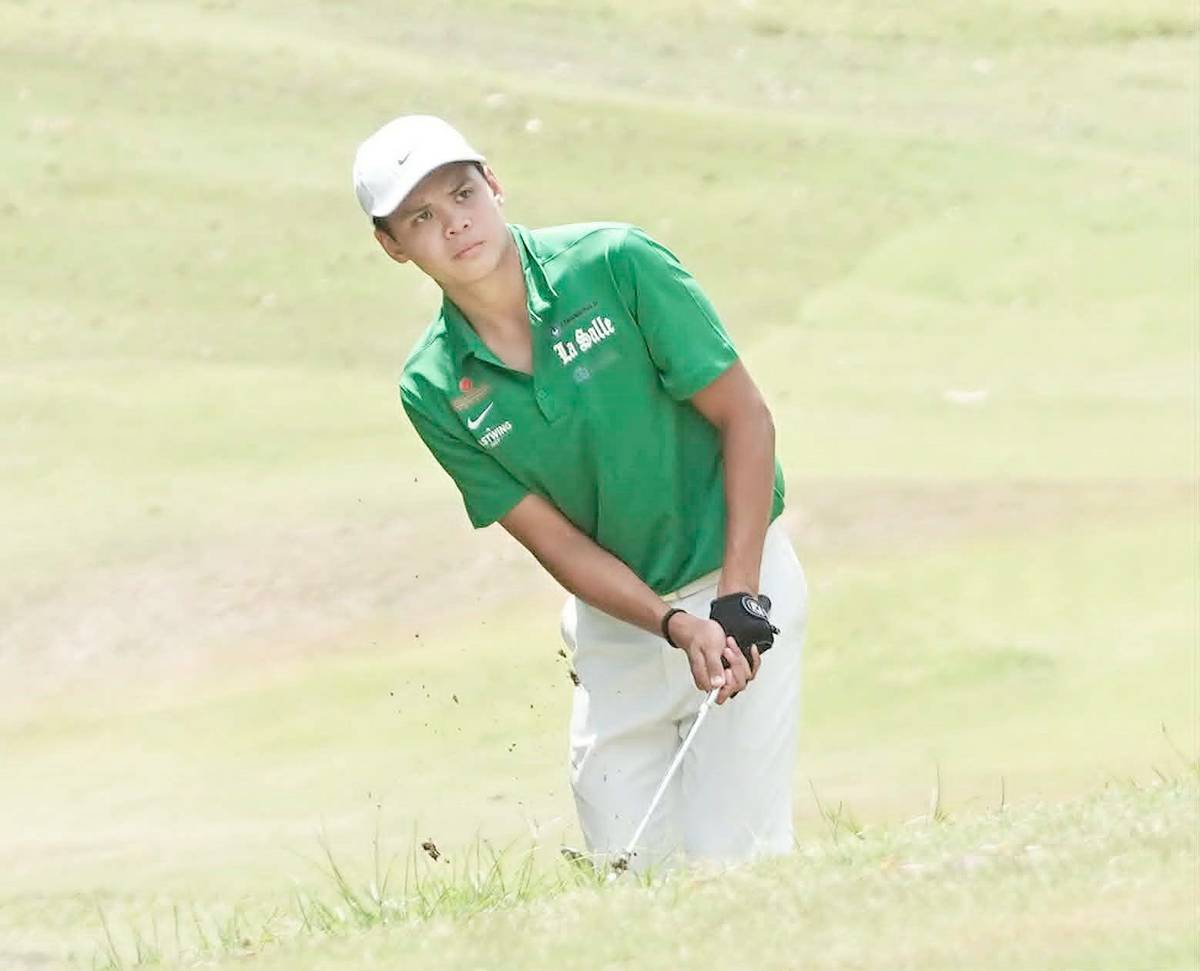
ZACH Castro provides La Salle the firepower it needs.
The problem has always been the absence of a middle ground.
Junior tournaments often feature bigger fields and learning-focused environments, while professional golf requires players to deal with elite competition, financial independence, intense pressure, mental toughness, and long-term career commitment.
This has left many young golfers making the leap too early, often without enough competitive preparation.
Recognizing this problem, Pilipinas Golf Tournaments Inc. (PGTI) pushed for the creation of a collegiate golf structure that could better prepare players for the next stage of their careers.
“After establishing the junior level, we felt the need for a collegiate platform — a bridge between junior and professional golf — and that is how the Intercollegiate Tour came about,” said Colo Ventosa, PGTI general manager, when discussing the purpose behind collegiate golf development.
To address this developmental gap, the UAAP partnered with PGTI under a three-year agreement aimed at building a structured collegiate golf circuit, while the NCAA has also embraced the movement by launching its own golf competition this year.
These initiatives go far beyond simply adding another sport to the university calendar.

JULIA Lua is one of the female players to watch from De La Salle University.
The goal is to create more competitive opportunities for collegiate golfers, strengthen player development at the university level, and provide a smoother transition between amateur golf and elite professional competition.
The inaugural tournaments featured both individual and team competitions, giving players valuable experience in formats similar to international events and professional tournaments.
The introduction of collegiate golf is particularly significant because it finally creates a structured pathway toward professional golf.
Ventosa emphasized the importance of this new platform, saying, “We are very excited because this provides a wonderful venue for collegiate players to showcase their skills and potentially progress to professional golf or even Olympic sports.”
A collegiate system allows players to compete regularly at a higher level, develop under experienced coaches, experience pressure-filled tournament situations, and build the strategic and mental skills necessary for life as a professional golfer.
In many ways, the Philippines is following a development model already proven successful internationally.
In the United States, the PGA TOUR University program was specifically designed to create a direct pathway between college golf and professional golf.
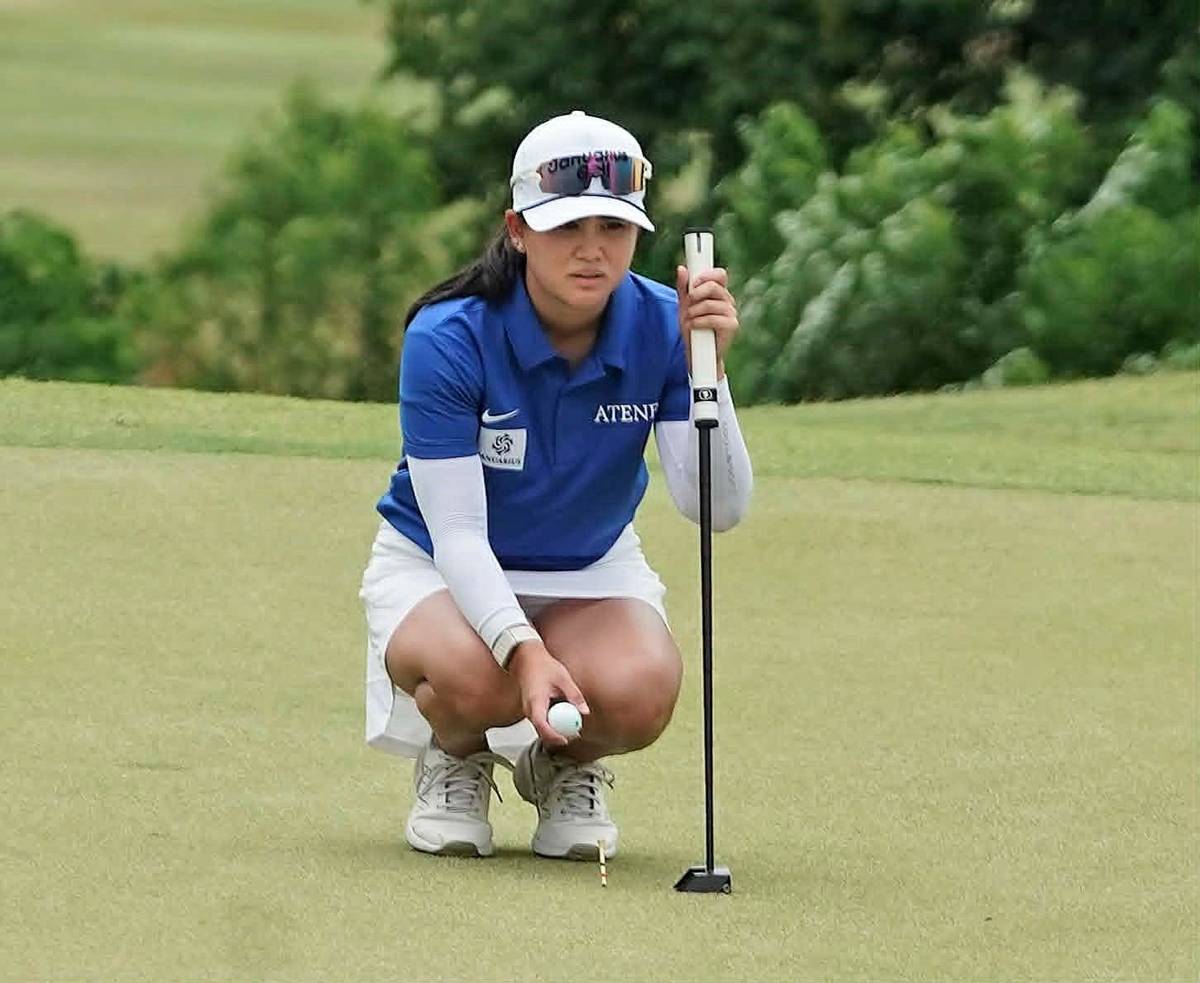
MONIQUE Mendoza proudly represents Ateneo de Manila.
Top performers in the PGA TOUR University Ranking earn status on the Korn Ferry Tour, widely considered the gateway to the PGA Tour. The program allows players to compete in designated tournaments while gaining exposure in front of sponsors, scouts, and professional teams.
The PGA Tour has also established its Pathway to Progression Collegiate Development Program, designed to identify and accelerate the development of promising collegiate golfers.
The emerging collegiate golf programs in both the UAAP and NCAA follow a similar philosophy — using university competition as a feeder system toward professional opportunities.
The benefits extend far beyond technical skill.
Professional golf requires mental resilience, pressure management, advanced course strategy, financial discipline for travel and equipment, and the ability to recover from setbacks — all experiences that are difficult to fully learn in junior golf alone.
Collegiate tournaments help players develop these important qualities before entering the demanding world of professional golf.
The inclusion of golf in both the UAAP and NCAA represents a major step forward not only for university sports, but for the long-term future of Philippine golf as a whole.
More than simply expanding athletic programs, these partnerships help build a sustainable player development pipeline that strengthens talent development, widens high-level competitive opportunities and closes the long-standing gap between amateur promise and elite performance.
The UAAP-PGTI agreement will continue through at least Season 90, ensuring collegiate golf remains part of the league’s future plans.
The NCAA has likewise committed to growing the sport after successfully staging its first golf tournament in May 2026.
In the coming years, organizers are expected to expand the number of participating schools, introduce more competition formats, build stronger links with professional tours, and potentially create pathways that could eventually lead Filipino golfers toward Olympic qualification.
For decades, young Filipino golfers were forced to make the difficult jump directly from developmental junior tournaments into the pressures of professional golf.
The emergence of collegiate golf finally fills that critical missing gap.
With the UAAP, NCAA and PGTI now building a structured pathway for young talent, the Philippines is finally creating the infrastructure needed to produce more world-class golfers — a system where players can compete, mature, and transition to the professional ranks with far greater confidence.
In many ways, collegiate golf may become the missing link that shapes the next generation of Filipino champions.
This is the future of Philippine golf.