
Carmela Marfori’s modern Maria Clara
‘I believe art has the power to create moments of pause in an increasingly fast-moving world. Much of my practice revolves around stillness — not as the absence of movement, but as a space for reflection, healing and becoming.’


How does one define freedom? For mixed media artist Carmela Marfori, the question has lingered since childhood. And eventually, it found its answers through her passion. The lass from San Pedro, Laguna, who is currently a scholar of Bachelor of Fine Arts in Culture-Based Arts at De La Salle-College of Saint Benilde, has built an impressive portfolio rooted in spirituality, femininity, identity, healing and personal transformation.
“I am deeply interested in stories — both personal and collective — and how they can be translated into tangible experiences through art,” she said.
Her background in music, dance and theater has also shaped her creative approach, leading her to foreground movement, rhythm and emotion in her work.
Marfori grew up as the youngest of three children, with two older brothers. On her father’s side, she is also the only girl among many cousins.
“Growing up surrounded by older brothers, cousins and relatives greatly shaped my perspective on womanhood and empowerment. While I was always protected and cared for, I was also encouraged to be independent, resilient, and ambitious,” she said.
Her earliest encounters with art grew out of memories of performance and creation. In time, however, she became equally fascinated by what happened behind the scenes. Costumes, props and stage design captivated her, revealing how objects themselves could carry and communicate stories.
Today, she works primarily with fabric, fiber, ceramics and jewelry — materials and adornments often associated with women’s dress. Her affinity for artisanal craftsmanship has naturally become part of her artistic language.
“I believe art has the power to create moments of pause in an increasingly fast-moving world. Much of my practice revolves around stillness — not as the absence of movement, but as a space for reflection, healing and becoming.”
A question for Malaya Clara
This philosophy came into full expression in her recent exhibition, Malaya Clara, Malaya Ka Ba?, at the National Commission for Culture and the Arts (NCCA). The project grew from a question that had occupied her for years. Drawn to Philippine history and literature, particularly the works of José Rizal, she became intrigued by Maria Clara, long portrayed as the ideal Filipina: modest, graceful, obedient and self-sacrificing.
“If I were Maria Clara, how would I truly feel? Behind the capiz windows, behind the expectations placed upon me, would I feel free? Would there be space for my own voice, choices and dreams?” she asked.
Through installations, sculptures, textiles and participatory works, Marfori examined the different stages of womanhood, self-discovery and transformation. Rather than offering a single answer, the exhibition invited viewers to reflect on their own understanding of freedom.
Perhaps this explains why audiences responded so warmly. “At some point in our lives, we have all been a version of Malaya Clara — trying to navigate who we are, who we are expected to be and who we want to become,” she said.
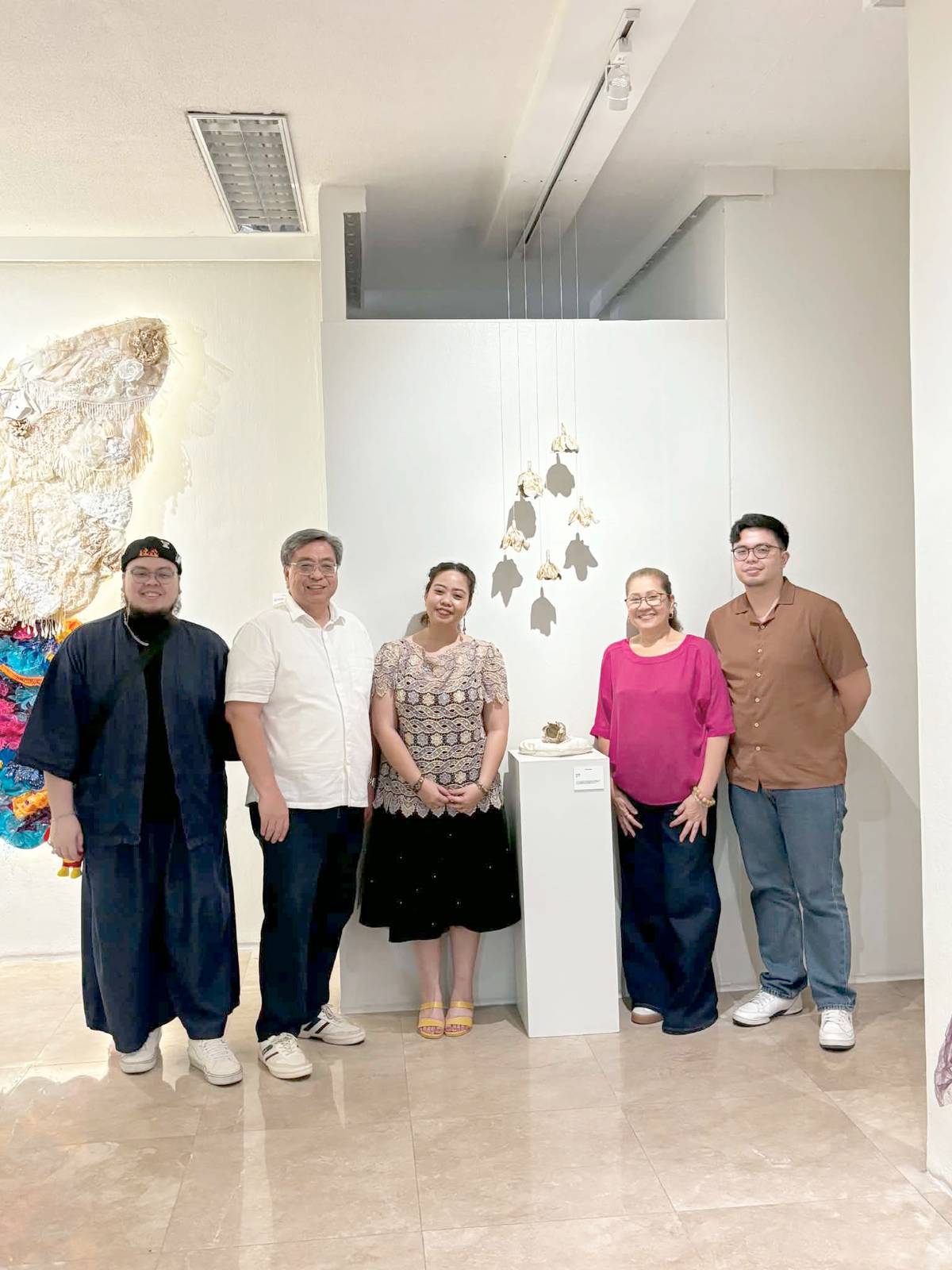
CARMELA Marfori with her family.
Among her favorite works is the interactive mirror installation Malaya Ka Ba? Covered with metal window grilles and secured by a lock, it invites visitors to study their reflections as though confined — or even imprisoned. The viewing angle changes the encounter: some notice butterflies trapped within, while others see the image of Malaya Clara herself.
Her colors are bright and expressive, often inspired by sunsets: warm yellows, oranges, pinks, reds and soft blues.
Installation art, textiles, fiber and mixed media remain her preferred forms, reflecting her background in music, dance and theater.
Fabric fascinates her for the way it folds, drapes, stretches and responds to its surroundings. Fittingly, one of her favorite tools is simply a good pair of fabric shears.
Among the artists she admires is Fiery Daisy, particularly for the exhibition A Body Draws, A Leaf Sprouts, which Marfori describes as both playful and deeply emotional. She also wishes she could have watched the late Pacita Abad at work, drawn to the artist’s confidence, craftsmanship and vibrant celebration of identity and culture.
One day, she hopes to visit the Metropolitan Museum of Art in New York, where she looks forward to encountering works by women artists and exploring narratives of womanhood across cultures and generations.
Beyond the studio, she takes part in sports and other physically demanding activities, which help her reconnect with her body after long hours of making. Quiet moments are just as important. The National Library remains one of her favorite places to linger, read, research and write simply. Through it all, her family continues to be her greatest source of support.
We sat down with Marfori to talk more about the exhibition and her future projects.
On her undergrad thesis
“I am currently continuing my research on the sampaguita community of San Pedro, Laguna. Through conversations with growers, garland makers, vendors, and community members, I hope to highlight the cultural significance of the national flower and bring greater visibility to those whose lives and livelihoods are connected to it.”
On Malaya Clara
“Malaya Clara is every Filipina who is learning to define herself on her own terms. She begins as a reimagining of Maria Clara, a figure often associated with modesty, restraint, and the expectations placed upon women. But rather than rejecting her entirely, I wanted to ask what happens when she is allowed to speak, choose, and grow for herself.
“Malaya Clara is not a woman who has fully arrived. She is not perfect, and she does not have all the answers. Instead, she exists in a state of becoming. She is confronting her fears, discovering her voice, questioning traditions, and learning what freedom means to her.”
On preparing for the exhibit
“It was a three-year journey of self-discovery, healing, and growth. The exhibition explored the question of freedom and what it truly means to become free. But in many ways, I was also trying to answer that question for myself while creating it. Throughout those three years, I experienced different stages of womanhood, identity, and personal transformation. Many of the works evolved alongside my own experiences, making the exhibition feel almost like a visual diary.”
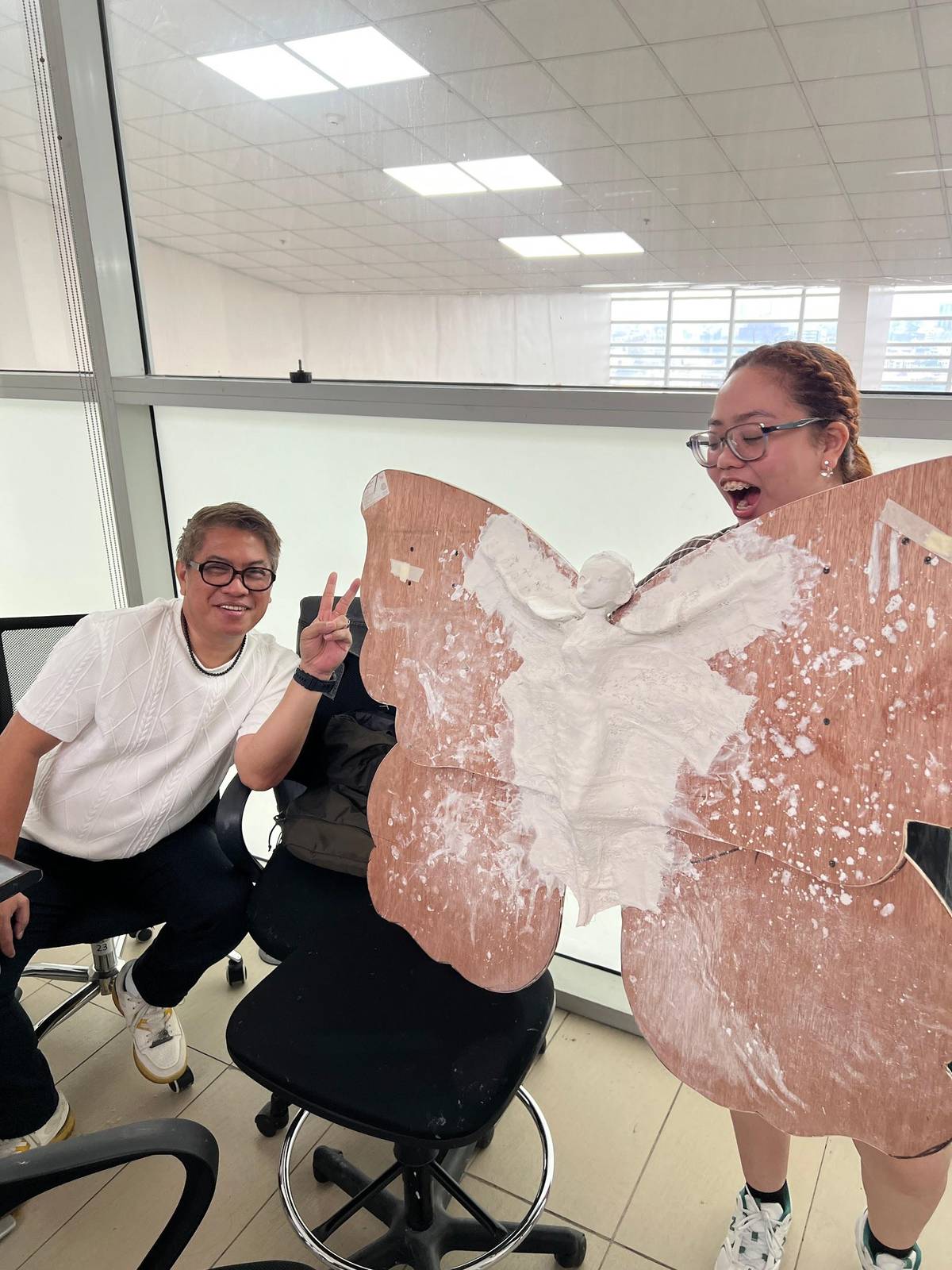
WITH mentor Offemaria, as she creates the first prototype for Malaya Clara.
On the significance of ‘Malaya Clara, Malaya Ka Ba?’
“On a personal level, the exhibition also represents my development as an artist. In just a few years, I went from creating notebook-sized works to producing large-scale installations measuring up to eight feet tall. It reflects my curiosity, perseverance, and willingness to keep pushing my practice further while maintaining a sense of playfulness and joy in the creative process.”
On other projects
“Beyond my studio practice, I have also been developing Marfori Collection, a creative venture which explores how art can exist beyond gallery spaces and become part of everyday life. Through the brand, I create small-batch and limited-edition wearable pieces such as jewelry, accessories, and collectible objects which merge design, craftsmanship, storytelling.”
On her goal
“Whether through community-based research, continuous exhibitions, or creative entrepreneurship, my goal remains the same: to share stories, celebrate culture and nurture meaningful connections among people, places, and objects. Ultimately, I do not create art simply to be seen. I create art to be felt. And if a viewer leaves with a new question, a new realization, or a deeper understanding of themselves, then I feel the work has done its job.”