
Ube industry eyes global export boom

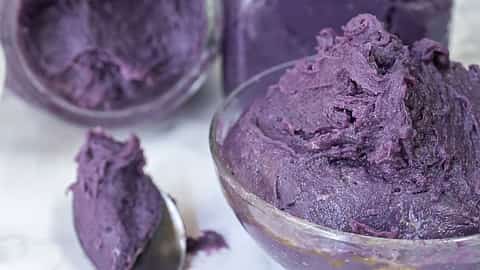
The Philippines is crafting a national roadmap to turn ube (purple yam) into a major export, strengthening supply chains, setting unified standards, and attracting investments to meet booming global demand from North America, the Middle East, Asia, and Europe.
The Philippines is creating a roadmap to turn ube into a major agricultural export product, as the government moves to strengthen supply chains, establish industry standards, and attract investments amid growing global demand for the purple yam.
Agriculture and trade officials recently convened 249 stakeholders in Quezon City, bringing together farmers, processors, exporters, traders, and cooperatives to address one of the industry's biggest challenges: demand has outpaced the systems needed to support it.
The consultation, organized by the Department of Agriculture (DA) and the Department of Trade and Industry–Export Marketing Bureau (DTI-EMB), focused on creating a coordinated strategy that would allow the country to capitalize on expanding export opportunities.
Agriculture Undersecretary Philip C. Young, who oversees the High Value Export Crops program, said the industry has reached a stage where stronger organization has become essential.
“Demand is booming but supply and structure are struggling to keep up,” Young said. “Ube is no longer just a pantry staple or dessert flavor but an export product that needs rules, scale, and a proper growth playbook.”
Central to the government's plan is the proposed creation of a Steering Committee and Technical Working Group (TWG) that will coordinate the industry's long-term development. The body is expected to establish common standards for raw and processed ube products, define quality specifications, and harmonize regulatory requirements among government agencies.
Officials believe a standardized system will reduce inconsistencies that often delay shipments, improve export competitiveness, and provide investors with greater confidence to expand production.
The government also wants the TWG to align phytosanitary and technical standards that have long been fragmented across agencies, a hurdle that exporters say has slowed the growth of agricultural exports.
Industry stakeholders noted that global demand is no longer the limiting factor.
Current production of roughly 50 to 60 metric tons per operator could expand to as much as 500 metric tons if supply coordination improves and more planting materials become available. Exporters continue to report shortages of raw ube even as overseas demand rises for powder, paste, jam, halaya, and other value-added products.
The Philippines already exports ube products to Canada, the Middle East, and several Asian markets, while demand is expanding in the United States, South Korea, and parts of Europe.
Private companies have expressed interest in expanding plantations and increasing processing capacity, but industry players said long-term investments will depend on predictable standards, reliable raw material supply, and a more coordinated industry structure.
Agriculture Secretary Francisco P. Tiu Laurel Jr. said strengthening the ube industry forms part of the government's broader effort to develop more globally competitive agricultural exports.
“We need to develop more agricultural export winners that can raise farmers’ incomes and help reduce our farm trade deficit, which exceeds USD10 billion annually,” Tiu Laurel said.
Officials said the initiative follows a broader strategy of building high-value agricultural industries through stronger government coordination and closer collaboration with the private sector, similar to efforts undertaken for other export-oriented commodities.
If successfully implemented, the proposed roadmap could position ube as one of the country's next major agricultural export industries, allowing Filipino producers to meet rising global demand with a more reliable, scalable, and internationally competitive supply chain.