
Lessons written in blood
America’s experience offers no perfect blueprint. If it did, it would have stopped burying students years ago.

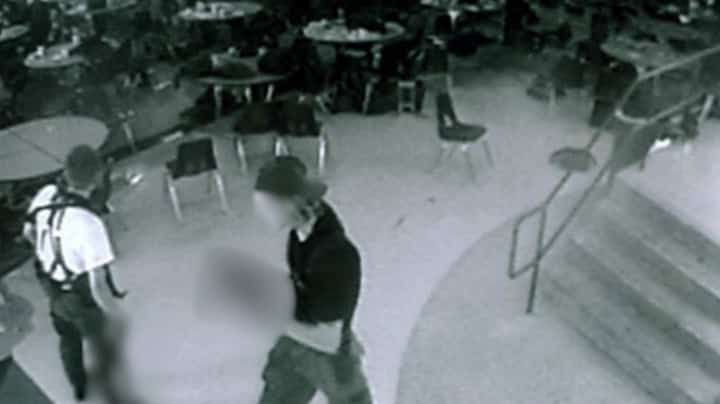
Columbine was supposed to be an aberration. Instead, it has become the grim benchmark against which every subsequent school massacre in the United States is measured.
In April 1999, two students murdered 12 classmates and a teacher before taking their own lives. Eight years later, a student at Virginia Tech killed 32 people before committing suicide. And in 2012, a former student massacred 20 children and six educators at Sandy Hook Elementary School before turning the gun on himself.
Six years later, a former student returned to Marjory Stoneman Douglas High School and killed 17 students and staff before he was arrested, pleaded guilty and was sentenced to life imprisonment without parole. Then another three years down the road, Ethan Crumbley killed four classmates at Oxford High School, pleaded guilty to murder and terrorism charges, and likewise received life without parole.
His parents would later become the first in the United States to be convicted of involuntary manslaughter after prosecutors proved they ignored glaring warning signs and failed to take reasonable steps that could have prevented the attack.
Each tragedy unleashed familiar demands for answers. Politicians blamed guns. Others blamed bullying, violent video games, social media, broken homes, or mental illness. Nearly three decades later, the uncomfortable conclusion is that none of those factors, standing alone, explains why one troubled adolescent commits mass murder while millions of others with similar experiences never do.
That is perhaps America’s most important lesson. School violence rarely springs from a single grievance. Investigations have repeatedly uncovered a convergence of warning signs — personal resentment, behavioral changes, social isolation, fascination with previous attacks, access to weapons and in many cases, missed opportunities for intervention.
The profile differs from case to case. The complexity does not.
That lesson deserves careful attention in the Philippines following the recent shooting at San Jose National High School in Tacloban City. Police said the two teenage suspects had complained of bullying, but investigators themselves have cautioned against treating that as the definitive motive while the investigation continues.
Their restraint is appropriate. If America’s experience teaches anything, it is that premature certainty often blinds authorities to deeper problems.
One lesson from the Oxford case, however, deserves particular attention. Prosecutors did not focus solely on the teenager who pulled the trigger. They also examined the conduct of the adults around him.
The Crumbleys had purchased the 9mm pistol for their son, ignored alarming behavioral warnings, declined to take him home after school officials confronted them about a disturbing drawing and failed to prevent his access to the weapon. Their convictions established that, under extraordinary circumstances, adults who recklessly enable a juvenile’s access to a firearm may also bear criminal responsibility.
That parallel is difficult to ignore in Tacloban. According to police, the 14-year-old suspect allegedly used a 9mm pistol belonging to a policewoman relative, while the 15-year-old allegedly used a .38-caliber revolver obtained from another relative.
Whether those adults violated the law or any regulations is a matter for investigators and ultimately, the courts to determine. But one question already demands an answer: How were two minors able to arm themselves with handguns?
That question may ultimately prove more important than any early theory about motive. Motive may explain why violence occurred. Access explains how violence became possible.
Now, the Tacloban shooting also did not occur in isolation. It came amid two separate stabbing incidents involving students that had already raised concerns over violence in schools. Whether those cases share common threads is for investigators to determine, not columnists. But together they should remind us that schools, once regarded as among the safest public spaces in the country, can no longer rely on assumptions of safety alone.
No one is suggesting that Philippine schools should resemble airports or military installations. Education flourishes in an atmosphere of trust, not fear. Yet trust is not a substitute for preparedness.
Just as schools learned to prepare for earthquakes without frightening children into panic, they can prepare for acts of violence through practical emergency protocols, better threat assessment, stronger coordination with authorities and systems that encourage intervention before grievances become tragedies.
America’s experience offers no perfect blueprint. If it did, it would have stopped burying students years ago. It does, however, offer one invaluable lesson purchased at an unbearable price: when warning signs are ignored, when firearms become accessible to children who should never have them and when schools are unprepared for the unthinkable, classrooms can become crime scenes.
That is one lesson the Philippines cannot afford to learn the hard way.