
Real trickle down effect
Every peso diverted to a fake flood control project is a peso that didn’t pay for a guidance counselor, a school clinic, or to train campus professionals.

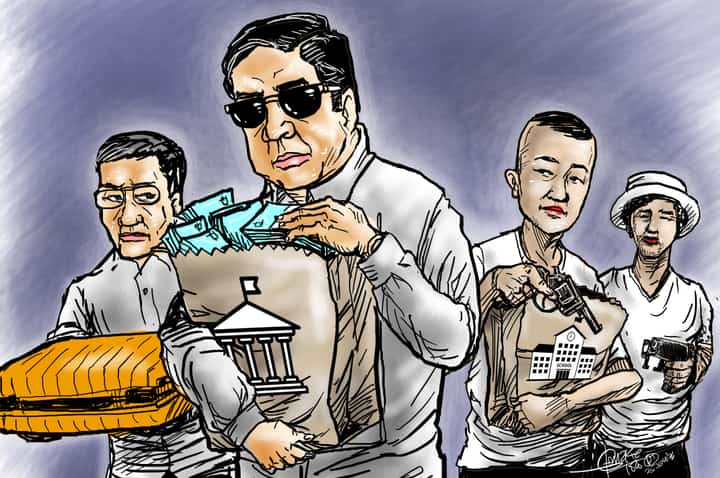
The past weeks have seen violence involving the youth and schools — three serious incidents capped by a shooting on a Tacloban campus.
It started with a 14-year-old girl armed with a kitchen knife attacking fifth graders in their classroom in General Trias, Cavite on 16 June; three days later, a senior high schooler was stabbed five times at Cavite National High School; and on 22 June, three students were killed and five wounded in a shooting at San Jose National High School in Tacloban City.
Institutions swept up in the whirlpool of corruption have a lot to do with the juvenile crime wave. The environment of impunity in government has trickled down to families and households, which had previously viewed the problem from afar.
The backlash of a society that considers corruption as an inevitable part of life may not cause a kid to bring a gun to school. What it does is hollow out every institution that would otherwise guide that kid before hatred engulfs him.
The money that should be spent on classrooms is diverted into private pockets and hard numbers back up such an assessment.
The Department of Education (DepEd) reported 4,460 vacant guidance counselor posts nationwide, and only 5,001 registered guidance counselors and about 3,000 psychologists for more than 47,000 schools.
The pork barrel scheme stole flood control money, which was diverted to ghost projects, Bicameral Conference Committee (Bicam) insertions and the Department of Public Works and Highways kickback network.
That’s the same budget process that starved DepEd educational programs, including psychosocial services.
Every peso diverted to a fake flood control project is a peso that didn’t pay for a guidance counselor, a school clinic, or to train campus professionals. The “Brave 18” testimony and the Unprogrammed Appropriations (UA) fight aren’t a separate story from the Tacloban shooting, which was their offshoot.
The reason is that impunity teaches a generation that consequences are negotiable. When children grow up watching public theft go unpunished, or when the lesson of their formative years is that power is the be-all and end-all of existence and that the people who stole are still looked up to, a worldview about consequences is inculcated in the youth.
Practices like hitting and verbal shaming are associated with increased aggression and long-term mental health challenges in children, and children who experience or witness violence at home tend to channel that aggression through bullying.
Abuses modeled at the top of society normalize violence and impunity at the bottom. A child who bullies because he’s hit at home is no different from a voter who shrugs because he’s robbed by officials he elected, with no fear of jail.
The Philippines has the highest bullying prevalence in the world. That comes from the bicameral Second Congressional Commission on Education, not from a tabloid. The Anti-Bullying Act exists on paper. So do the Child Protection Committees. Enforcement is not applied equally across the country.
Track the pattern, and it runs straight into the flood control scandal. Local political machines are strongest where they are least watched. Social services are weakest in the same places, for the same reason. Services were never the point. The cut from the contract was the point.
The DepEd blames mental health, family breakdown, social media and violent content. Correct, as far as that goes.
But the real enabler is older than any of that — a culture that condones the perverted use of power and lets children grow up fluent in it.