
Do bicycle lanes actually work?
The Philippine Development Plan 2023–2028 now places pedestrians and cyclists at the top of the road-user hierarchy, while the Department of Transportation continues expanding the country’s protected bicycle network.


PROTECTED bicycle lanes physically separate cyclists from moving traffic, creating a safer and more comfortable environment for riders of all ages and experience levels.
DAILY TRIBUNE IMAGES
As one sits in yet another line of traffic, it is hard not to glance at the bicycle lane beside the road and wonder whether it is actually doing its job. With cars barely moving, the occasional cyclist quietly passes by, prompting a familiar question: Do bicycle lanes really work?
It sounds like a reasonable criticism until one asks a different question. Are we judging bicycle lanes as transportation infrastructure, or are we judging unfinished infrastructure that was never allowed to function as intended?
Since the pandemic, the Philippines has undergone a quiet but significant shift in the way it thinks about mobility. Cycling, once viewed largely as recreation or a necessity for those without alternatives, has become part of national transport policy. The Philippine Development Plan 2023–2028 now places pedestrians and cyclists at the top of the road-user hierarchy, while the Department of Transportation continues expanding the country’s protected bicycle network.
More importantly, Filipinos have responded. Citizen-led Bilang Siklista counts recorded 191,578 cyclists across 10 cities in 2022, increasing to 271,555 cyclists across 18 local governments in 2024. Meanwhile, the Social Weather Stations found that the share of Filipino households using bicycles rose from 24 percent in 2021 to 36 percent in 2023, equivalent to about 10 million households. These are not simply weekend riders enjoying parks. They represent workers, students, delivery riders and ordinary commuters making practical daily trips.
The numbers suggest something important: there is demand. The challenge is that our infrastructure has not yet caught up.
International research consistently reaches the same conclusion. Bicycle lanes work best when they are protected, continuous and connected. A painted strip squeezed beside fast-moving traffic is very different from a dedicated lane separated from vehicles by physical barriers. Safety is what determines whether an experienced cyclist rides to work and, more importantly, whether a parent allows a child or an older adult to do the same.
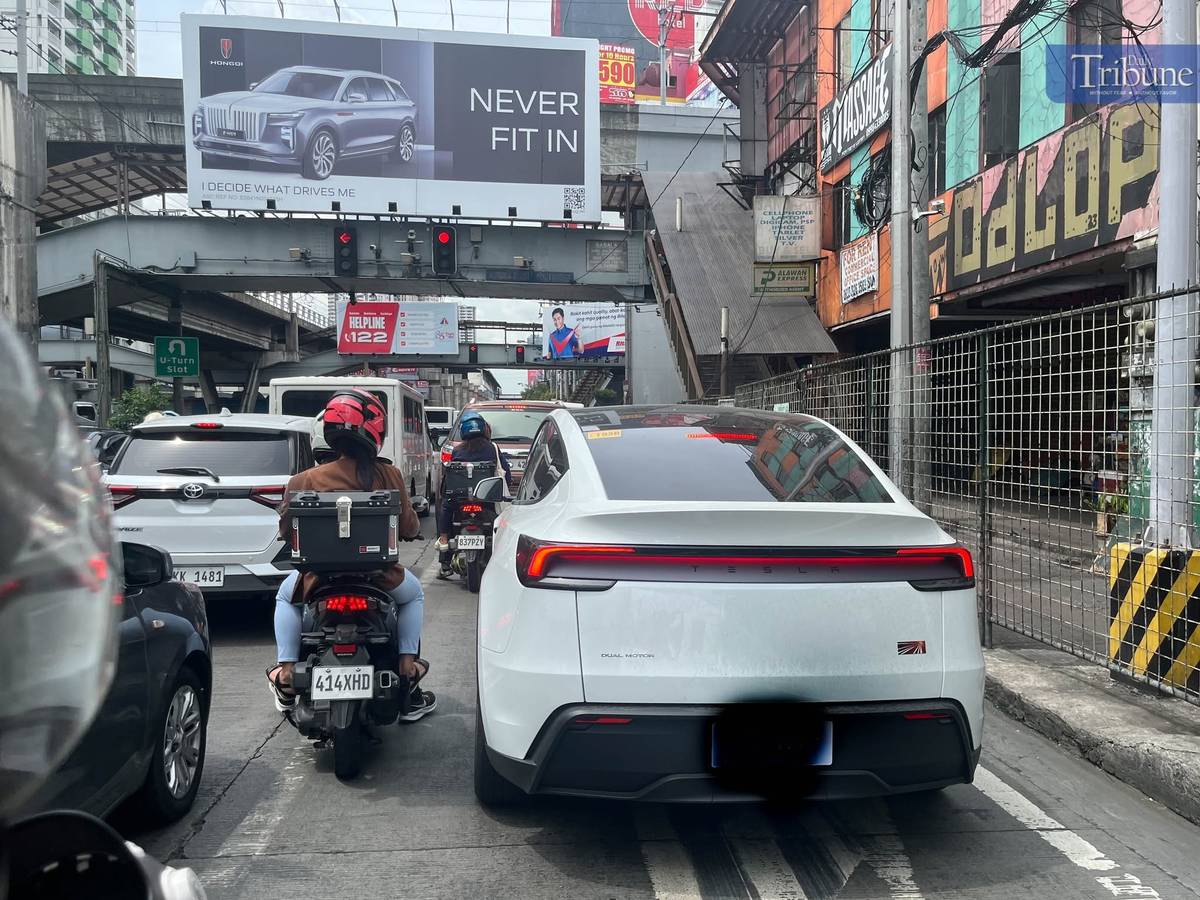
VEHICLES blocking bicycle lanes remain a common challenge in many Philippine cities, reducing both the safety and reliability of active transport.
DAILY TRIBUNE IMAGES
This is where many Philippine cities still struggle. Bike lanes often disappear at intersections, become occupied by illegally parked vehicles, or end abruptly before reaching schools, offices, or transport terminals. Even when the ride itself is comfortable, commuters frequently arrive only to discover there is nowhere secure to leave their bicycles.
Ironically, bicycles can already compete with cars for many short urban trips. According to the 2025 TomTom Traffic Index, vehicles in Metro Manila move at an average of just 15.2 kilometers per hour during rush hour, a speed comparable to that of an everyday cyclist. Once the time spent searching for parking and walking to a destination is considered, bicycles can be just as fast for many trips of only a few kilometers.
The issue has never been whether bicycles are capable of moving people efficiently. It is whether cities make those trips feel safe enough for ordinary residents to choose them. Heat and humidity do not prevent cycling. Singapore, Taipei and Jakarta have shown that people willingly ride when routes are connected, parking is available and designed for public transport. Climate is not the deciding factor, but rather its design.
Choosing a bicycle is definitely not about replacing a car altogether. Its true value lies in the choices it creates. Having well-designed bicycle lanes gives people the opportunity to spend less on fuel, gain a little exercise during the daily commute, and sometimes even arrive faster.