
OFW remittances post modest April increase — BSP
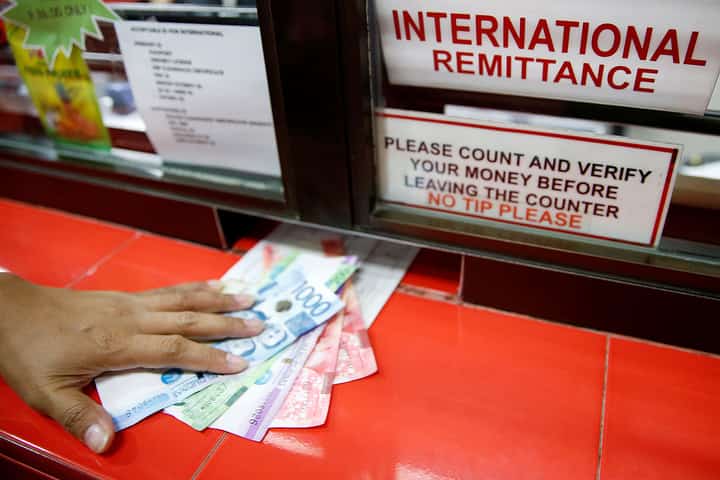
Cash remittances from overseas Filipino workers (OFWs) rose modestly in April despite heightened global economic uncertainty, according to preliminary data from the Bangko Sentral ng Pilipinas (BSP).
BSP data showed cash remittances coursed through banks reached $2.72 billion in April, up from $2.67 billion in March. On a seasonally adjusted basis, cash remittances also increased by 0.4 percent month on month.
Personal remittances, which include cash transfers through formal and informal channels as well as remittances in kind, climbed to $3.04 billion from $2.97 billion a month earlier. Seasonally adjusted personal remittances rose 0.4 percent month on month to $3.34 billion.
The BSP said the sustained growth reflects the resilience of OFWs and their continued support for household spending and domestic consumption.
For the first four months of 2026, cash remittances increased 2.6 percent to $11.40 billion from $11.11 billion a year earlier, while personal remittances grew 2.7 percent to $12.70 billion from $12.37 billion.
The United States remained the largest source of remittances, accounting for 39.7 percent of total inflows during the January-to-April period, followed by Singapore at 7.3 percent and Saudi Arabia at 6.4 percent.
The BSP said the latest figures underscore the continued resilience of remittance flows despite global economic uncertainties.
The Financial Stability Coordination Council (FSCC), chaired by the BSP, noted that around 49 percent of OFWs work in the Middle East, accounting for roughly 18 percent of total remittances.
“While OFWs in Israel and Iran remain limited (estimated in the tens of thousands), escalation affecting Gulf airspace, maritime routes, or economic activity could pose broader risks given the concentration of Filipino workers across Gulf Cooperation Council markets and their importance as a source of household income,” the FSCC said.
The BSP projects cash remittances to grow by 3 percent to $36.7 billion this year, following an estimated 3.3-percent increase to $35.6 billion in 2025.