
PINANG PERANAKAN MANSION: An overlooked melting pot of cultures
From its language and cuisine to its architecture and customs, the Peranakan legacy remains alive in Penang.


There is an old statement to not judge a book by its cover. I was reminded of it in Malaysia when I finally stepped inside the Pinang Peranakan Mansion, a place I had somehow managed to ignore during previous visits.
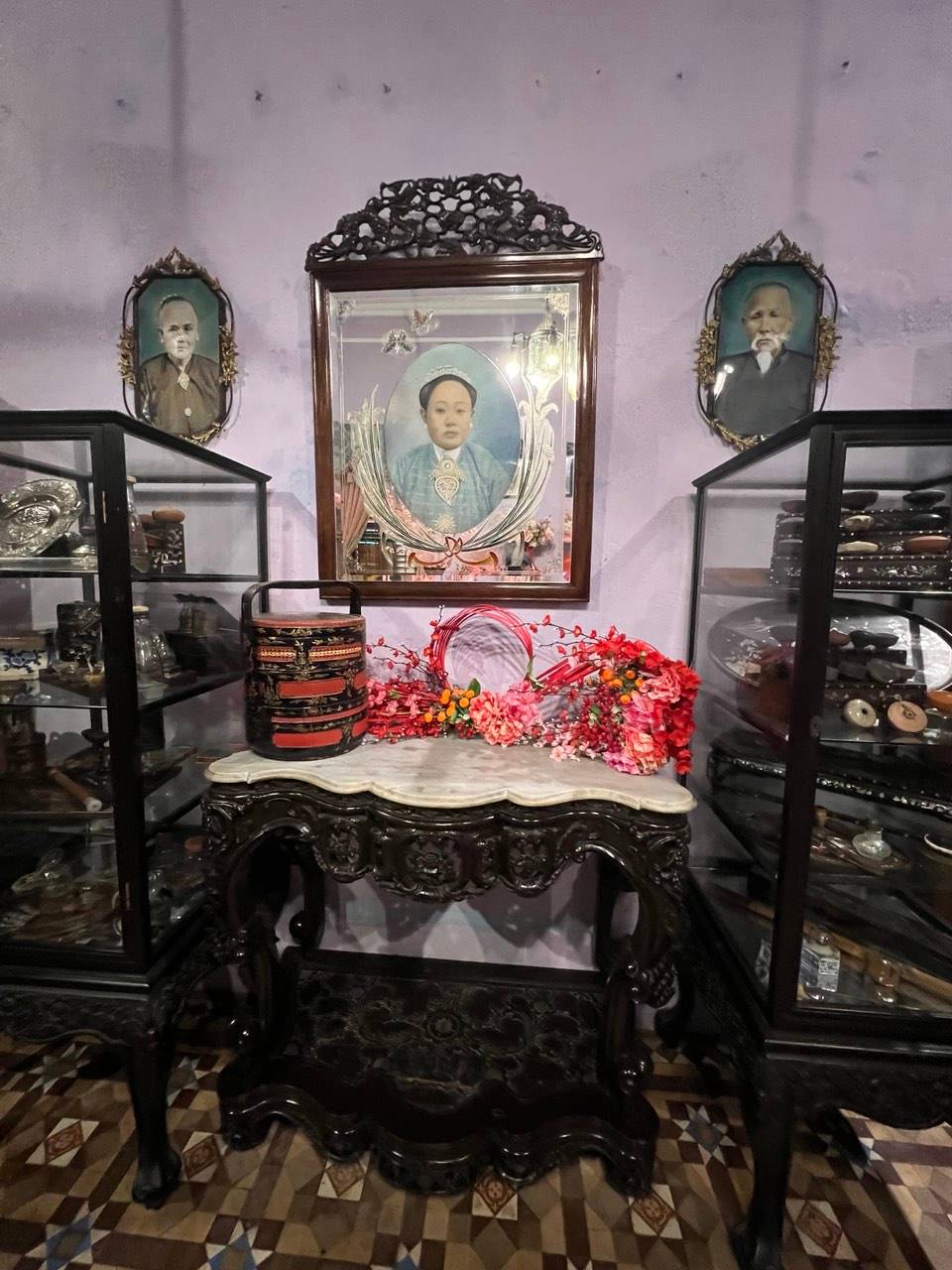
A SHRINE of Peranakan ancestors.
PHOTOGRAPHS by Edu Jarque for DAILY TRIBUNE
In my defense, the plain exterior did not exactly ring come-and-stay bells and whistles. The pedestrian entrance was little more than a simple gate, and from the outside there were few clues to suggest valuable treasures within, waiting to be discovered. Fighting for attention against several of Penang’s attractions, it was easy to walk past without a second glance. I certainly had!
On our most recent trip, however, circumstances were different. Our tour guide, the bubbly and endlessly entertaining — a supreme storyteller with a remarkable command of local history — whom we fondly called Wawa, graciously insisted that we simply should not skip the mansion. She would not take no for an answer. We almost protested. After all, we had already seen so many architectural gems and cultural landmarks around Penang. Surely we did not need to add another stop to an already packed schedule!
Wawa would hear none of it — thankfully!
The moment I crossed the threshold, I realized how mistaken I had been. The Pinang Peranakan Mansion faithfully recreated the home of a wealthy Baba from more than a century ago. It offered guests educational glimpses into lifestyles marked by elegance and refinement, luxury and affluence.
Before this stopover, I must admit I was largely ignorant of the term Peranakan. Like many travelers, I had heard the word in passing without fully understanding its significance. We soon found out the Peranakans, also known as the Babas for males and Nyonyas for the females, were descendants of Chinese settlers who married local Malay women in the Straits Settlements of Penang, Malacca and Singapore.
Over generations, they developed a distinctive culture which blended Chinese traditions with Malay customs. They even later absorbed elements of British colonial influence. The eventual result is a hybrid lifestyle unlike any other in Southeast Asia — complete with its own cuisine, language, fashion, customs and artistic expressions.
As we explored the mansion, I noticed local maidens in traditional eye-catching attires enthusiastically posing for photographs in favored spots. Their Nyonya-inspired ensemble was especially striking: a sarong wrapped elegantly below and a delicate lace blouse, often sheer and intricately embroidered as the top.
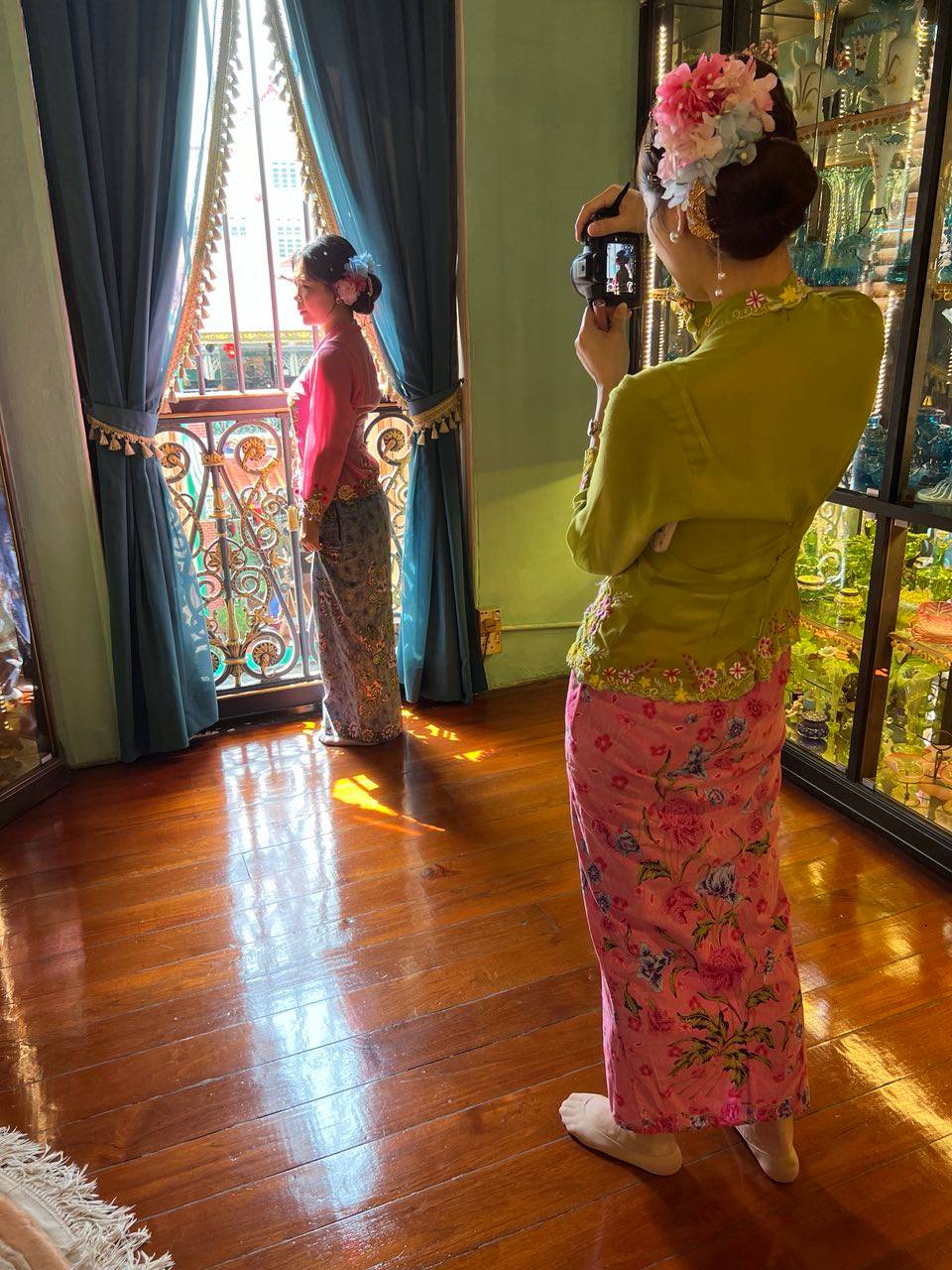
YOUNG maidens in traditional attire.
PHOTOGRAPHS by Edu Jarque for DAILY TRIBUNE
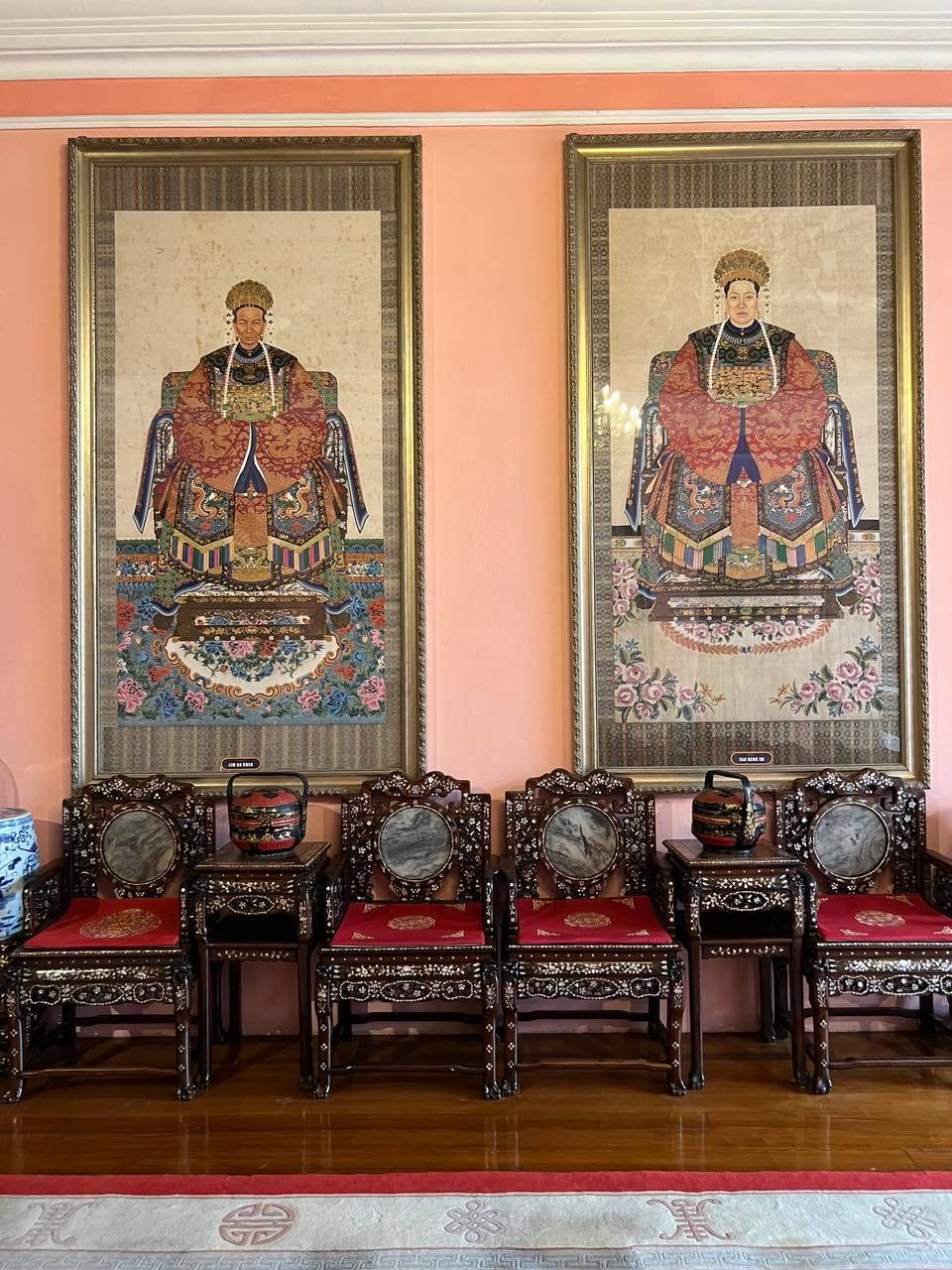
ORNATE furniture and portraits of forebears.
PHOTOGRAPHS by Edu Jarque for DAILY TRIBUNE
Yet clothing was only one aspect of Peranakan culture. The mansion itself was a showcase of their distinctive tastes. Every corner seemed designed to impress! Ornate carvings, elaborate furnishings, decorative motifs and gilded details competed for attention. However, surprisingly these all still coordinated amongst each other for a full, immersive experience.
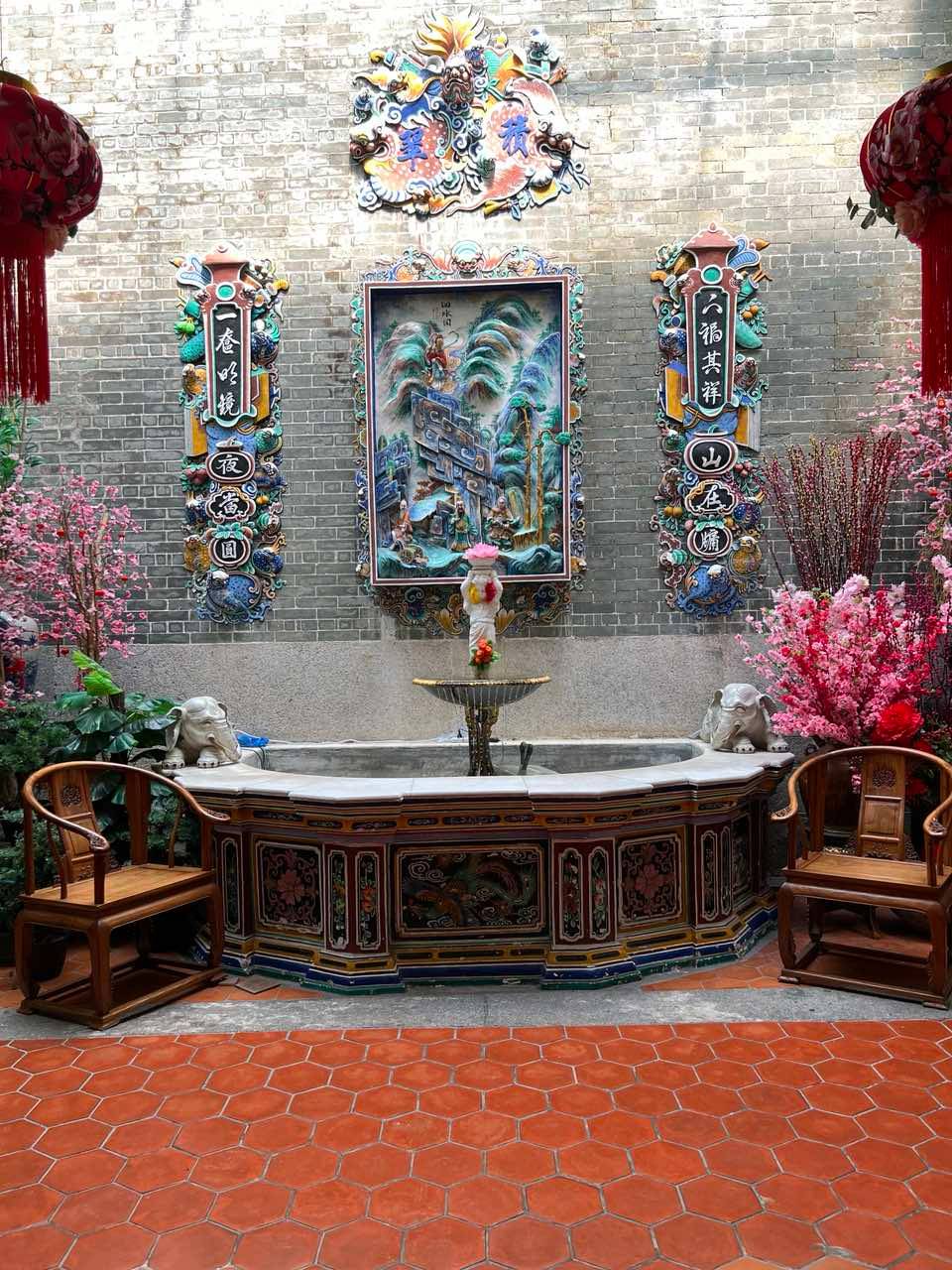
AN ornate fountain invites us to relax.
PHOTOGRAPHS by Edu Jarque for DAILY TRIBUNE
Among the numerous treasures, there were five spaces and features which particularly stood out for us:
1. The main courtyard
The courtyard was the first to greet us. Encircled by grand staircases, embellished balconies, and carved doors, it served as the heart of the mansion. Wawa explained the area was designed according to Feng Shui principles. Originally open to the sky, it allowed sunlight and positive energy to enter the home, while rainwater continues to be carefully collected through channels still visible today.
2. The dining hall
Across from the courtyard stood the impressive dining hall known as Tok Panjang. Feng Shui was once again considered — mirrors were strategically positioned so the head of the household, while seated, could simultaneously monitor the main entrance, a side access, and the staircase. The teak wood panels and aparadores full of European porcelain and statuettes intensified the room’s stately atmosphere.
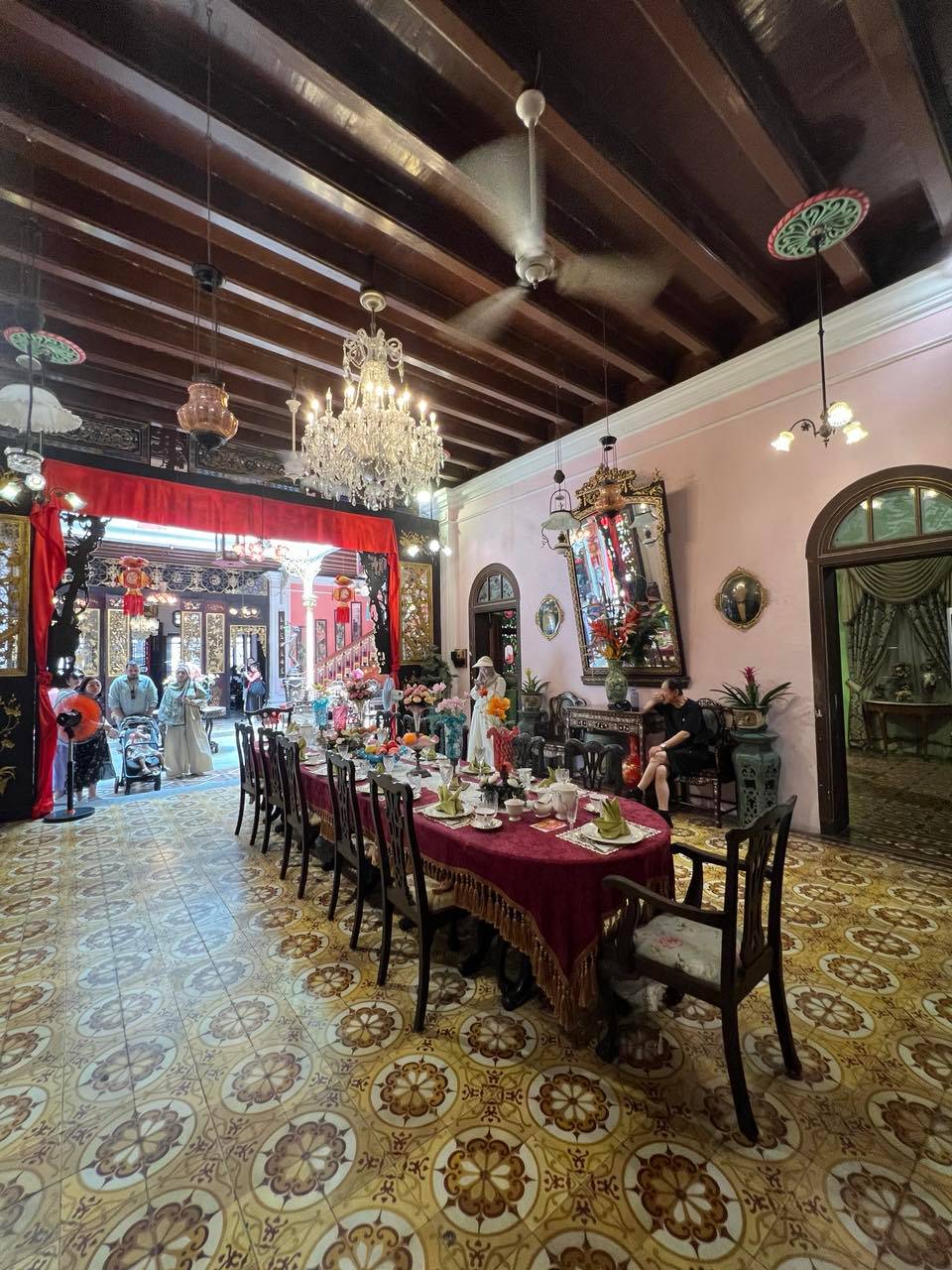
THE dining hall.
PHOTOGRAPHS by Edu Jarque for DAILY TRIBUNE
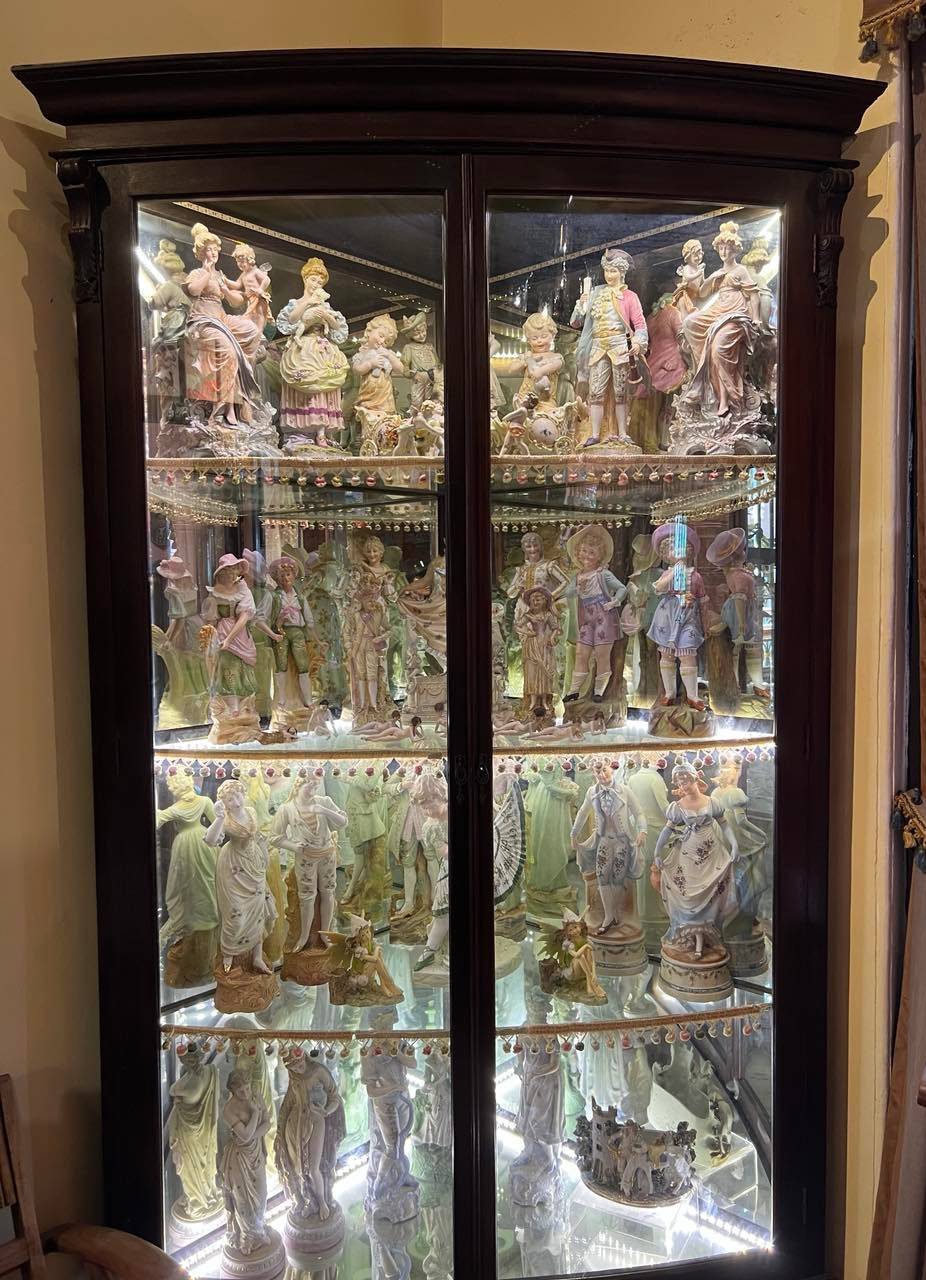
APARADOR bursting with European statuettes.
PHOTOGRAPHS by Edu Jarque for DAILY TRIBUNE
3. The Chinese partitions
Equally fascinating were Chinese partitions which split various sections. They provided privacy, particularly for the women. However, they likewise served a symbolic function. According to ancestral beliefs, they disrupted the paths of evil spirits and encouraged the flow of positive energy. Straight lines were avoided whenever possible. This explained the prevalence of curved edges which we continued to notice throughout the residence!
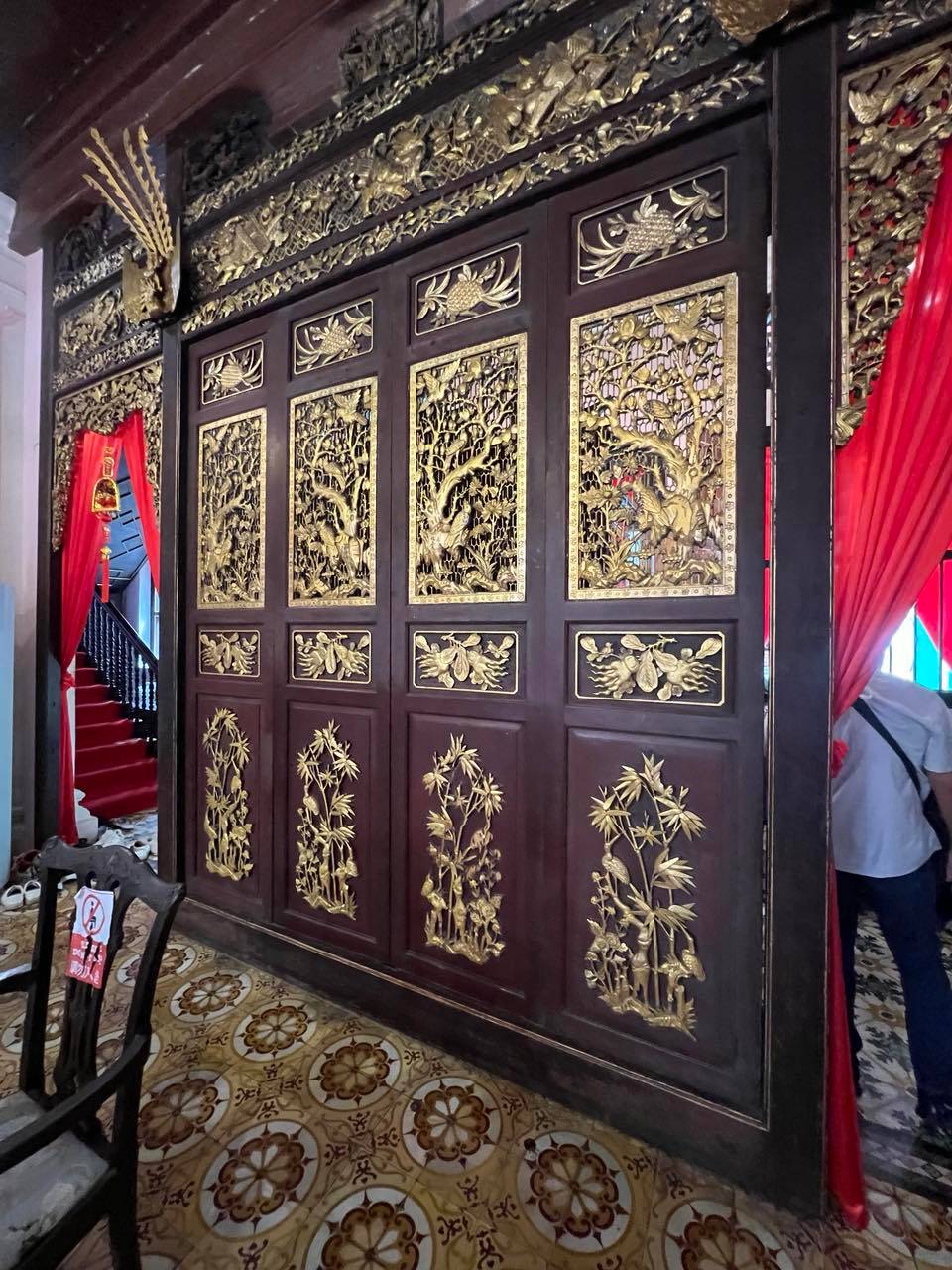
THE Chinese partitions.
PHOTOGRAPHS by Edu Jarque for DAILY TRIBUNE
4. The private quarters
The private chambers above revealed another layer of Peranakan life. Among the highlights of particular interest was the ceremonial marriage bed. Beneath it sat a small basket with a cock and a hen, part of an old custom associated with newlyweds. After the wedding night, whichever fowl emerged first was believed to predict the gender of the couple’s first child.
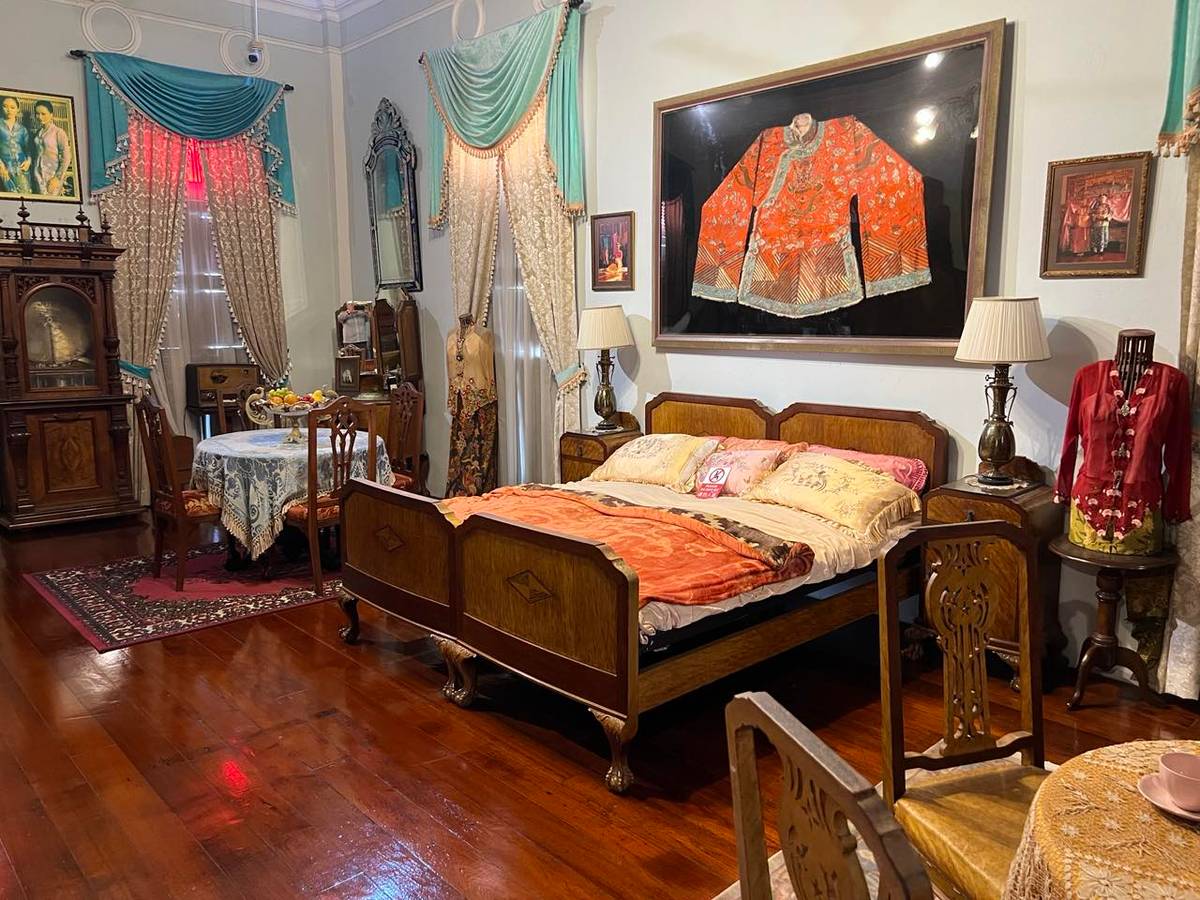
PRIVATE quarters.
PHOTOGRAPHS by Edu Jarque for DAILY TRIBUNE
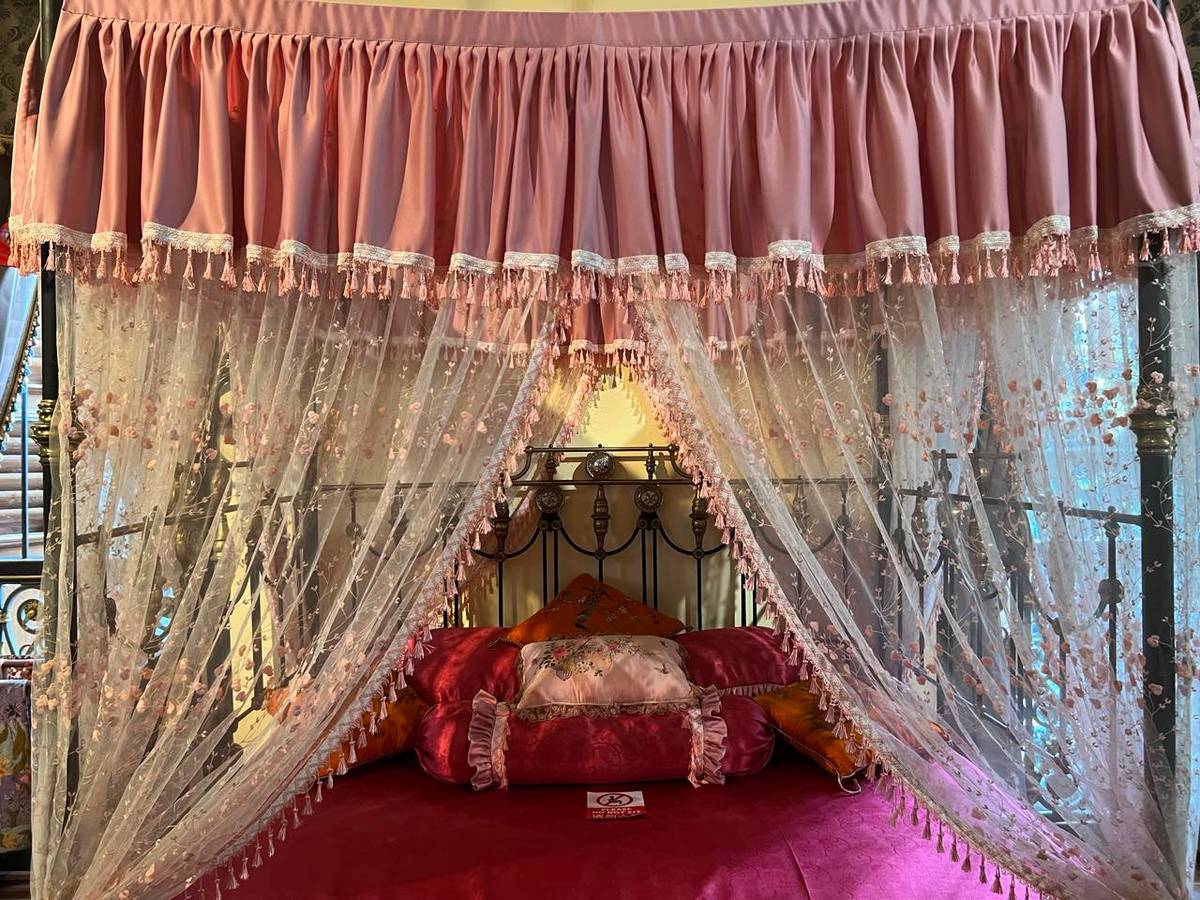
BED fit for royalty.
PHOTOGRAPHS by Edu Jarque for DAILY TRIBUNE
5. The furniture and decorative objects
I found myself lingering longest over the dozens of furniture. Every room seemed to contain a masterpiece. Exquisite chairs, framed mirrors, well-stocked cupboards and more all displayed astonishing craftsmanship. Delicate filigree work adorned many pieces, while rounded forms reflected the ever-present influence of Feng Shui. Meticulously scattered, with lots of study and care were porcelain vases, ivory carvings, and endless collections of treasured keepsakes.
I took a much-needed refuge by the elaborate fountain to process the entire walk.
By the end of the day, I absolutely understood why Wawa had been so determined — almost adamant, but still kind. From its language and cuisine to its architecture and customs, the Peranakan legacy remains alive in Penang. And for anyone tempted to pass that unassuming gate, I share the same advice as Wawa: step right in!