
Batu Caves : A pilgrim’s dream
Sad to say, years of developments, nearby industrial activities, and the steady streams of tourists have placed pressure on the ecosystem.


Some 13 kilometers north from the city of Kuala Lumpur, the exceptional highway narrowed into a road just enough to signal we were leaving the capital behind. Then limestone spires, sparingly covered in vegetation, convinced us we had arrived at the iconic Batu Caves.
The name, from the Malay word batu meaning rock, was definitely on-the-nose for a fabled destination which carried ancient layers of geology, history, and devotion in one take.
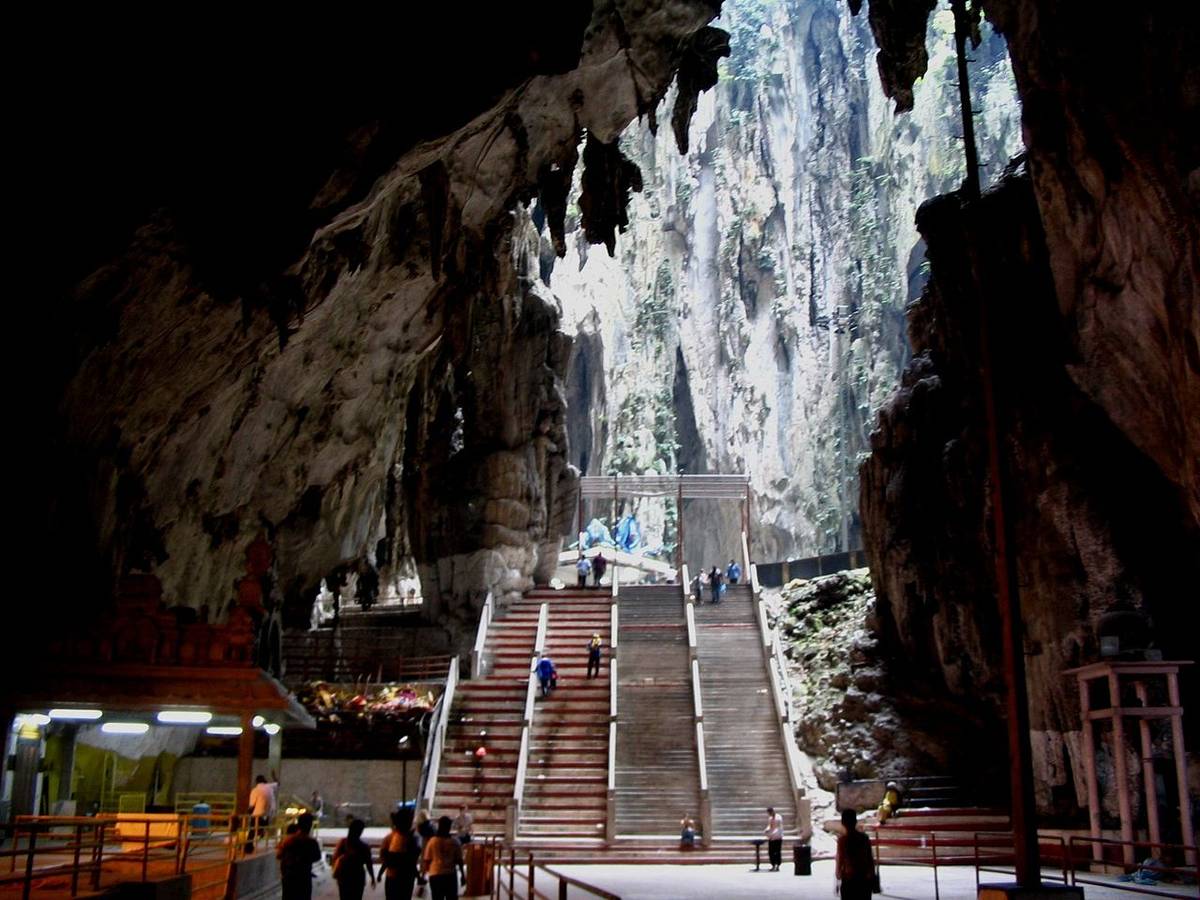
THE impressive interior of Batu Caves.
Photograph courtesy of Patrice78500/Wikimedia Commons
Upon arrival, we were immediately drawn into the glistening icon: the towering image of Lord Murugan, masterfully cast in bronze and gold, who watched over the town. He is the Hindu god of war — though the iconography leaned toward youth rather than glory. His young figure is often depicted beside a peacock, with the vel, the spear said to have been given by his mother, Parvati, the principal Hindu Goddess of power, love, beauty, devotion, and fertility. As we stood by the tallest statue in Malaysia — all of 43 meters — it proclaimed a clear sense of proportion: we were just mere incidentals — Lord Murugan was the star.
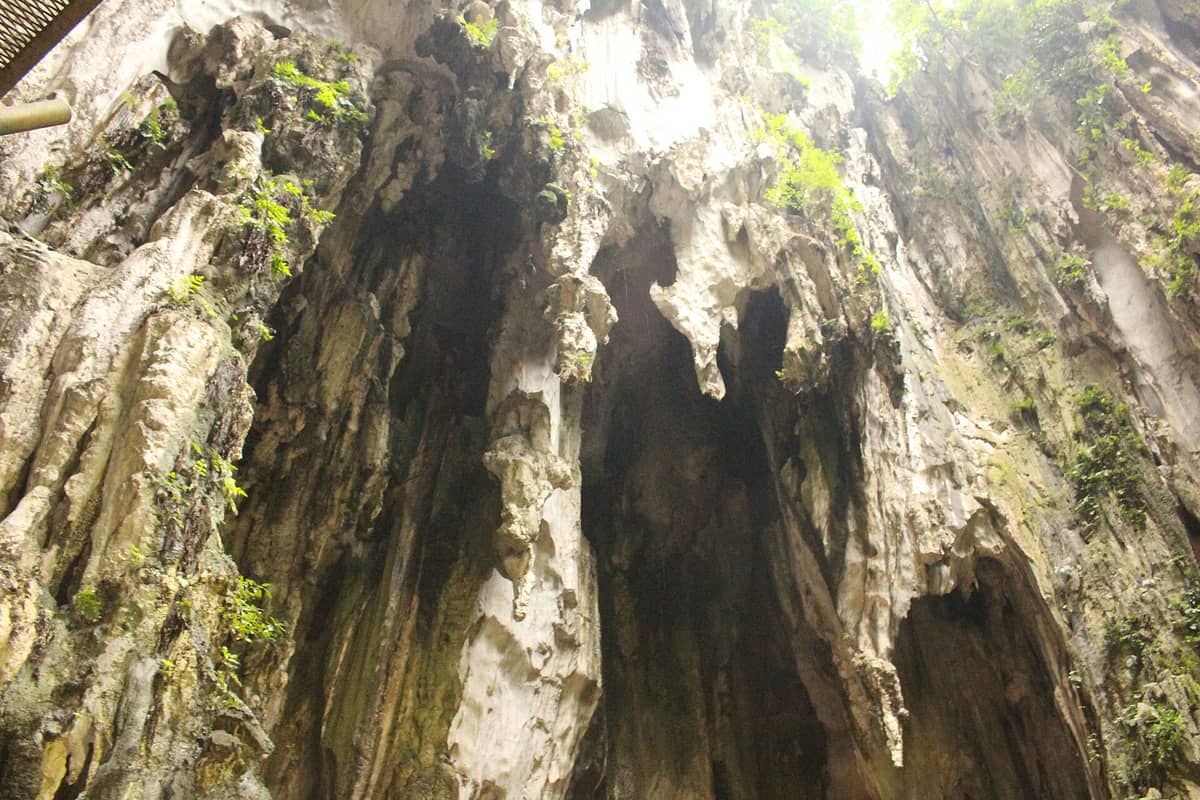
JAGGED limestone formation embrace the sacred area.
Photograph courtesy of Mithun Ahamed/CC BY-SA 4.0
We soon found out the pathway beside had 272 steps — I repeat, 272 steps! — painted in unapologetic bands of color, the so-called rainbow staircase has become a favorite topic online, though in person it felt less curated and more lived-in. The steep climb demanded a certain stamina and undeniable patience, especially under the cloudless sky summer heat. Are you ready with your cap, portable fan, bottled ice-cold water and handy towel?
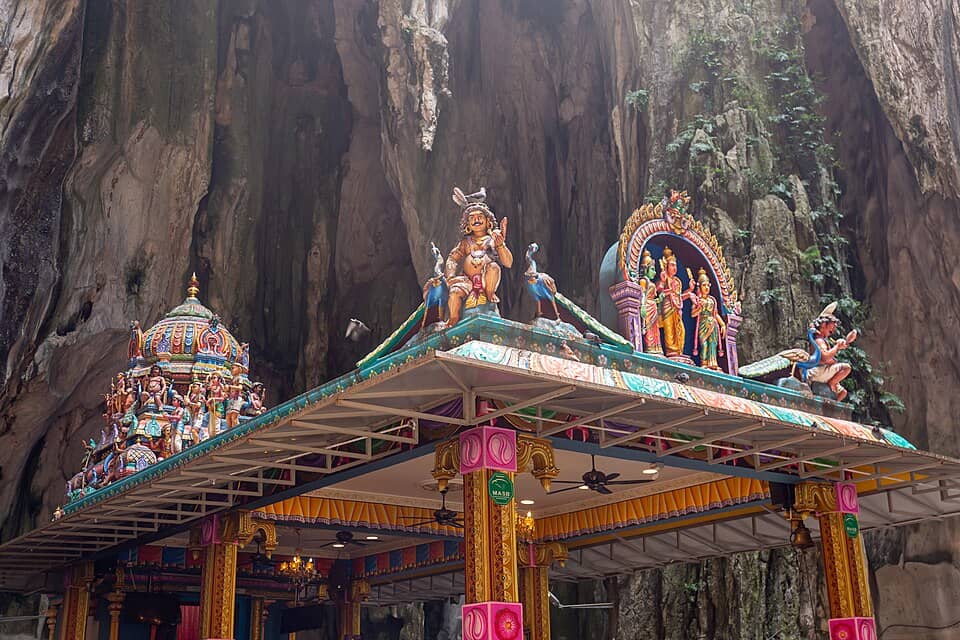
THE Main Temple of The Batu Caves.
The two youngest, most-fit travel buddies accepted the challenge — and we sent them off with all good wishes. They soon reported ala Antonio Pigafetta — remember Ferdinand Magellan’s faithful chronicler?
Here’s what we found out: inside the main Temple Cave, the ceiling opens high above, cathedral-like but without symmetry. The caves themselves are estimated to be more than 400 million years old, shaped through the slow drip of water dissolving limestone and leaving behind formations which seemed both delicate and permanent. Interesting stalactites hung from above, while intriguing stalagmites pushed upward from the ground, meeting in places where time had allowed them to.
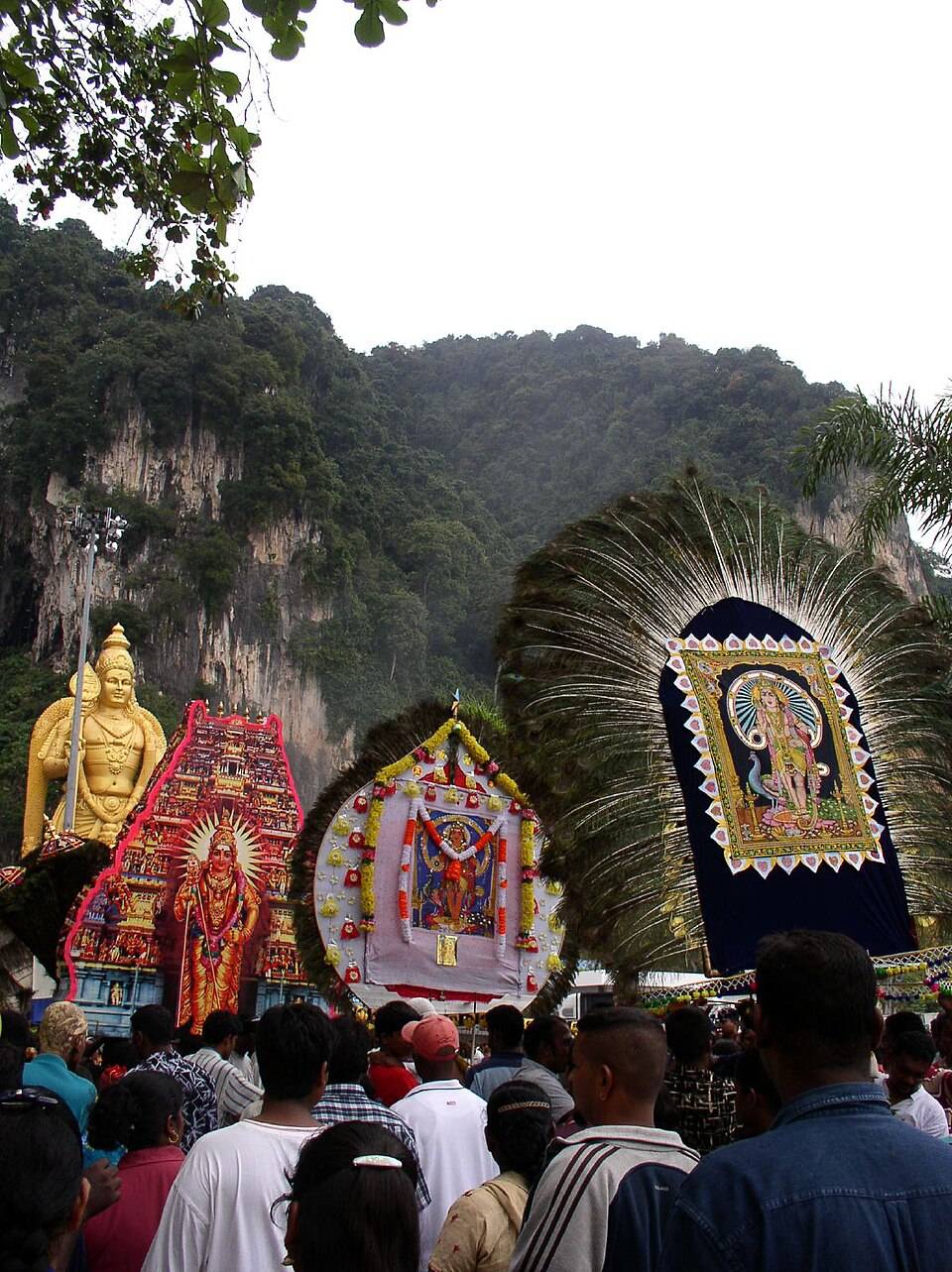
PROCESSION of Lord Murugan idols during a Thaipusam festival celebration.
Light filtered in through natural openings, giving the space a shifting brightness which changed as clouds gilded overhead.
The caves held another layer which was easy to overlook. The entire system is considered a biodiversity hotspot, home to hundreds of plant species, many of which have adapted specifically to limestone environments.
There are bats — 21 species recorded, our emissaries were reminded — and smaller, less visible inhabitants, including endemic creatures like Liphistius batuensis, a trapdoor spider found only in this area.
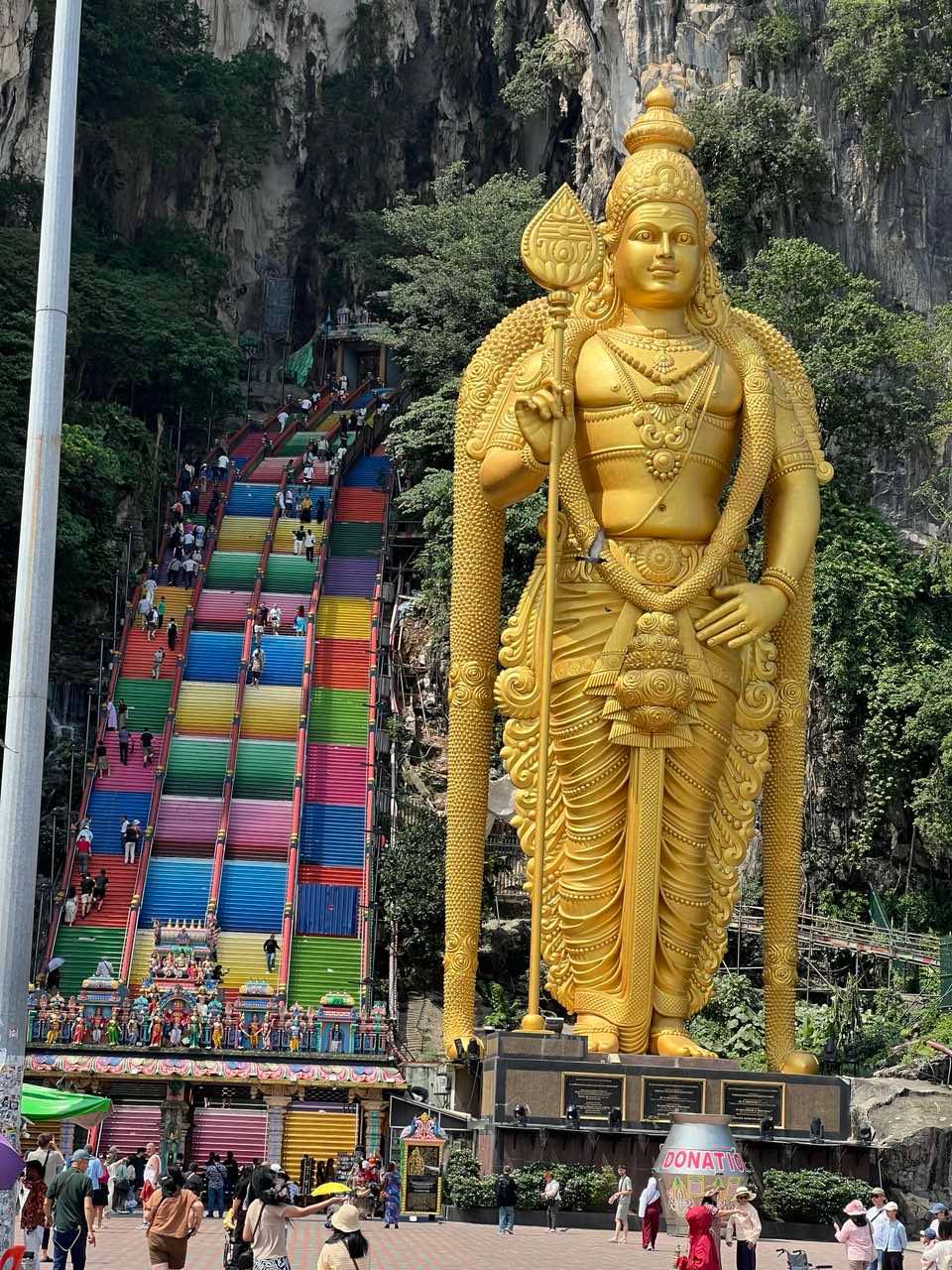
THE towering image of Lord Murugan in bronze and gold by the 272 steps to reach the cave.
There is a tiny gift shop tucked at the top — postcards, trinkets, the usual take-me-home reminders — which feels but a small addition to the cavern.
From our tour guide, we learned more on the history of the area. Long before it became a religious site, the caves had served as shelter for the Temuans, part of the Orang Asli communities. In the 1860s, Chinese settlers extracted guano, to be used as fertilizer.
It was only much later, through the efforts of K. Thamboosamy, a respected leader of the Tamil community, the site was established as a center of Hindu worship. A temple dedicated to Lord Murugan was completed in 1891. And by the following year, the first Thaipusam festival was commemorated and celebrated.
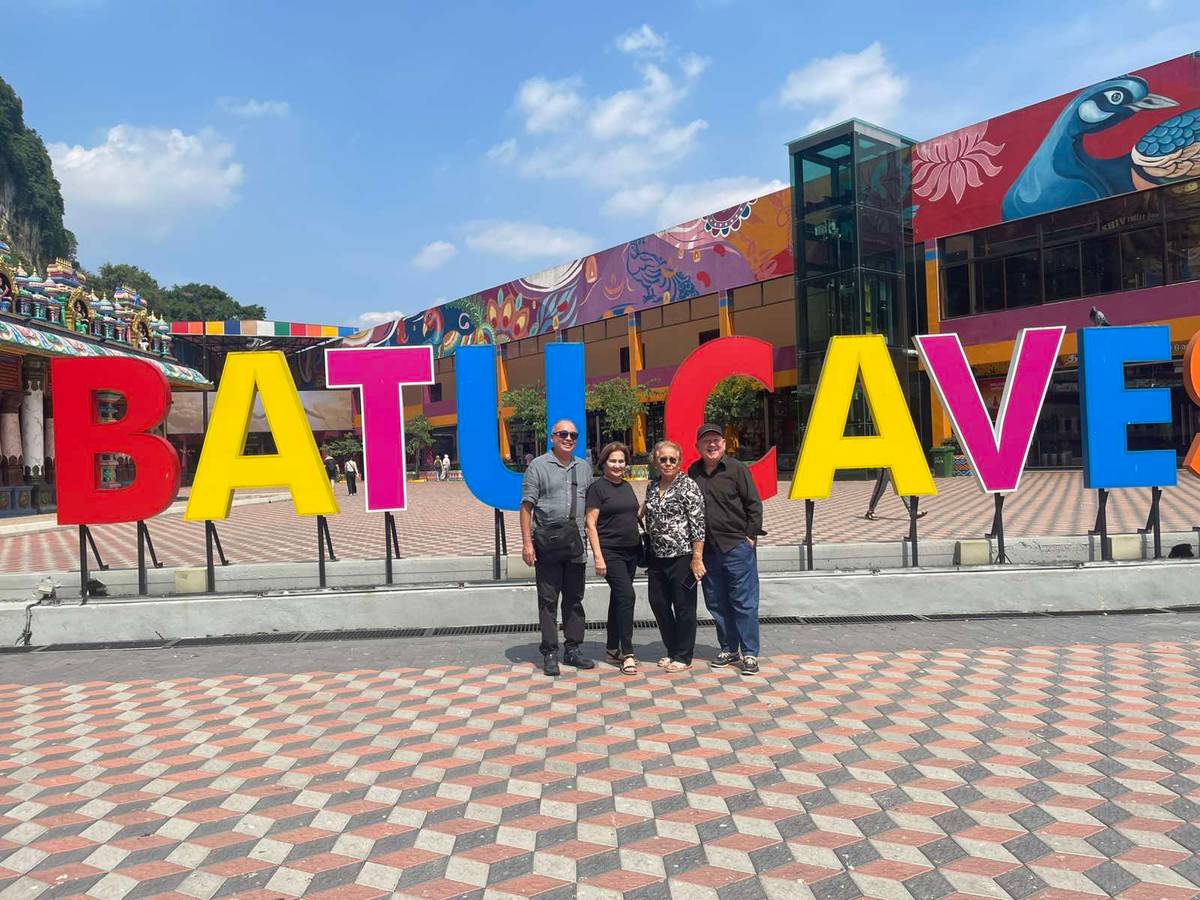
THE author (rightmost) with traveling buddies.
Meanwhile, back down at the base of the hill, the experience branched out into a fragmented, more curated expanse. The Cave Villa complex, which includes the Art Gallery Cave and Museum Cave, presented scenes from Hindu mythology, many of which centered on Lord Murugan’s life.
To the left stood the Ramayana Cave, where painted panels and statues retold episodes from the familiar Ramayana. They were more interpretive, guiding visitors through narratives — we felt it could have been an ideal first stop for the uninitiated.
My travelling buddies and I were likewise made aware of the Thaipusam Festival. Every year, during the first full moon of the Tamil month of Thai, the caves become the focal point of a massive pilgrimage.
Devotees begin in Kuala Lumpur, carrying kavadis — physical burdens which symbolize offerings or acts of devotion — and make their way to the caves on foot. The sacrifice, known as Kavadi Aattam, is both personal and communal, with millions taking part, specially on the second day when pilgrims finally descend on the temple grounds.
For those thrill seekers — as if going into eons-old caves was not enough — the limestone outskirts likewise offer rock climbing routes, particularly along the Damai Caves on the northeastern side. Nearly 160 routes have been established, some rising as high as 150 meters, with guided climbs and spelunking trips organized locally.
Near the end of the day, our tour guide summed it all up — sad to say, years of developments, nearby industrial activities, and the steady streams of tourists have placed pressure on the ecosystem. Litter here and there, normal wear and tear, disturbances to the cycles of the flora and fauna. And so, he asked for one final favor: to request future visitors the grace and kindness to gently amble, without much intrusion around the area.