
Facing the final curtain
In the Senate, those words now echo the uncertainty over Senator Alan Peter Cayetano’s grip on the chamber’s top post.

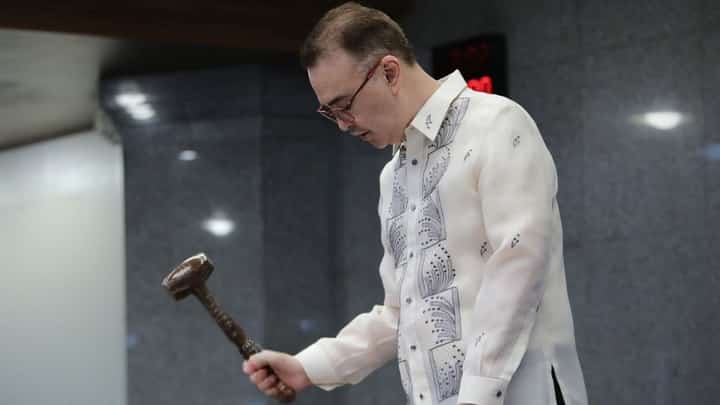
When Frank Sinatra sang the opening lines of his famous song My Way — “And now, the end is near, and so I face the final curtain” — he captured the tension that often marks political endings.
In the Senate, those words now echo the uncertainty over Senator Alan Peter Cayetano’s grip on the chamber’s top post.
The standoff has reached a clear impasse. While Cayetano’s proposed interim power-sharing arrangement with Acting Senate President Sherwin “Win” Gatchalian — including a dual-signature requirement for official Senate documents — was presented as a way to avoid administrative confusion, it also underscored how contested his authority has now become.
Gatchalian’s bloc rejected the proposal, arguing that the Senate cannot function under two competing authorities. From an institutional standpoint, that argument is difficult to dismiss. Legislative leadership requires clarity, and any arrangement that blurs authority risks deepening, not resolving, uncertainty.
There is also a legal and political consideration: accepting the proposal could be read as recognizing Cayetano’s continuing claim to the Senate presidency, even after the 3 June session in which a new majority declared all leadership posts vacant and elevated Gatchalian as Acting Senate President.
That context makes the timing of Cayetano’s overture difficult to ignore. Since taking the Senate presidency on 11 May, he did not initially seek accommodation with the opposition. Instead, his leadership quickly became polarizing, with exchanges between his allies and the opposing bloc further hardening the division within the chamber.
The timing of the proposal is revealing. Its late emergence suggests that the balance in the chamber has shifted and Cayetano’s room to maneuver has narrowed. More than a formula for stability, it reflects his diminished leverage — an effort to preserve a role for his camp while the leadership question remains unresolved.
In the Senate, its leadership ultimately turns on numbers, and those numbers no longer favor Cayetano. On 3 June, 12 senators formed a quorum, declared the leadership posts vacant and elevated Gatchalian to acting Senate President — a move later recognized by Malacañang and the House of Representatives as consistent with law and the democratic process.
That is why the reports of new minority Senator Joel Villanueva’s imminent transfer to the other side matters. If he joins Gatchalian’s bloc, he would provide the 13th vote required to elect a Senate President outright. Until then, the chamber remains suspended between an acting arrangement and a contested leadership claim.
The distinction is crucial. Under the legal theory invoked on 3 June, and given that two senators (Bato dela Rosa and Jinggoy Estrada) are unable to function, 12 senators may constitute a quorum and reorganize the chamber. But 13 votes are still needed to elect a Senate President. That single vote is the line between uncertainty and finality.
If that threshold is reached, the dispute becomes difficult to sustain. The question would no longer be whether Cayetano can contest the current arrangement, but whether any credible claim remains. In that sense, reports of Villanueva’s shift matter not as gossip, but as an indicator of how close the Senate may be to a decisive realignment.
Viewed more broadly, this is no longer just a contest over one politician’s survival or a struggle between rival blocs. It is a test of whether the Senate can restore its clarity, integrity and the public’s confidence. The chamber can function for a time in ambiguity, but it cannot lead through it indefinitely.
That is what gives Sinatra’s My Way its force here: in politics, the end often says as much about a leader as the fight to stay in power.