
Sen. Chiz triggers Senate shake-up
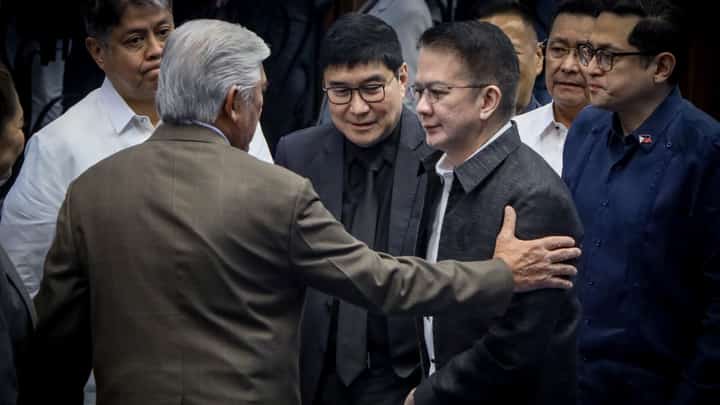
Senator Francis “Chiz” Escudero’s exit from the Senate majority bloc sparks a dramatic leadership shake-up and power realignment, as he denounces an “untenable and unacceptable” political impasse and vows to put the institution’s constitutional duties above factional loyalties.
Photo by Aram Lascano for DAILY TRIBUNE
Senator Francis “Chiz” Escudero on Wednesday defended his decision to leave the Senate majority bloc, declaring that the chamber's deepening political standoff had become “untenable and unacceptable” and was already undermining its ability to perform its constitutional duties.
In a statement issued amid the escalating leadership crisis in the Senate, Escudero said the chamber could no longer remain trapped in a political deadlock that has divided senators and disrupted normal operations.
“The current impasse in the Senate is untenable and unacceptable,” Escudero said.
His move proved pivotal in reshaping the balance of power inside the chamber, triggering a dramatic realignment that led to the emergence of a new majority bloc and intensified an already bitter confrontation between rival factions.
The political fallout was immediate.
Following Escudero's decision to cross from the bloc led by Senate President Alan Peter Cayetano, senators convened a caucus that resulted in the election of Senator Sherwin Gatchalian as Senate President Pro Tempore.
The development further escalated tensions inside the Senate, where competing camps have advanced rival claims over the chamber's leadership and direction.
Malacañang later weighed in on the unfolding dispute, saying it recognizes and respects the decision of the new majority and the leadership of Acting Senate President Sherwin Gatchalian.
Despite the realignment, Cayetano has maintained that he remains the legitimate Senate President of the Republic and has insisted that Senate operations will continue uninterrupted.
On Wednesday, Cayetano confirmed that the Senate Blue Ribbon Committee hearing scheduled for 4 June would proceed as planned.
Escudero rejected suggestions that his decision was driven by political loyalties or factional interests, insisting that his actions were motivated by a desire to protect the institution.
“When political divisions become too extreme and obstruct our mandate, we must all have the courage to pause, gain perspective, reflect, consider and realize that we should put the Senate, as the institution that we serve, above ourselves,” he said.
“This is not a political contest. I am not taking sides. I am taking a stand for the Senate.”
The senator stressed that his allegiance was not to any political bloc, personality or alliance but to the institution itself.
“My allegiance is not to any faction, personality, group or alliance. This is not about loyalty, betrayal, or choosing one group over the other—this is about duty,” he said.
Escudero also pushed back against claims that his decision was intended to favor one camp over another.
“Hindi ito usaping pampulitika. Wala akong sinasamahan o iniiwanang grupo, pangkat o paksyon. Hindi ko sinasabi na may mali o tama o may nagkulang o nagmalabis kaninuman,” he said.
“Ngunit hindi pwedeng manatili tayo sa ganitong sitwasyon. Ang naaapektuhan na ay ang mismong kakayahan ng Senado na gampanan ang kaniyang tungkulin sa bayan.”
The senator's statement underscored the growing concern that the continuing leadership dispute could hamper the Senate's ability to focus on legislation, oversight, and other constitutional responsibilities.
His remarks also highlighted what has become the central argument of those calling for a resolution to the impasse: that the institution itself risks becoming the biggest casualty of the conflict.
Escudero said the Senate's ability to serve the public must take precedence over political rivalries and internal divisions.
“Ito ang rason at dahilan ng aking pasya ngayong araw na ito,” he said.
“Hinihiling ko ang inyong pag-unawa sa amin, kasabay ng inyong panalangin para sa inyong Senado na malampasan ang hamon na ito at patuloy na magampanan namin ang aming tungkulin sa inyo at sa sambayanan.”