
SOVEREIGNTY CLUB
Ukraine and the Philippines are expanding cooperation in agriculture, labor, energy security and digitalization, reflecting rapidly deepening ties since Kyiv opened its embassy in Manila in 2024.

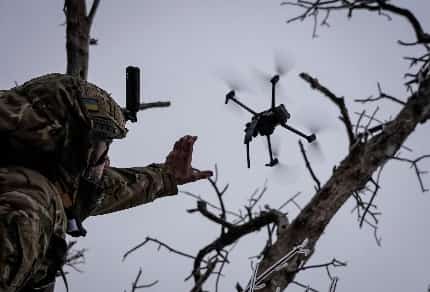
A Ukrainian soldier launches a kamikaze FPV attack drone near the front line in Bakhmut, Ukraine, in 2023. As Kyiv expands ties beyond Europe, drone technology has become one of several areas of potential cooperation between Ukraine and the Philippines.
Courtesy of Reuters
Ukraine is seeking to expand cooperation with the Philippines in agriculture, energy security, labor, digitalization, defense technology as the two countries deepen relations two years after Kyiv established its first embassy in Manila.
Speaking before students and faculty at the University of Southeastern Philippines in a recent visit to Davao City, Ukrainian Ambassador Yuliia Fediv said Ukraine sees growing opportunities for engagement with the Philippines as it continues to confront the economic and human costs of Russia’s invasion while building new partnerships outside Europe.
The International Forum on Ukraine-Philippines Relations in a Changing Global Order came as relations between Manila and Kyiv have broadened significantly since Ukrainian President Volodymyr Zelenskyy visited the Philippines in 2024 and opened an embassy for the first time since the two countries established diplomatic relations in 1992.
In a call last year, Marcos and Zelenskyy discussed cooperation in food security, agriculture and digitalization. They also explored ways to strengthen ties between Ukraine and Asean as the Philippines prepares to assume the chairmanship.
Last year, Ukrainian and Philippine officials discussed a defense technology cooperation agreement that could include joint drone production.
Ukraine has become a major developer of military drone technology during the war, using unmanned aerial vehicles and uncrewed surface vessels extensively against Russian forces.
Analysts say Ukraine’s experience has attracted interest from Philippine defense planners as Manila accelerates military modernization amid continuing tensions with China in the West Philippine Sea.
The Philippines has strengthened defense ties with several countries in recent years while seeking new technologies for maritime surveillance and deterrence.
Philippine and American forces conduct counter-drone drills, while the Philippine Air Force unveiled domestically-developed armed drones as part of its self-reliant defense program in recent Balikatan exercises.
Fediv’s visit also came months after a wartime case involving a Filipino citizen highlighted the growing practical demands of the relationship.
In February, Senator Erwin Tulfo met with the ambassador to discuss the case of Raymon Santos Gumangan, a Filipino captured by Ukrainian forces last year and held as a prisoner of war.
Following the meeting, Tulfo called for a formal bilateral framework between Manila and Kyiv, saying the case exposed the absence of established mechanisms for handling humanitarian and legal issues involving Filipinos caught in the conflict.
Fediv said efforts were being made to facilitate communication between Gumangan and his family but noted that the absence of a specific bilateral agreement complicated such cases.
Tulfo also raised concerns about Filipino seafarers working aboard vessels operating in areas affected by the war.
Since Russia’s full-scale invasion began in February 2022, the Department of Foreign Affairs has maintained Alert Level 4 over Ukraine, prohibiting the deployment of Filipino workers to the country.
The World Bank and the United Nations estimate the war has caused approximately $195 billion in damage and that reconstruction could require around $600 billion.
Fediv said rebuilding would involve not only restoring infrastructure but also addressing the long-term social and psychological consequences of the conflict.
She said Ukraine continues to bring its case before the international community because the conflict raises broader questions about sovereignty and the effectiveness of international law.