
In Bohol, discovery is not rushed

Travel today is increasingly shaped by intention — seeking destinations that inspire while encouraging more mindful ways of exploring. In Bohol, this comes to life through experiences that connect visitors not only to places, but to the island’s deeper stories of nature, resilience, and conservation.
Recognized in 2023 as the Philippines’ first UNESCO Global Geopark, Bohol showcases a 150-million-year geological history across rolling hills, limestone formations, forests, and coastal ecosystems. Its most iconic landmark, the Chocolate Hills, features more than 1,200 cone-shaped formations that turn brown during the dry season. Beyond their striking appearance, these hills reveal the island’s ancient marine origins, formed from uplifted coral deposits over millions of years.
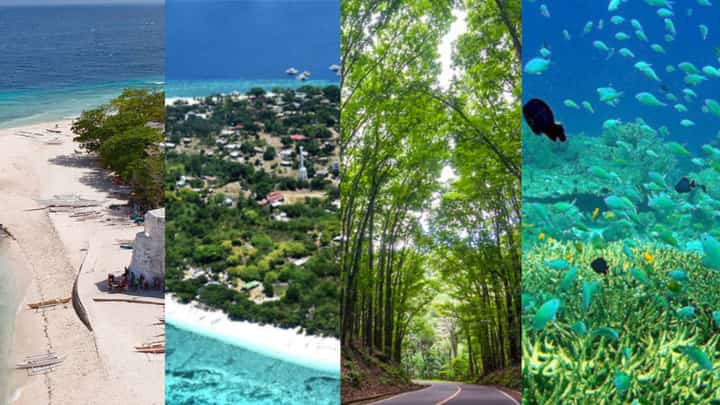
The Bilar Man-Made Forest offers another perspective on Bohol’s natural heritage. Stretching along the road between Loboc and Bilar, the dense mahogany forest traces back to reforestation efforts in the 1940s and 1950s following environmental damage caused by World War II. Established through collaboration between government and private stakeholders, the project aimed to prevent soil erosion and protect the Loboc River watershed. Today, it stands as a lasting example of environmental stewardship.
Off Bohol’s coast lies the Danajon Double Barrier Reef, one of only six known double barrier reef systems in the world. Its shallow waters support diverse marine life while sustaining nearby coastal communities, highlighting the balance between conservation and livelihood.
That same balance is evident in Pamilacan Island, where former whale-hunting communities now lead responsible dolphin and whale-watching tours. The shift has created sustainable livelihoods while helping protect marine ecosystems. Nearby Balicasag Island remains one of Bohol’s premier diving and snorkeling destinations, known for thriving coral reefs, sea turtles and abundant tropical fish.
Mindful exploration begins upon arrival at Bohol–Panglao International Airport, the country’s first eco-airport. Designed with sustainability at its core, the airport uses natural ventilation, solar energy, rainwater collection systems, and expansive green spaces to reduce environmental impact.
From its geological landscapes to its marine sanctuaries, Bohol is best experienced at a slower pace — where forests, reefs, and rolling hills reveal the island’s distinct character. Here, discovery comes naturally when travel allows space to truly take it in.