




Claiming what’s ours
Much can still be done to increase production, standardize quality and ensure priority crops are scaled to meet global demand.

Text size
Much can still be done to increase production, standardize quality and ensure priority crops are scaled to meet global demand.
If only our legislators would pause from their self-imposed dramas, they might want to smell the calamansi and do something for our country.
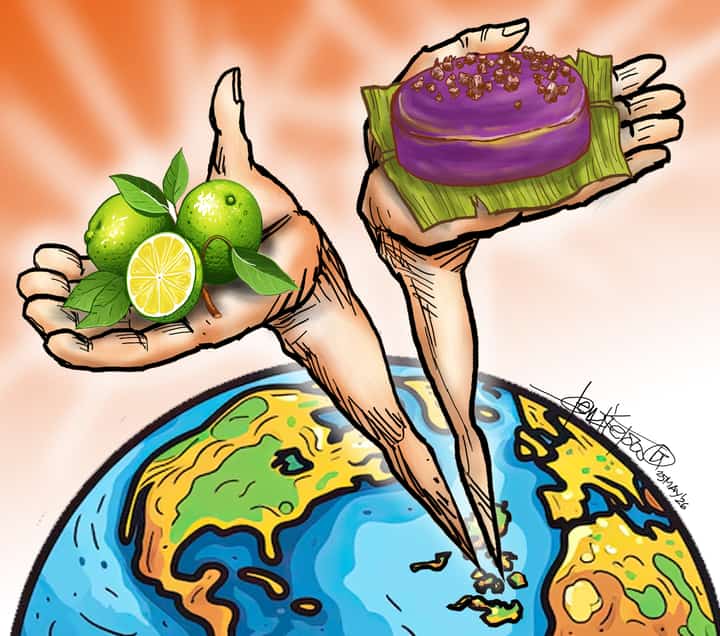
Like the humble ube, the Philippines’ calamansi is beginning to rise in stature on the global food scene. And like the purple yam, calamansi suffers from a remarkably similar economic and cultural quandary.
While these Filipino backyard staples have become highly sought-after global commodities, the country’s ube and calamansi industries face a massive paradox: booming international demand versus local production declines, supply-chain exploitation and the potential erasure of their Filipino identity.
For us Filipinos, rich or poor, the chance to shine on the global stage is grasped eagerly, living as we do with daily disappointments, not least of which come from our own leadership. The last two weeks alone have filled us with shame, as we witnessed massive displays of self-absorption from those we entrusted to lead us toward progress.
So even as Trade Secretary Cristina Roque hails the growth of Philippine exports of agricultural products, citing coconut, ube, among others, as superstars, one must ponder how the government is addressing the challenges in production and branding.
It is widely acknowledged that ube has exploded into a multimillion-dollar global phenomenon. Its “purple reign” was driven by social media aesthetic trends, with some even calling it the “new matcha.” Yet production is low due to climate change, typhoons and fragmented backyard farming setups. Fragmented might even describe the way our leaders approach development in this country.
But if matcha is definitely associated with Japan, ube has yet to attain immediate recognition of its Filipino roots.
Filipino cuisine has been gaining attention on the global stage, from sinigang to lumpia and now the photogenic purple delight that is ube, featured prominently on international menus, including lattes in Paris, pastries in London and doughnuts in New York.
But long before international café culture embraced it, ube had been deeply woven into Philippine cultural identity for centuries. Ube halaya is among our nostalgic comfort foods, puto bumbong a traditional holiday treat and everyday merienda. A spoonful of ube crowns our halo-halo, and it is popularly given as pasalubong from Baguio in bottles sold by nuns. Making this purple treat is a labor of love, requiring continuous stirring and immense patience.
As foreign cafés and food manufacturers rush to capitalize on the trend, there is an ongoing discourse that ube is losing its Filipino identity abroad. Many global consumers and multinational chains present “ube-inspired” products — sometimes substituting sweet potatoes or taro — without acknowledging the ingredient’s Philippine roots. By capitalizing on its color or aesthetics instead of its authentic taste, often due to the unavailability of the real tuber, ube might eventually lose its identity and cultural significance for Filipinos.
To be fair, legislative action, such as the proposed “Ube Bill,” has been taken to secure geographical indications and intellectual property rights, much like Japan has done with matcha. But then again, the Department of Tourism has its work cut out to build the brand image of our own ube and calamansi.
Just as ube is often genericized abroad, calamansi is heavily rebranded in Western and Asian markets under its scientific name, “calamondin,” or vague terms such as “Panama lime” and “Philippine lime.” Foreign consumers frequently buy premium calamansi-infused cocktails, gourmet sauces and skincare products without ever realizing the crop is a cultural cornerstone of Filipino cuisine.
At the same time, the agriculture budget should be revisited so that proper funding goes to the production and development of high-demand products, or we might end up importing from a neighboring country again something we can readily produce.
Much can still be done to increase production, standardize quality and ensure priority crops are scaled to meet global demand.
While the country grapples with rot in politics, and some of our politicians continue to wrangle among themselves, perhaps full attention can be given to growing something good enough to claim as our own.
Before politics, the pressures of public life, and the Presidential Palace, Ferdinand “Bongbong” Marcos Jr. remembers a…
When a Tennessee woman was sentenced to death in 1996 for murdering a 19-year-old student the year before, she remained…
Records from the Anti-Money Laundering Council (AMLC) showed that Cale88 Foods Corp., a firm linked to Vice President…
