
Philippine giant clamshells spotted in Spanish churches


This year marks the centennial death anniversary of “God’s Architect” Antoni Gaudí, declared a “Venerable” (into the second step to sainthood) by Pope Francis on 14 April 2025 before the pope died.
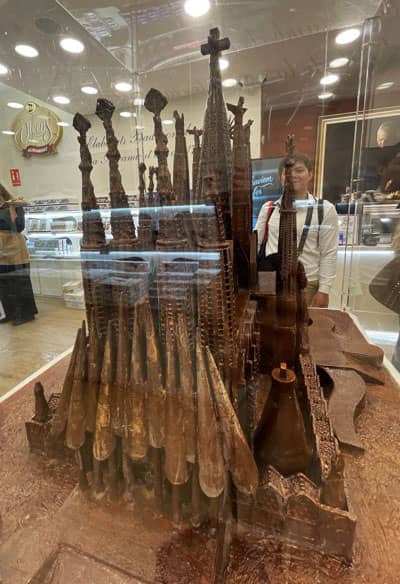
THE Sagrada rendered in chocolate by artist Adrian Ramirez.
The renowned Catalan architect, best-known for designing the iconic La Sagrada Família in Barcelona, Spain, knew that his magnum opus could not be finished in his lifetime, so he left his designs and instructions for four generations to follow. Now, eight generations have worked on the Unesco (United Nations Educational, Scientific and Cultural Organization) World Heritage-listed Roman Catholic basilica and it is still not finished. But at least Gaudi’s instruction and request to have giant clamshells as the basilica’s holy water fonts has been fulfilled — thanks to donations from the Philippines.
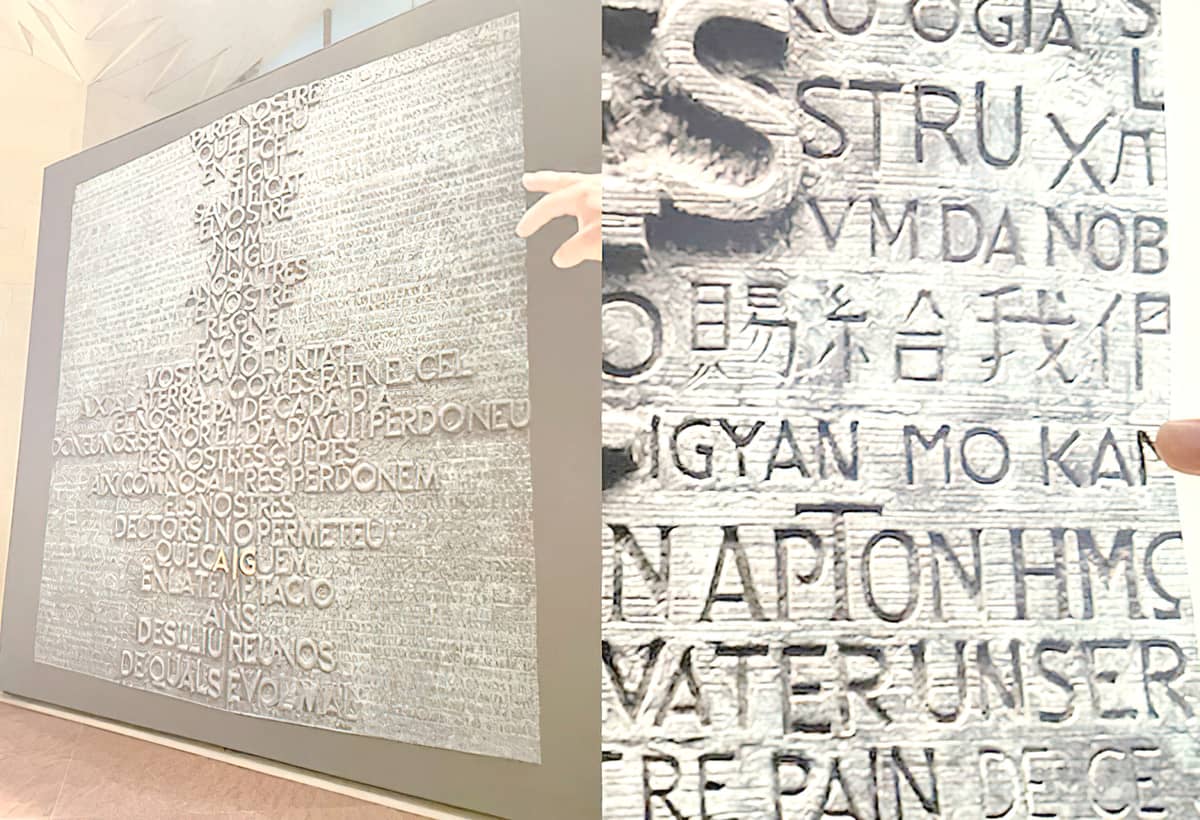
A LINE from the Filipino ‘Our Father’ is sculpted on La Sagrada’s doors.
On 16 September 2010, H.E. Eduardo José A. de Vega, who served as the Philippines’ Consul General to Barcelona, Spain from 2008 to 2011, formally made the donation of six Philippine giant clam shells or taklobo (Tridacna gigas) holy water fonts to the representatives of the Sagrada Família Foundation, including foundation president Joan Rigol i Roig and construction director Jordi Bonet.
The giant clam shells breed in tropical Indo-Pacific shallow coral reefs from Myanmar to Fiji, southern Japan and northern Australia, with key strongholds including the Great Barrier Reef, Indonesia and the Philippines (Bolinao, Palawan).
Although considered critically endangered as of late 2024 due to 84 percent population decline in the past century because of habitat loss and overharvesting, the giant clamshells serve not only as fulfillment of Gaudi’s wish, but their donation is seen as a gesture of “expression of historical, social and cultural ties between the Philippines and Spain,” as signified by the bilingual brass plaque that acknowledges the donation, saying: “Alay ng Sambayanang Pilipino / Ofrenda del pueblo Filipino (An offering from the Filipino nation).”
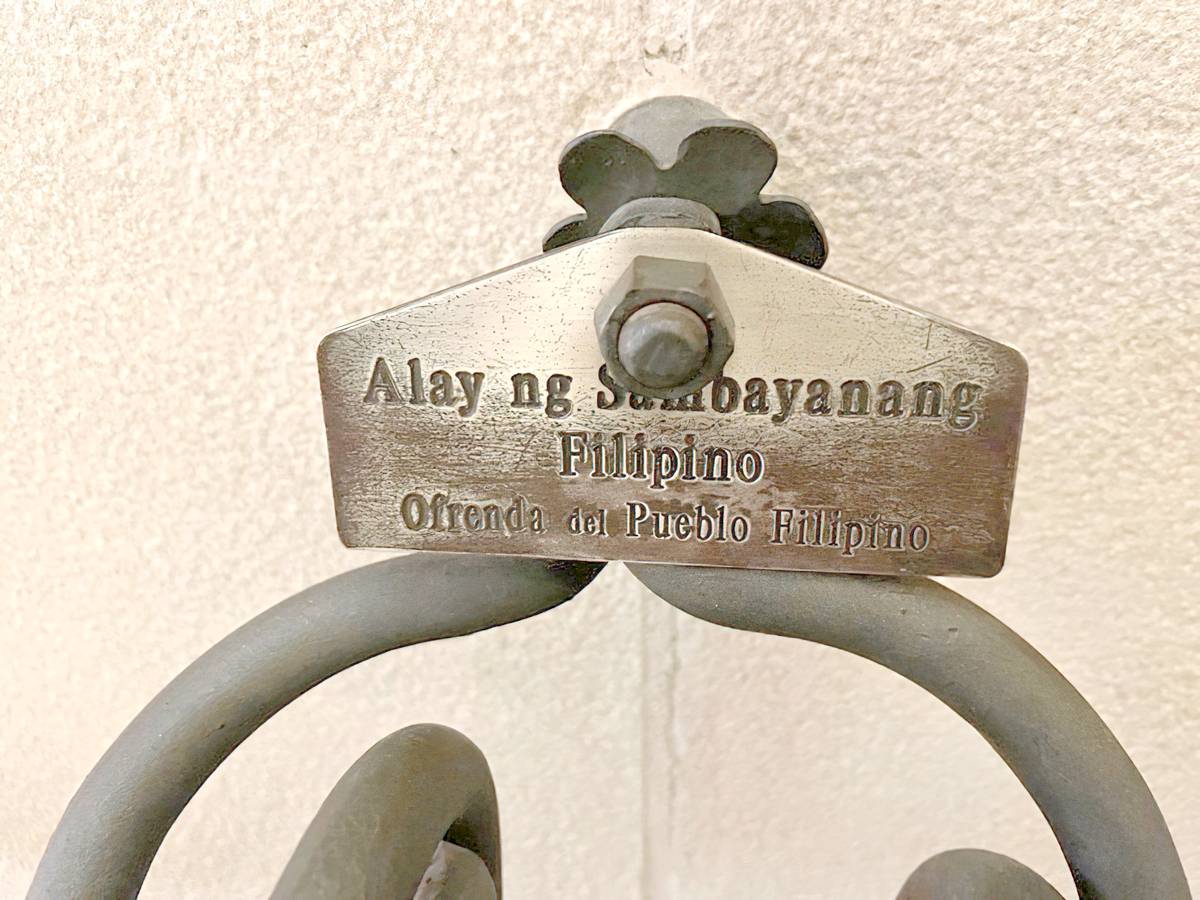
BRASS inscription above a La Sagrada Familia holy water font stating that the clam shells have been donated by the Filipino people.
In a private tour of La Sagrada Família early this month, a tour guide told this author that the giant clam shells perfectly aligns with Gaudi’s design of patterning the church after nature — not only aesthetically, but also mathematically. In Gaudi’s pre-AutoCad era, he used the algebra found in nature as inspiration for the exact measurements in the church — and measured that the giant clam shell holy water fonts are exactly 3.5 meters away from a base pillar, and so forth.
But the giant clam shells are not the only “Filipino connection” found in La Sagrada Família. The bronze doors of the Glory Façade, created by sculptor Josep Maria Subirachs, feature the phrase “Give us this day our daily bread” inscribed in 50 different languages, including Filipino.
Likewise, La Sagrada Família is not the only church in Spain with Philippine taklobo shells. Also having giant clamshells as holy water fonts is Torreciudad, a Marian shrine in Aragon, Spain, built by Opus Dei founder, Saint Josemaría Escrivá. Like in La Sagrada Família, the giant clamshell holy water fonts are bordered with silver lining and held by curved brass. A Spanish priest confirmed to this author that the two water fonts are from the Philippines as well.
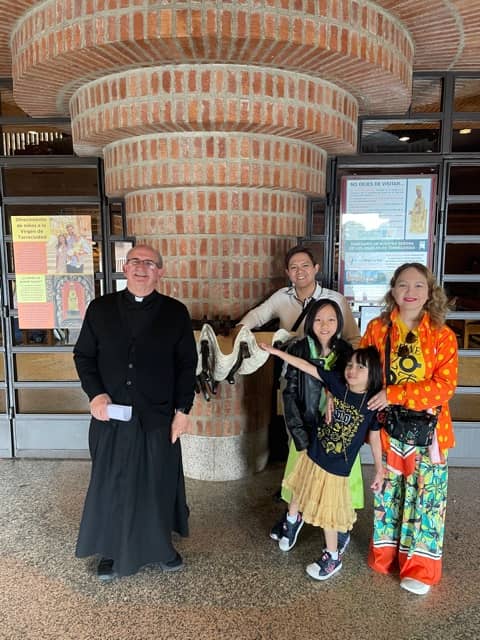
A Spanish priest told this writer and her family that the giant clam shells came from the Philippines.
The use of giant clamshells as holy water fonts is in keeping with the Roman Catholic tradition of using shells in baptism as a tool for purification and rebirth.
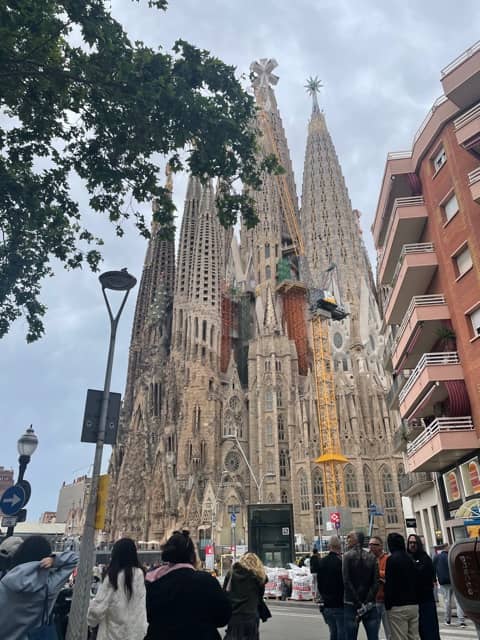
La Sagrada Família exterior.
The “Filipino connection” doesn’t stop there. Filipino Mama Mary statues, from the Our Lady of the Manaog of the north to the Nuestra Señora de la Candelaria of the south, are among those that comprise the global Marian exhibition collection of Torreciudad.