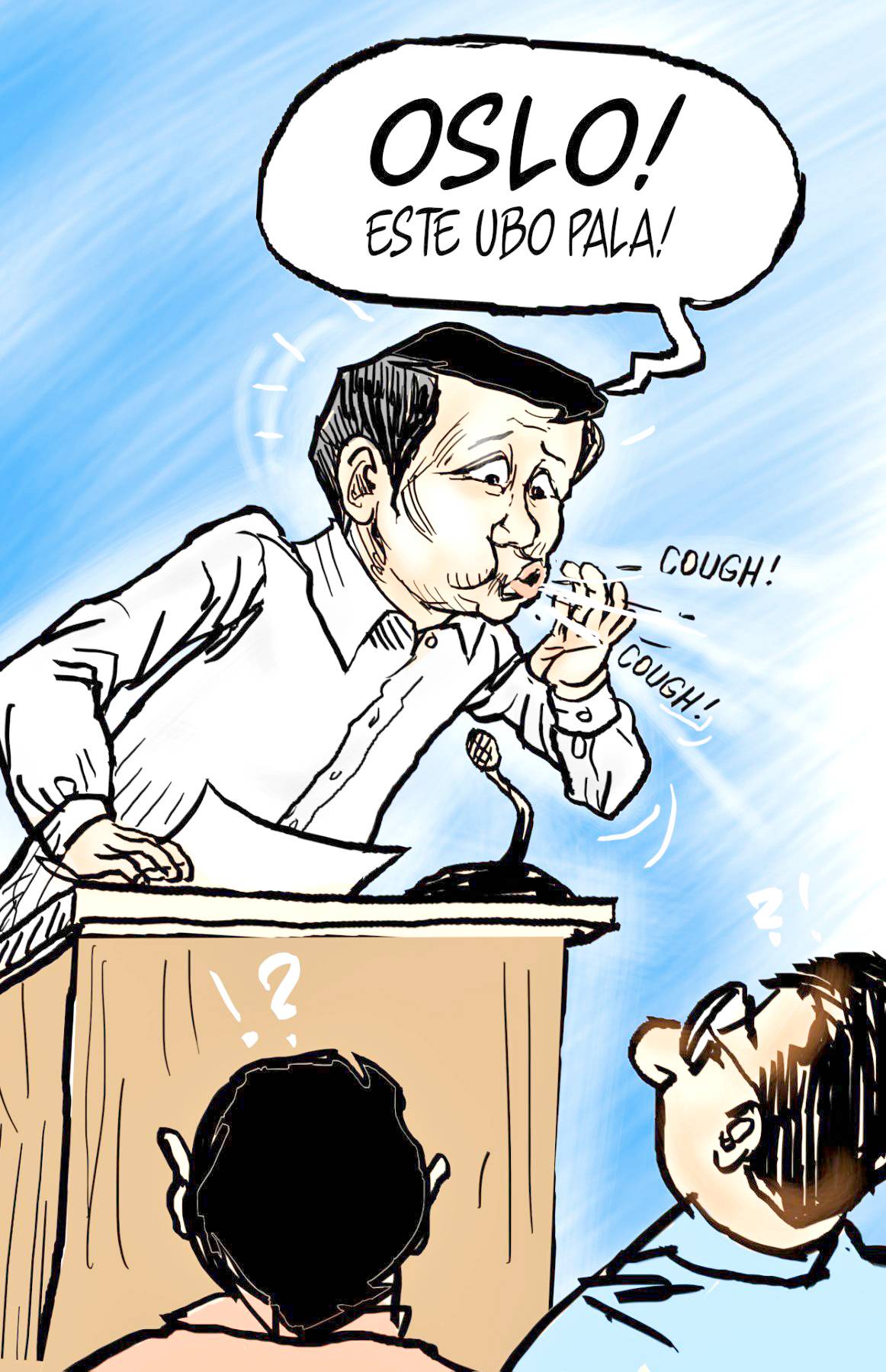
Oslo baiting

The cocktail circuit frequented by Nosy Tarsee is fizzing with a whisper campaign so coordinated it practically comes with talking points: that the country’s embattled leader, whose approval rating has taken a battering that would make a prizefighter wince, is being quietly positioned for one of the world’s most hallowed peace honors.
The hook was apparently a recent summit conveniently timed to showcase his chairmanship of a major regional bloc, where he inserted himself as the gracious neutral host between two neighbors whose border dispute had been threatening to boil over.
Two leaders sat down. Some agreements were reached. Both men said thank you, publicly and warmly. And just like that, a narrative was born.
Sources close to the Palace say this was no accident. The optics, the handshakes, the carefully worded joint statements, the “open and candid dialogue” language were assembled with the kind of precision that doesn’t come from spontaneity but an image architecture.
The domestic headlines have been unkind for too long, and someone in the inner circle decided the answer was to reframe the entire portrait: not as a leader under siege at home, but as a statesman sought after abroad.
To be fair, the mediation was real. The de-escalation is tangible. The gratitude from the two visiting premiers genuine enough.
But sources with good memories pointed out to Nosy Tarsee the timing, a reputation badly in need of rehabilitation, a chairmanship that handed him a ready-made stage, and a global awards committee that has, historically, rewarded the appearance of peace as readily as its architecture.
He’s been making the right noises on the right podiums, calling for restraint in distant conflicts, invoking diplomacy-not-dominance, cultivating the multilateral crowd that votes on these things.
His country is even angling for a seat at the most powerful table in international governance.
Skeptics are calling it exactly what it looks like: a coup de grâce aimed at a specific Scandinavian city, engineered to outlast the noise back home.
Whether Oslo is listening, or whether Oslo will remember who is whispering, is, as they say, another story entirely.