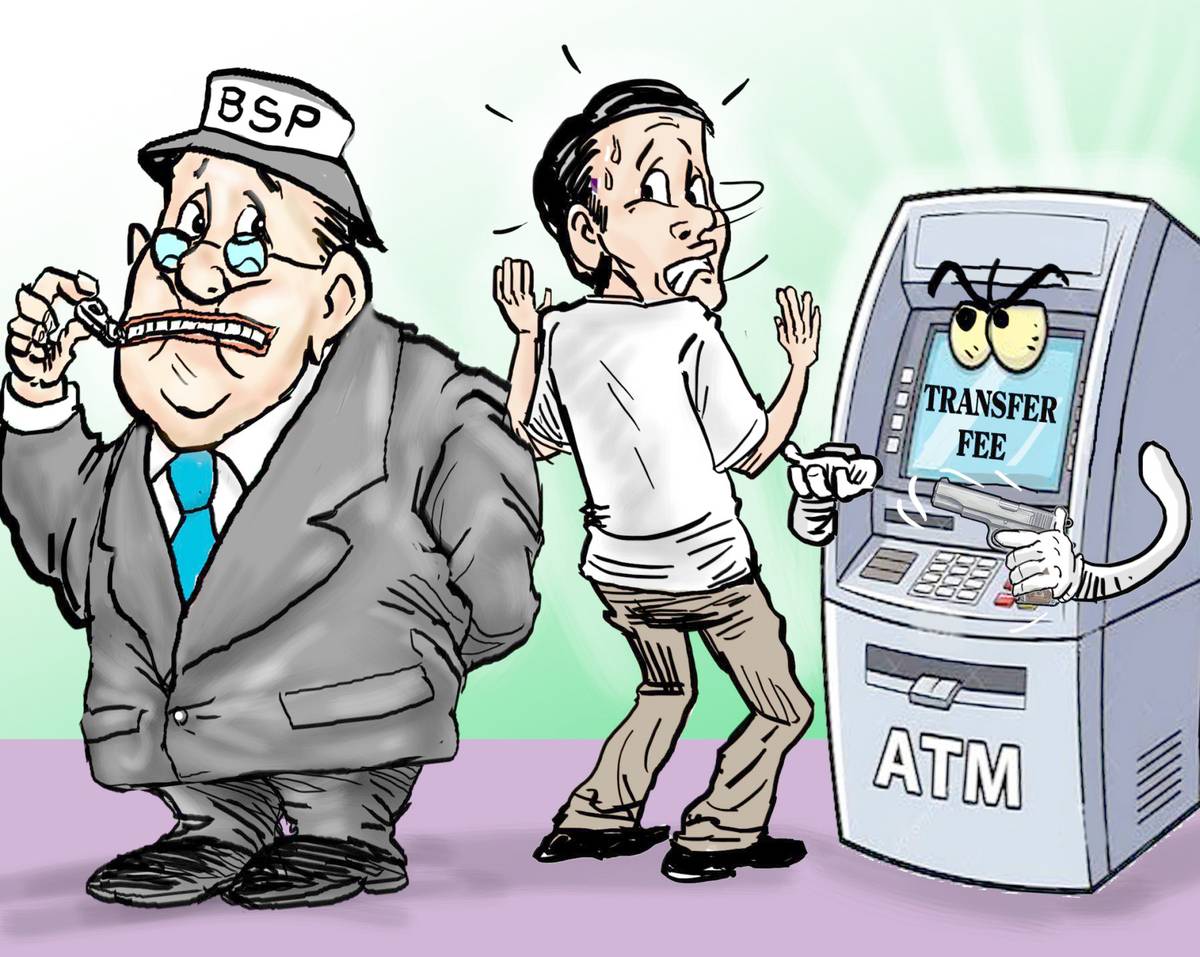
Hidden cost of ‘free’


The Philippines’ external debt remains sustainable despite rising to $147.35 billion in the first quarter of 2026, with the BSP citing long-term maturities, ample reserves, and manageable debt servicing as the government continues to fund infrastructure and economic priorities.
The objective is shared. But, as Nosy Tarsee noticed, trouble begins when a worthy objective is pursued with a blunt instrument. At the center of the debate is Bangko Sentral ng Pilipinas Circular 1238 on electronic fund transfer pricing.
The circular does not explicitly mandate the removal of transfer fees. Nor does it plainly order financial institutions to make InstaPay transfers free. Yet its implementation appears to be moving in that direction.
Industry players intimated to Nosy Tarsee that the BSP has begun asking institutions that reduced their transfer fees, rather than eliminated them, to explain why they have not gone further.
Banks have also reportedly been warned that noncompliance could expose them to penalties. That creates an uncomfortable gap between what a regulation says and what regulated institutions believe they are being required to do.
If zero or near-zero transfer fees are effectively becoming mandatory, the BSP should say so plainly.
Institutions should not have to infer a major pricing policy from implementing guidelines, regulatory conversations or the threat of sanctions.
This matters because “free” is never really free.
A digital transfer may take seconds, but behind it are authentication, cybersecurity, fraud monitoring, clearing, settlement, reconciliation, customer support and systems maintenance. Those costs do not disappear simply because customers no longer see a fee.
Free transfers are commercial decisions. Some institutions can absorb the expense because they have larger balance sheets or diversified revenue streams. Others depend more heavily on payments and transaction income.
Uniform rules should apply, but equal treatment does not mean pretending every institution operates under the same economics.
Government itself recognizes this principle elsewhere.
When authorities raise minimum wages to help workers cope with rising living costs, they also consider the impact on smaller employers through mechanisms such as exemptions, assistance or phased implementation.
The BSP should apply the same discipline to digital payments.
It should remain firm on affordability, transparency and consumer protection. Excessive or unsupported fees deserve scrutiny. But regulators should also examine actual costs and business models before allowing one commercial choice — free transfers — to become the practical standard for an entire industry.
The stakes go beyond a few pesos on a transfer screen.