
Amadis Ma. Guerrero, chronicler of Phl arts and culture, writes 30
Veteran culture and arts journalist Amadis Ma. Guerrero leaves behind a legacy of essays, books, criticism and reportage that helped preserve and illuminate the nation’s cultural life.

Often regarded as the country’s oldest active culture and arts journalist, Amadis Ma. Guerrero passed away on 13 May 2026 due to illness. He was 85. His ashes were inurned at The Crypts of Santuario de San Antonio Parish Church in Forbes Park, Makati City, on 18 May.
An art critic, fictionist, essayist, and veteran newsman, Guerrero devoted more than six decades to writing about Philippine arts and culture, leaving behind a substantial body of work that helped document, interpret, and preserve the country’s artistic life.
Fondly called “Tito Mads” by many and “Sluggo” by family and friends, Guerrero belonged to the famed Guerrero clan of Ermita, Manila. He was born on 15 April 1941 to Tristan Ma. Guerrero, a medical doctor and writer, and Estrella San Agustin, a writer and Spanish professor.
In a tribute posted on 14 May, public historian, curator, and writer Lisa Guerrero Nakpil recalled their family lineage and the artistic inheritance from which Amadis came.
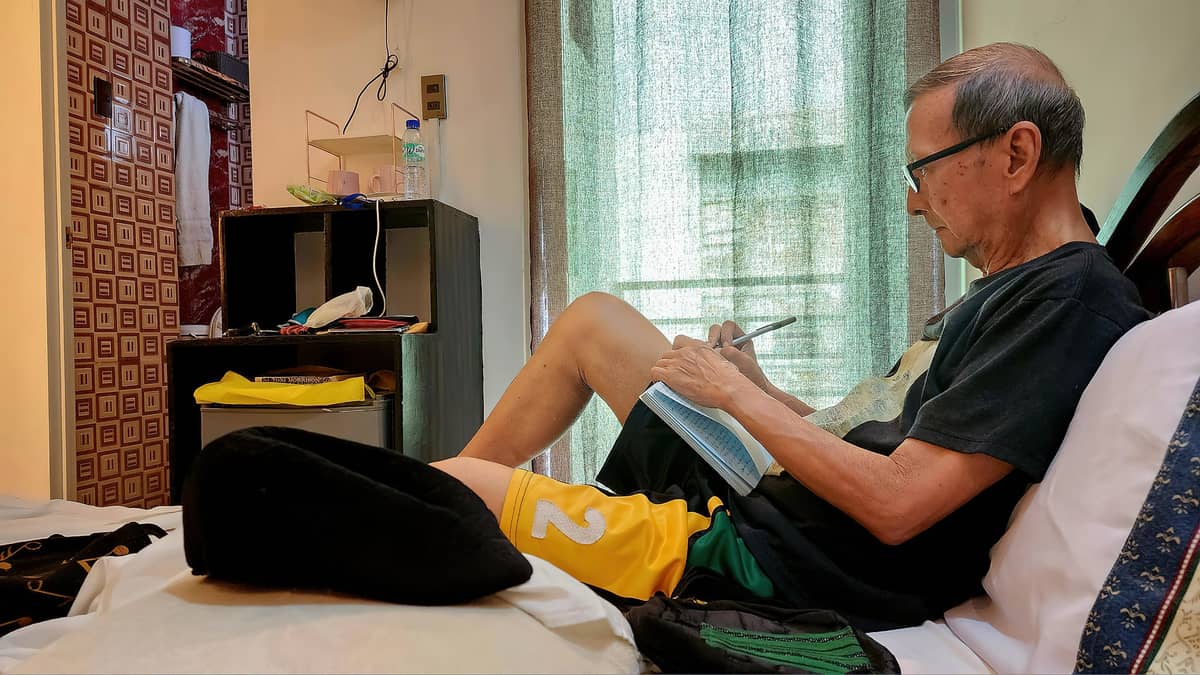
GUERRERO writing an article in Ilagan, Isabela, in May 2024.
Photographs by Roel Hoang Manipon for DAILY TRIBUNE
“Amadis — aka Sluggo — and I are cousins through our great-grandfathers. He is descended from Lorenzo Guerrero, painter and mentor to the Philippines’ most famous 19th-century painter, Juan Luna,” Nakpil wrote. She added that Lorenzo’s son, the journalist and poet Fernando Ma. Guerrero was Amadis’ grandfather. “My mother, whose standards were almost always outrageously high, called him a genius. She also happened to be very fond of Sluggo and would look forward to seeing him.”
Nakpil remembered Guerrero as “perhaps the gentlest, sweetest of the Guerreros who were notorious for their short fuses and wicked, razor-sharp tongues.” Like his grandfather, she noted, he wrote for newspapers, “not about politics, but instead about art and culture.”
Guerrero was educated at the Ateneo de Manila, where he completed grade school and high school, and at the University of Santo Tomas, where he obtained a degree in English and history in 1960. A year after graduating from college, he began his journalism career as a deskman-reporter for the Associated Press, where he worked until 1969.
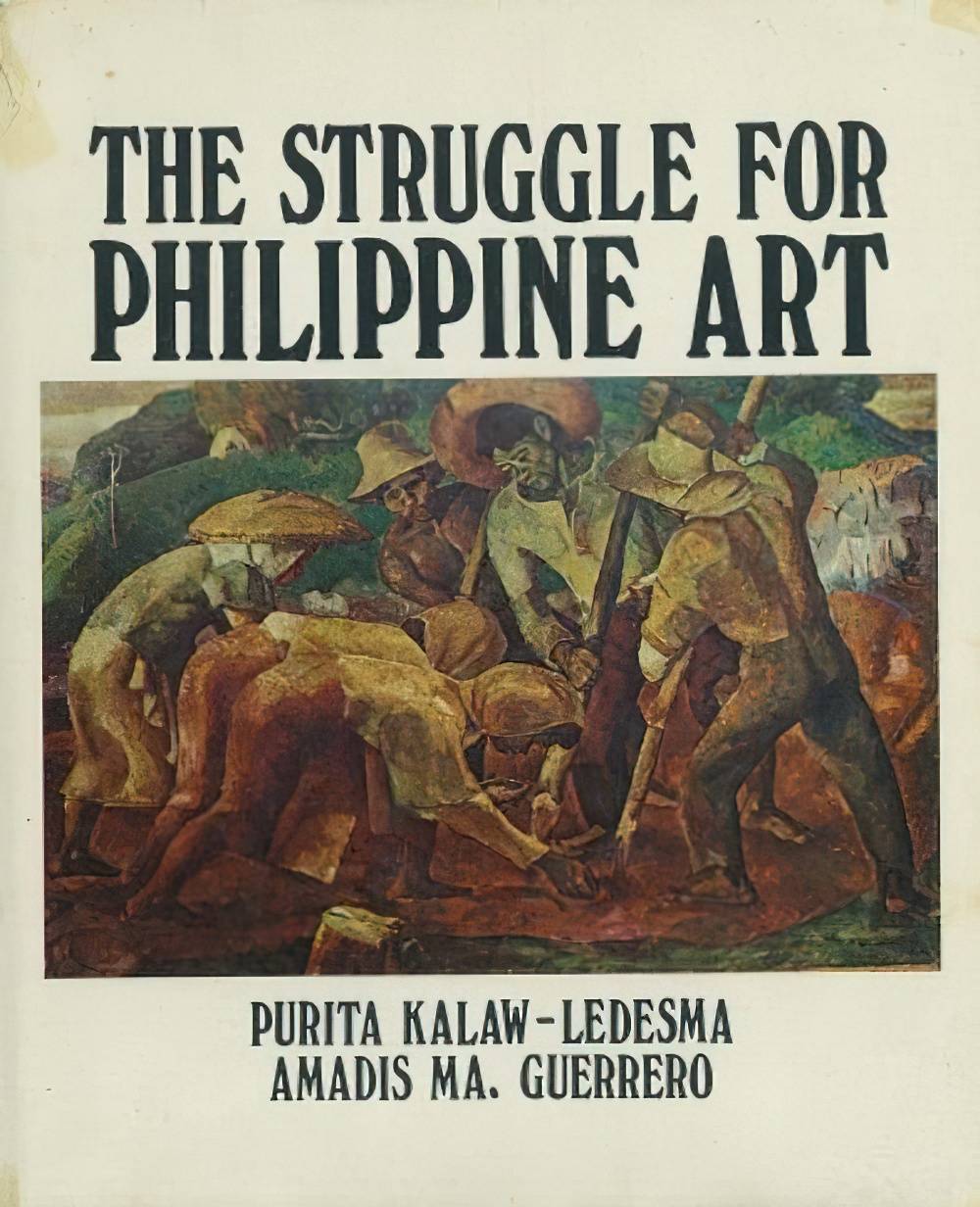
HE co-authored a landmark book with Purita Kalaw-Ledesma, ‘The Struggle for Philippine Art.’
From 1969 to 1972, he served as staff writer for Graphic magazine, and later worked as editor for Planter’s products from 1972 to 1975. In 1975, he joined the Population Center Foundation as editor, a post he held until 1983. From 1983 until his death, he was editor at Raya Media Services.
Through the years, Guerrero became a familiar and respected presence in the country’s cultural beat. He regularly contributed articles on arts and culture to the Philippine Daily Inquirer. Also, he wrote for The Philippine Star, Daily Tribune, and Agung, the official magazine of the National Commission for Culture and the Arts. He also wrote for Parents Magazine and Filipinas magazine.
He was a member of the Concerned Artists of the Philippines, Philippine PEN, Unyon ng mga Manunulat sa Pilipinas and the National Press Club.
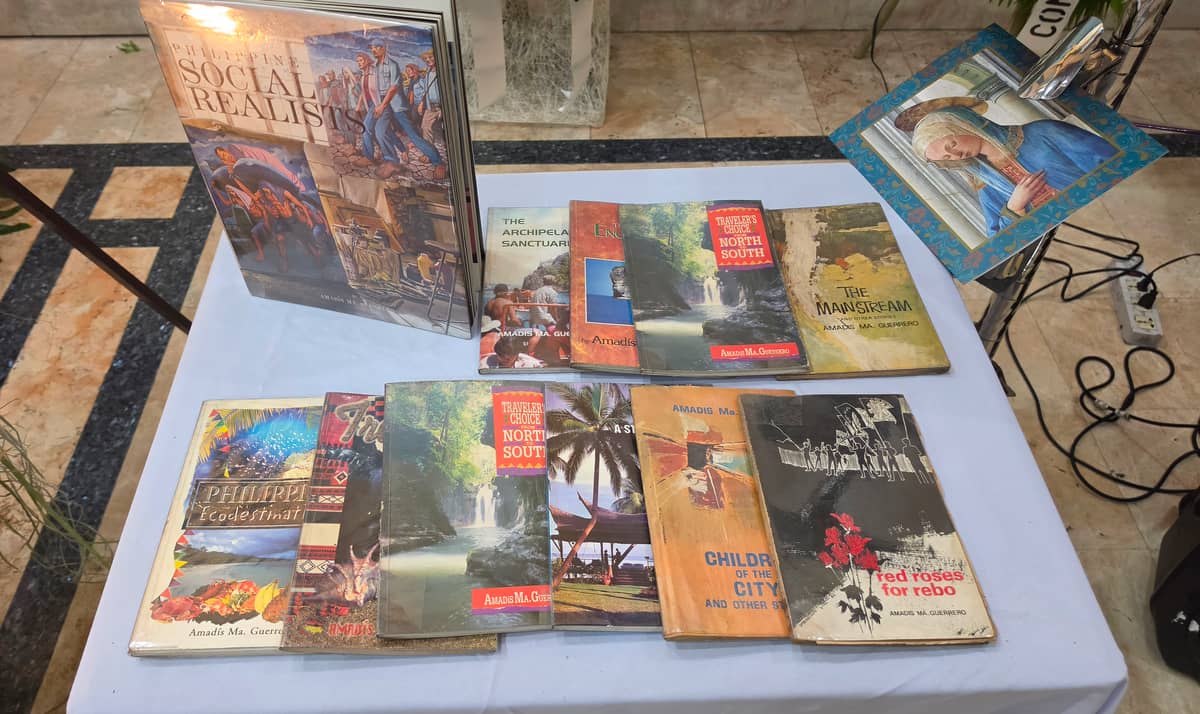
SEVERAL of his books on display during the wake on 17 May.
Guerrero’s body of work was wide-ranging, encompassing essays, short stories, travel writing, art criticism, and books on Philippine art and theater. His essays appeared in local publications and anthologies, as well as in publications abroad, including in Lebanon, Germany, and the Czech Republic.
His travel essays were collected in several anthologies, including Traveler’s Choice: From North to South (1993), A Journey through the Enchanted Isles (1995), Tropical Splendor (1998), and The Archipelago Sanctuaries (2006).
Among his books were Amadeo Y. Manalad: History’s Muralist (2003), Bulacañana: A Heritage of Artistic Excellence (2007), Tanghalang Pilipino: Celebrating 25 Years of Philippine Theater (2012), Philippine Social Realists (2019), and SYM, Galicano and PASPI (2020). He also co-wrote with Purita Kalaw-Ledesma The Struggle for Philippine Art (1973) and Edades: A National Artist (1979).
Nakpil described The Struggle for Philippine Art, his landmark collaboration with Kalaw-Ledesma, as “a sort of bible on Filipino modern art.”
Her tribute also recalled Guerrero’s quiet discretion and old-world courtesy. Remembering her last meeting with him at the premiere of A Chorus Line, Nakpil said she had asked whether he could be interviewed by a Church tribunal regarding the cause for sainthood of her uncle, Bishop Guerrero. Amadis replied that he had never met the bishop, but remembered that his father Tristan had been confirmed by him and had received a religious medal. “The medal was one of the few keepsakes that survived of his fallen father — and Sluggo went out of his way to find the medal — which had traveled to America — and to send me photos,” she wrote.
“I have now realized how much I will miss him and rue that I did not spend more time asking him about the various greats of Filipino art,” Nakpil said, “but knowing Sluggo, he would have refused to tell me anything indiscreet. So it goes.”
The Cultural Center of the Philippines also mourned Guerrero’s passing, recognizing his lifelong contribution to the arts.
“The Cultural Center of the Philippines mourns the passing of Amadis Ma. Guerrero,” the CCP said in a 16 May Facebook post. “A distinguished fictionist, essayist, journalist, and art critic, Guerrero built a lasting legacy through his dedication to the preservation and promotion of Philippine arts and culture.”
The CCP also cited his authorship of the Tanghalang Pilipino 25th anniversary book and his role as co-author of The Struggle for Philippine Art. “As an active media partner of the CCP, he helped share and uphold the institution’s vision for Filipino artistry and cultural development,” the CCP said. “His contributions will continue to inspire and guide generations of Filipino artists and audiences.”
At the time of his passing, he was in the process of publishing another book.
Through a lifetime of steady, generous, and deeply informed writing, Amadis Ma. Guerrero helped make Philippine art more visible to the public. His work endures not only in the books and articles he left behind, but also in the memory of a cultural press corps that learned from his example: attentive, humane, historically grounded, and faithful to the artists and institutions whose stories he chose to tell.