
Energy-efficient for a greener future
All newly-developed malls are being designed to transition directly to renewable energy, integrating clean power into standard operational requirements instead of treating it as a post-construction enhancement.


Energy sourcing has become one of the most impactful areas of Ayala Malls’ sustainability strategy, delivering measurable results at scale. By 2025, 98 percent of Ayala Malls are powered by renewable energy, with 31 malls transitioning through accredited Retail Electricity Suppliers and Renewable Energy Suppliers. All renewable electricity consumption is backed by International Renewable Energy Certificates (iRECs), ensuring third-party verification of renewable sourcing.
This shift represents more than a pilot initiative — it reflects a fundamental operational transformation. Renewable energy now supplies 98 percent of electricity requirements across 31 of Ayala Malls’ 32 properties, significantly reducing dependence on conventional energy sources. Alongside emissions reduction, the company estimates potential annual savings of up to P180 million, demonstrating how renewable energy adoption also strengthens cost efficiency amid ongoing energy price volatility. In a higher-cost environment, these savings help Ayala Malls manage operating pressures while continuing to deliver a high-quality experience for both shoppers and merchants.
All newly-developed malls are being designed to transition directly to renewable energy, integrating clean power into standard operational requirements instead of treating it as a post-construction enhancement.
“Renewable procurement is only one part of our energy framework,” said Paul Birkett, chief operating officer of Ayala Malls. “We take a diversified approach, combining clean power sourcing with on site generation to improve resilience, manage risk and support stable, long-term energy performance across our malls.”
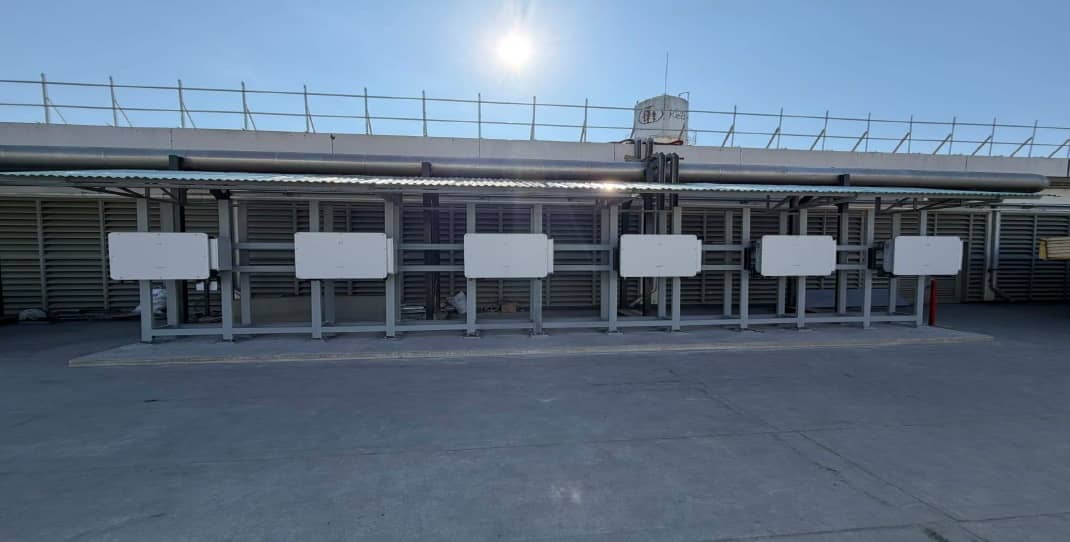
AYALA Malls utilizes inverter systems.
Expanding on-site solar capacity across the portfolio
In addition to renewable power procurement, Ayala Malls continues to scale its on-site renewable energy generation initiatives. At present, 13 malls are equipped with solar rooftop installations, representing a combined installed capacity of approximately 15.3 megawatts peak (MWp). Another 19 malls are currently in various stages of bidding and development discussions for additional solar rooftop systems, which could contribute an estimated 20 MWp of new capacity once completed.
Rather than pursuing isolated installations, Ayala Malls has adopted a phased, portfolio-wide rollout strategy for solar deployment. By tailoring installations to site-specific requirements, the company has steadily expanded distributed renewable capacity across its properties — an approach that remains relatively uncommon at this scale within the Philippine retail sector. This supports Ayala Land’s broader objective of improving energy resilience, reducing reliance on centralized power systems, and reinforcing long-term operational reliability. Increased resilience also contributes to more stable day-to-day operations for both tenants and consumers, particularly in an increasingly volatile business environment.
Advancing energy efficiency at scale
Ayala Malls complements its renewable energy initiatives with continuous operational efficiency improvements across its properties. In 2025, overall electricity consumption rose by eight percent year-on-year due to new mall openings, higher occupancy levels, and ongoing redevelopment projects. Despite this expansion, common area energy consumption declined compared to 2024 as a result of engineering interventions and the implementation of operational best practices.
The company maintained an energy intensity level of 76.6 kWh per square meter, sustaining performance even as operations expanded. This was achieved through a range of efficiency measures, including LED lighting upgrades, zoning and sensor-based controls, energy-efficient escalators and elevators, high-efficiency chillers, variable-frequency drives, and passive design features such as natural lighting and ventilation.
These systems are intended to support long-term operational performance as the portfolio grows, rather than deliver short-term efficiency gains that diminish over time.
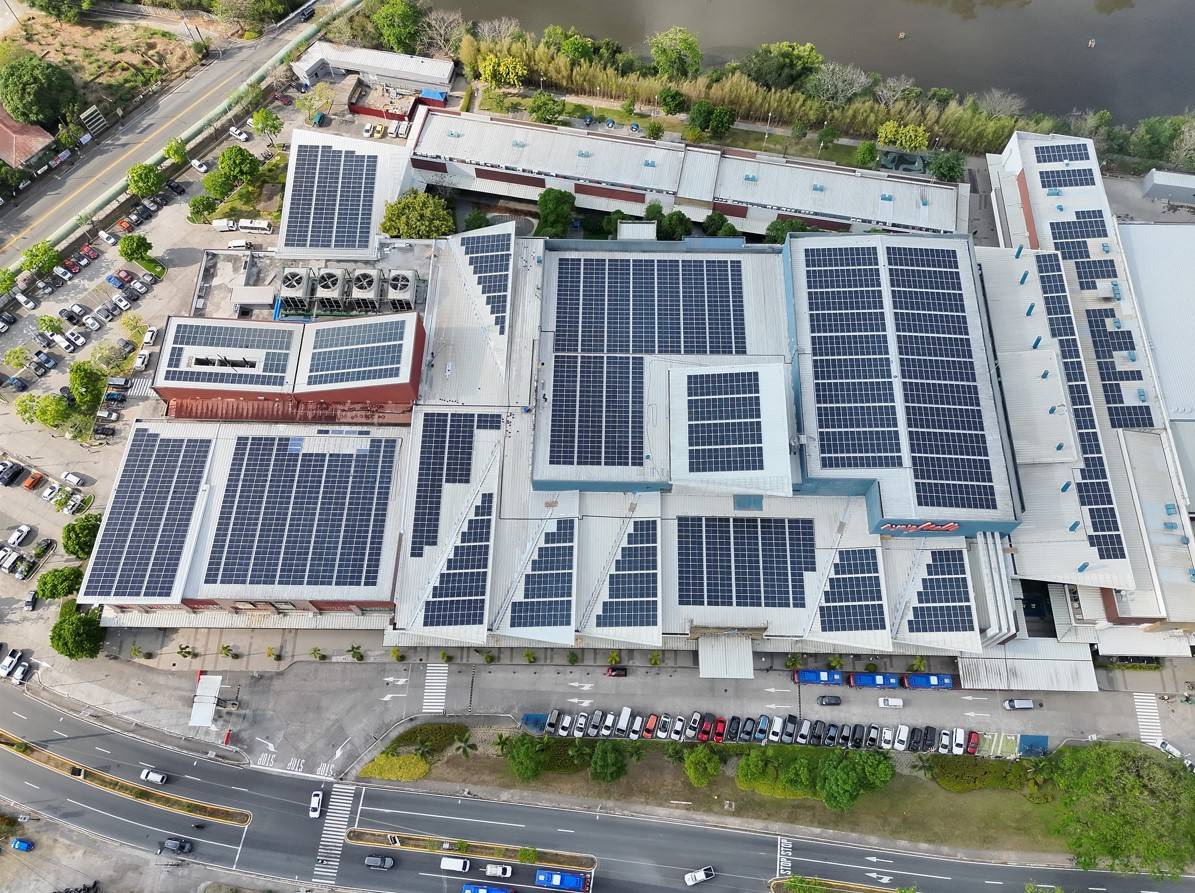
AYALA Malls Solar Roof (Harbor Point).
Integrating sustainability from the design phase
Ayala Malls’ long-term sustainability strategy is also evident in how new developments are planned and designed. All new projects are required to pursue green pre-certification, incorporate recycled materials where practical, and evaluate the integration of solar roofing and water reuse systems during the design stage.
By 2025, six newly launched projects had already secured EDGE pre-certification, forming part of a broader pipeline intended to steadily increase the number of certified malls year after year. This proactive approach reduces future retrofit requirements while aligning developments early with evolving green building standards.
Delivering measurable environmental outcomes
The cumulative effect of these initiatives is reflected in Ayala Malls’ portfolio-wide environmental performance metrics. In 2025, total greenhouse gas emissions were recorded at 24,068 tCO2e, with renewable electricity serving as the company’s largest emissions reduction lever. Water management initiatives reduced overall water consumption by 11 percent year-on-year despite improved occupancy levels, while 41 percent of solid waste was diverted from landfills—surpassing internal targets.
“Sustainability is integral to how we operate as a business,” said Paul Birkett, chief operating officer of Ayala Malls. “Through responsible infrastructure, energy-efficient systems, and consistent operating standards, we create environments where tenants perform better, communities stay engaged, and our assets remain resilient and competitive over the long term.”
Building for long-term resilience and performance
Ayala Malls continues to strengthen the long-term efficiency and reliability of its developments.
In today’s environment, these initiatives extend beyond achieving sustainability targets. They help safeguard profitability, create more stable operating conditions for merchants, and support a consistently positive experience for consumers amid rising costs and external pressures. More broadly, they reflect a changing definition of value creation in real estate—where long-term operational performance increasingly defines industry leadership.