
Cost of war equals aid for more than 87-M people
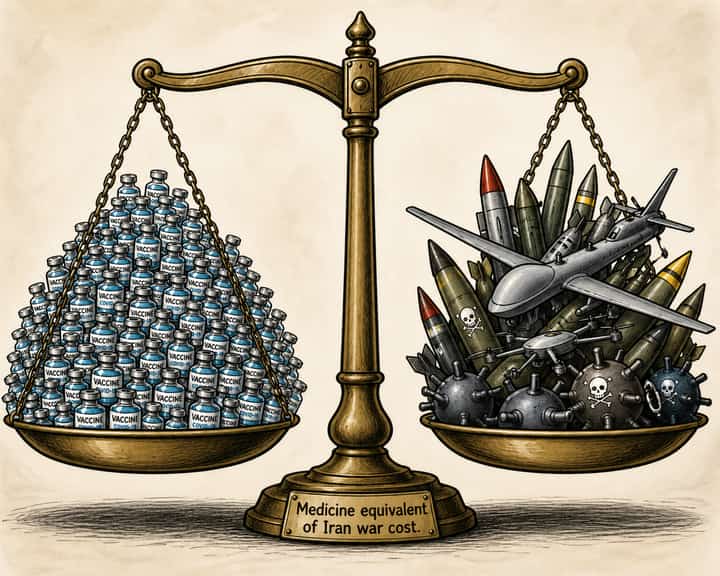
NAIROBI, Kenya (AFP) — The Pentagon’s spending on its war with Iran could cover the United Nations’ entire 2026 aid appeal and bring lifesaving support to more than 87-million people, its aid chief told Agence France-Presse (AFP) Thursday.
The United States Department of Defense says it has spent $25 billion so far on the conflict in the Middle East, while the UN Office for the Coordination of Humanitarian Affairs (OCHA) sought $23 billion for this year’s aid appeal.
“I know what we could do with 25 billion,” OCHA head Tom Fletcher told AFP. “We have a direct comparison of what we can do with that money.”
The OCHA appeal target is “less than one percent of what the world is spending on guns and arms and defense in the coming year,” he added.
Fletcher said the war, and the resulting closure of the Strait of Hormuz, has doubled fuel prices and driven up food costs by 20 percent.
“That makes our job much harder. But it also pushes more people into hunger and starvation,” he said, referring specifically to Somalia, from where he spoke to AFP.
“We reckon the numbers who are hungry right now are double what it was six months ago.”
Worldwide, Fletcher said there were more than 300 million people in critical need of support, but he had been forced to prioritize 87 million due to tightening budgets, as the US and others curb donations.
Without funding, “hundreds of millions of lives over several years” will be lost, he said.
Somalia has been particularly hard-hit by the shortages from the war as well as drought and flooding.
“It’s a poisonous cocktail of factors,” he said, adding it had been a “very rough visit.”
With its Somalia program only 13 percent funded, the UN has had to shut down health centers at a time when half a million children face severe acute malnutrition, he said.
Doctors at one clinic told him patients were seven times more likely to die due to the extra walking distances.
“It’s just devastating,” said Fletcher.