
Nationwide school earthquake readiness program launched vs. ‘Big One’ threat
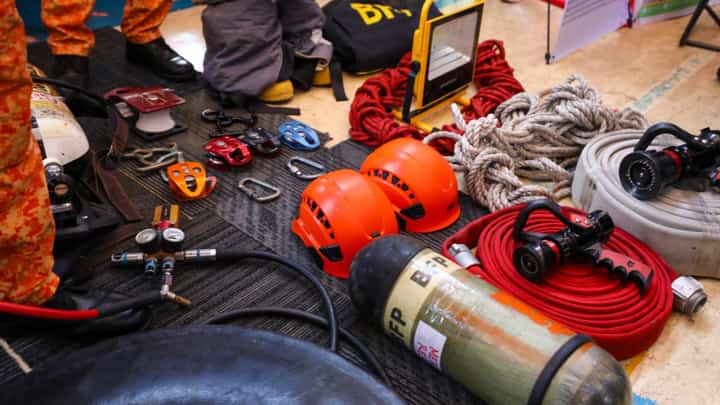
Education Secretary Sonny Angara on Thursday launched the M7X Ready School Program, a nationwide initiative aimed at strengthening earthquake preparedness across the education sector amid warnings of a possible magnitude 7.0 earthquake dubbed “The Big One.”
The program seeks to institutionalize a certification system for earthquake-ready schools, beginning with all public schools in the Greater Metro Manila Area—covering the National Capital Region, Central Luzon, and Calabarzon—by the end of School Year 2026.
A nationwide rollout covering both public and private schools is targeted for completion by 2028.
“Gumagawa ang DepEd ng mga proactive na hakbang upang maghanda para sa ‘The Big One’ sa halip na tumugon lamang matapos ang sakuna,”Angara said during its launch at Tanghalang Rizal in Pasig City.
The program is anchored on projections from the Metro Manila Earthquake Impact Reduction Study (MMEIRS) Model 08, which estimates that a magnitude 7.2 earthquake along the West Valley Fault could result in as many as 34,000 deaths and widespread infrastructure damage.
Under the M7X framework, schools must comply with a set of requirements to earn certification, including structural integrity audits, fire safety inspections, installation of early warning systems, and the formation of DepEd Agile Response Teams (DART).
The Department of Education said the standards are especially critical for schools in high-risk, densely populated areas located near active fault lines, where structural failure could pose severe risks to students and personnel.
Beyond infrastructure safety, the program also requires training in basic life support and first aid for teachers and school staff, aimed at improving on-site emergency response capabilities.
Authorities said the initiative also integrates family preparedness into school-based safety planning, with the goal of building a broader culture of resilience within the basic education system and ensuring continuity of learning even after major seismic events.