
When heat becomes a national risk
Heat is not just a climate and environmental issue. It is a development issue.


We no longer experience heat in the Philippines as a passing inconvenience. It lingers, intensifies and increasingly shapes how we live, work and plan our days.
This is not unique to us. The World Meteorological Organization has reported that the past decade has been the warmest on record globally, with recent years setting successive temperature highs. The Intergovernmental Panel on Climate Change meantime has concluded that human-induced warming is driving more frequent and intense heat extremes.
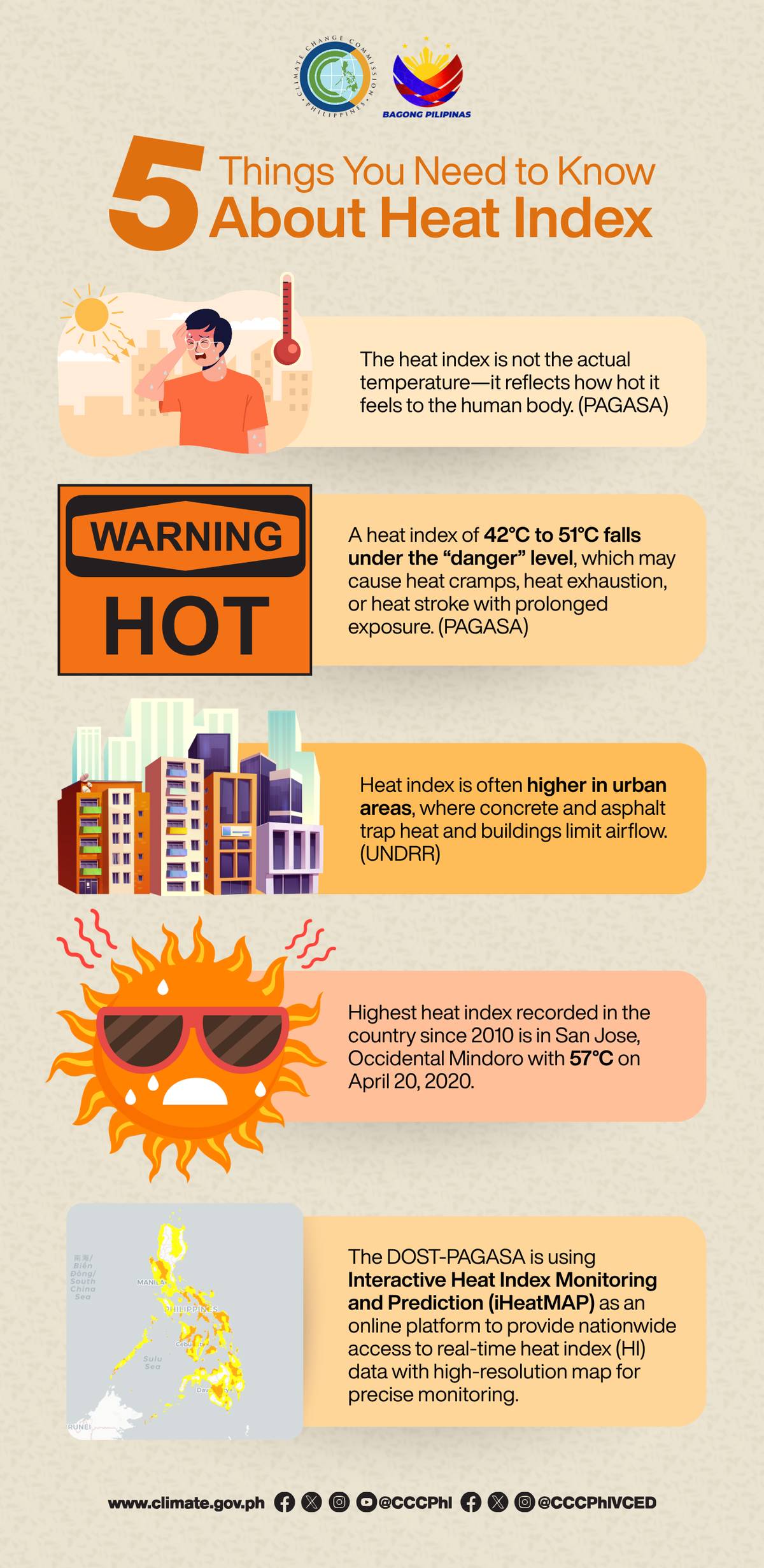
These global trends are being felt with increasing force in the Philippines. Heat index levels have reached dangerous extremes, with some areas recording conditions classified by PAGASA as “Extreme Danger.” These are not isolated spikes. They reflect a broader shift in baseline conditions.
But while rising heat is a national condition, it does not land evenly.
In Metro Manila, heat is intensified by design and reinforced by demand. Concrete, asphalt and steel absorb and retain warmth long after the sun sets. Limited green space reduces natural cooling, while dense infrastructure restricts airflow. The result is a built environment that traps heat and amplifies exposure, particularly for those who have the least capacity to avoid it. Equally concerning is the fact that as temperatures rise, the city’s dependence on energy for cooling deepens, creating a feedback loop between heat, consumption and cost.
Cebu presents a more complex picture. Rapid urban expansion, coastal exposure and upland degradation intersect with infrastructure and watershed pressures. Heat does not act alone here. It compounds existing stresses on water systems, land use and the overall livability of fast-growing communities. Risk in Cebu is cumulative, shaped by how multiple vulnerabilities converge in one place.
In agricultural provinces such as Nueva Ecija, heat affects crop yields, water availability, and labor conditions. It determines how much is harvested, how much is lost, and ultimately what reaches tables far beyond the province. What begins as a temperature increase becomes a question of food security.
These are different contexts, but they point to a shared reality: rising heat is not a uniform experience. It manifests through the systems we have built in our cities, growth patterns and production landscapes.
Heat is the hazard. But risk is determined by how exposed and unprepared we are.
The true measure of rising heat is not simply the temperature reading. It is what it takes away from us — our health, our learning and our productivity.
In our communities, the impacts are evident.
Heat places direct strain on the body. It increases the risks of cardiovascular stress, dehydration and heat-related illnesses, particularly among the elderly, children and those who work outdoors. For many families, staying cool comes at a cost, as electricity consumption rises and household budgets tighten. Public health systems, already under pressure, are forced to absorb these additional burdens.
In education, the effects are quieter but no less significant. Class suspensions due to extreme heat disrupt learning continuity. Even when schools remain open, high temperatures affect concentration and cognitive performance, particularly in classrooms without adequate ventilation or cooling. These disruptions accumulate, shaping the quality of learning over time.
In the workplace, heat is becoming a constraint. It slows down labor, reduces efficiency and increases fatigue. Outdoor and informal sector workers bear the brunt, but the effects ripple across the economy. Rising cooling costs affect businesses, while productivity losses begin to register at scale. Heat is no longer a background condition. It is an emerging drag on economic performance.
Heat is also driving a surge in overall energy demand. As temperatures rise, households and businesses rely more heavily on cooling, pushing electricity consumption upward and straining already tight supply conditions. In a context where global energy markets remain volatile, shaped in part by geopolitical tensions in the Middle East, this exposes a deeper vulnerability.
Our dependence on imported fuels means that the cost of staying cool is no longer just a matter of weather. It is tied to forces beyond our control. What begins as a heat problem quickly becomes an energy security and affordability issue.
Taken together, these impacts point to something more fundamental. Heat is not just a climate and environmental issue. It is a development issue.
The Philippines does not lack the policy frameworks to respond.
Under the administration of President Ferdinand R. Marcos Jr., the National Adaptation Plan provides a science-based approach to managing climate risks, including rising temperatures. The Philippine Development Plan embeds resilience into the country’s growth strategy. The Philippine Energy Plan reinforces this direction by pursuing a more diversified energy mix and reducing dependence on imported fuels, even as demand for cooling continues to rise. The National Climate Risk Management Framework underscores the need to address multiple, interacting hazards.
At the local level, tools such as Comprehensive Land Use Plans, zoning ordinances, and Annual Investment Programs determine how these national priorities are translated into action.
The challenge is not the absence of direction. It is the consistency of execution.
If climate risk is not fully integrated into land use decisions, then development continues to expand into areas that are increasingly exposed. If infrastructure is designed without considering future heat conditions, then we lock in vulnerability. If natural systems are degraded, we lose some of the most effective buffers we have against rising temperatures.
This is where the responsibility becomes collective.
Local governments are at the frontlines of implementation. Their decisions on land use, infrastructure, and service delivery shape how communities experience heat. The private sector influences where and how investments are made, and whether these align with long-term resilience. Communities themselves play a critical role in managing local environments and sustaining the natural systems that provide cooling and protection.
What connects these actors is a shared stake in the outcome.
In a warming Philippines, the question is no longer whether temperatures will continue to rise. The science is clear on that.
The question is whether we continue to build in ways that intensify heat or begin to design systems that can withstand it.
The defining test of our resilience in this context is not how much heat we can endure. It is how well we prevent it from undermining the foundations of our health, our learning, and our productivity.