
Anna Mae Yu Lamentillo on courage, belonging, being honored at Oxford

There are achievements that look impressive on paper, and then there are achievements that carry the weight of a life story. Anna Mae Yu Lamentillo’s recent recognition at Oxford University belongs firmly to the second kind.
Lamentillo was awarded the Programme Director’s Prize, a distinction given to a student who has made an exceptional contribution to both the classroom and the wider cohort. Selected by a panel that includes the directors for the program and academics, the prize honors not just academic excellence but the intangible qualities that define a meaningful presence: generosity, engagement and influence.
Yet what made the moment especially memorable was not just the award itself, but the story Lamentillo shared when she took the stage at the final ceremony for the MSc in Major Programme Management at Saïd Business School.
Held at the historic Holywell Music Room, the event marked the culmination of a demanding academic journey. Speaking on behalf of her class, Lamentillo delivered remarks that were thoughtful, moving and quietly profound.
“This moment means so much to all of us, because we know it did not come easily,” she said.
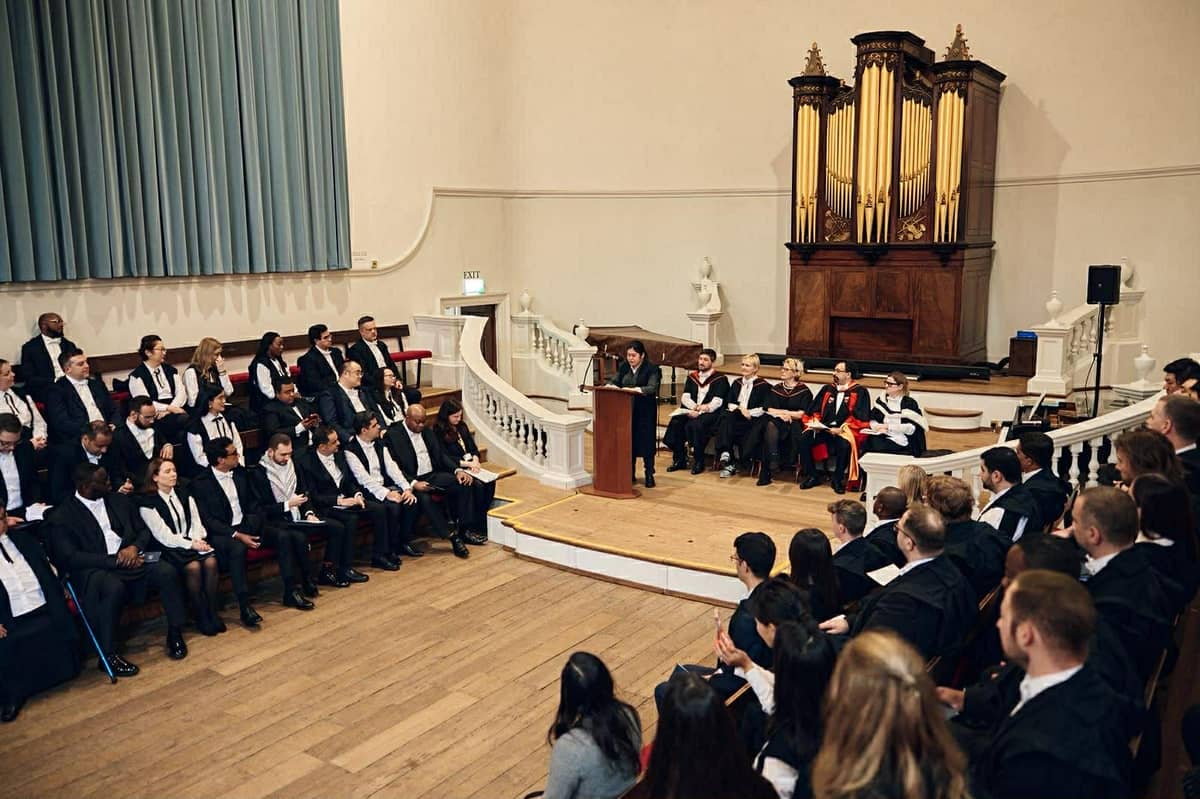
RECOGNIZING excellence, engagement and leadership within a university community.
Her speech stood out for its honesty. Rather than focus only on accomplishment, she spoke about what it means to endure. She described a cohort made up of people whose lives extended far beyond the classroom, many of whom were navigating burdens that were deeply personal and, in some cases, shaped by crisis and conflict.
“Because for most of the people in this class, crisis is not a case study,” she said. “It is something lived.”
Lamentillo’s own story made that reflection even more resonant. English, she shared, is not her first language. She is from the Karay-a ethnolinguistic tribe and grew up with a speech defect. Her first English book was an Oxford dictionary.
There is something cinematic about that image: a young girl learning English through a dictionary, then years later standing at Oxford, addressing a graduating class and being honored for her contribution to the community.
“It is a full-circle moment that humbles me deeply,” she said.
In many ways, Lamentillo’s story speaks to a broader cultural conversation about belonging. Who gets to feel at home in elite institutions? Who gets to speak, lead, be heard? Her answer, delivered not as a slogan but as lived truth, was unmistakable: belonging is not reserved for those with the easiest paths.

THE graduating class of Saïd Business School.
Her speech also offered a gentler and more expansive view of success. She acknowledged that achievements like this are never individual alone. They are shared with loved ones, parents, children, friends and communities whose sacrifices often make the visible milestone possible.
That sense of collective gratitude gave the occasion unusual warmth. This was not triumph framed as individual genius. It was triumph framed as persistence, support and courage.
For Lamentillo, the Programme Director’s Prize is formal recognition of what she brought to her Oxford experience. But for many who heard her story, it will likely mean something more: a reminder that brilliance can grow through difficulty, that voice can emerge through barriers and that some of the most meaningful arrivals are the ones we once thought impossible.