
'Too much': Manila commuters, drivers reject heavy 10-peso fare hike petition

(April 20 2026) Members of transport group PISTON file a P10 fare increase petition at the LTFRB in Quezon City on Monday, April 20, 2026, amidst the high fuel prices. Photo/Analy Labor
ANALY LABOR
A petition to raise the minimum public utility jeepney fare by P10 has drawn mixed reactions from drivers and commuters, highlighting tensions between rising operating costs and limited passenger income.
Transport group PISTON filed a petition before the Land Transportation Franchising and Regulatory Board seeking to increase the base fare from P13 to P23.
For 50-year-old jeepney driver Diego Manapul, the proposed increase presents a difficult trade-off.
“I agree to increase fares for better income, but it is pitiful for the commuters, because their wages do not increase,” Manapul said.
He added that his daily take-home pay of about P800 is not enough to support his family of five.
“My earnings are not enough; they're just for food. By the time you wake up, you have no money left and you have to find a way to earn again,” he said.
ANALY LABOR
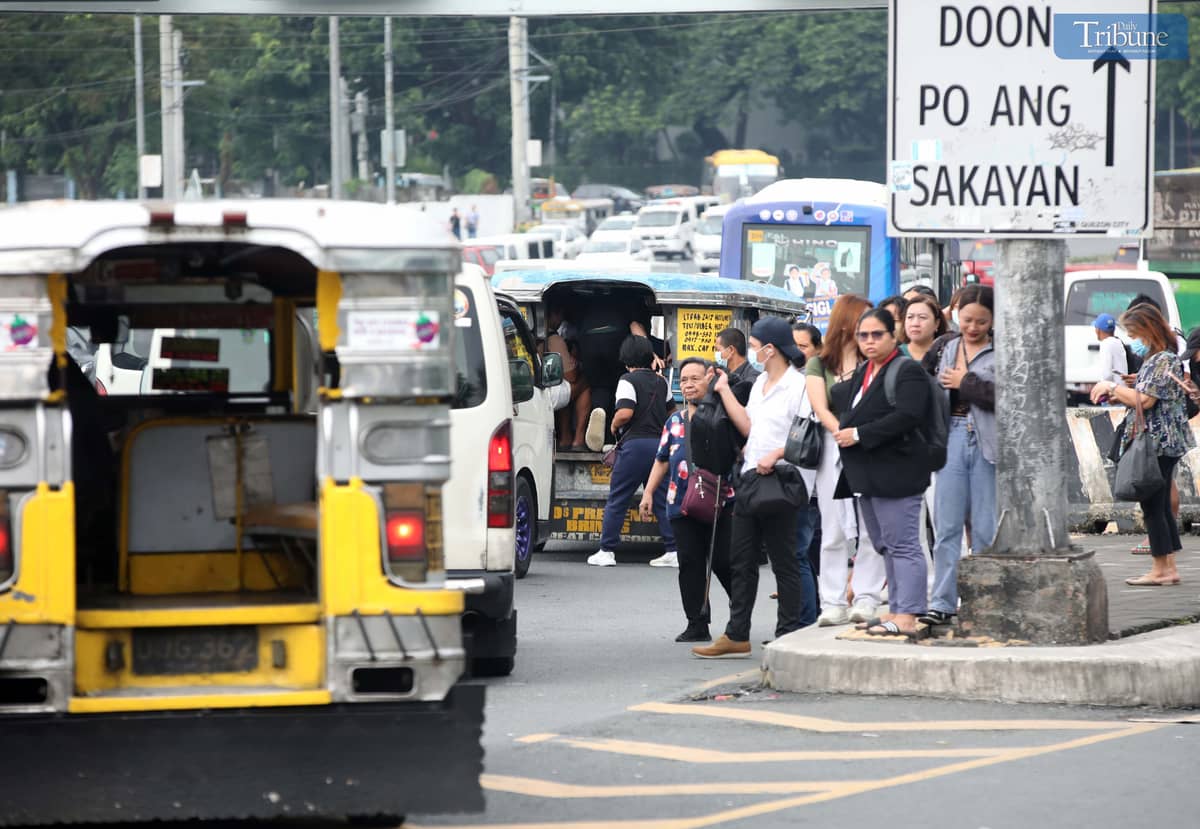
Commuters share the anxiety. Althea Rasco, a 19-year-old student, said her daily commute would spike to over 70 pesos should this petition be implemented.
"As a student, a 5-peso increase is understandable because gas is high, but 10 pesos is too much for someone who isn't rich," Rasco said.
Meanwhile, Cindy Comia, who is also a university student, voluntarily pays 13 pesos instead of her 11-peso discounted rate out of sympathy for the drivers.
"Whenever I commute, I almost feel ashamed to pay the student discount because you know their expenses are so high," Comia said. Yet, she warned that a 10-peso hike would be devastating. "You will really wince, but we don't have a choice."
PISTON President Mody Floranda emphasized that the petition aims only to recover severe losses caused by diesel prices remaining above 100 pesos per liter, not to generate profit.
"The goal is not to make lives better off, but to ease the significant losses," Floranda said. He noted that drivers consuming 30 liters of fuel daily pay 715 pesos in direct taxes, amounting to a staggering 150,000 pesos annually.
Drivers on the ground validate these heavy losses. Rommy Franco, 59, said a full tank costs him 2,700 pesos, leaving him with only 500 to 600 pesos to support his family of six. Marlon Mayor, 49, who sleeps in his jeepney garage to save money, takes home just 400 to 500 pesos daily.
Despite these hardships, drivers still prefer systemic relief over raising fares.
"The 10-peso hike isn't the answer," Mayor argued. "The government just needs to reduce the tax on fuel, because the commuters will suffer."
LTFRB Chairman Vigor Mendoza II has scheduled a public hearing for the petition, noting that fare adjustments typically follow a rule of a 1-peso hike for every 10-peso rise in fuel prices. Mendoza assured the public that the board will heavily weigh commuter affordability before issuing a decision.