
Kristine Jane Atienza reaches for the space
‘It’s a quiet burden that we carry as women; we still need to perform and show up even when we’re not at our best.’


FROM a childhood encyclopedia to simulating life on another planet — Kristine Jane Atienza shows that passion, persistence and courage can take you beyond the stars.
PHOTOGRAPHS COURTESY OF FB/KRISTINE JANE ATIENZA
Women in science are now taking up space — leading research, driving innovation and making their presence felt in fields that once excluded them.
Kristine Jane Atienza’s love for space started because of a simple children’s encyclopedia. It soon ignited a passion she didn’t think would break barriers in the field of science.
“I wanted to become an astronomer, not an astronaut. I kind of failed a lot along the way,” Atienza said in a panel for BeautyCon 2026.
Challenges didn’t stop her, though, from reaching for her dreams. She said, “It’s about creating the passion and love for astronomy that keeps me going. I found a new reason why I keep pushing the boundaries: I really want the Philippines to go to orbit.”
Atienza took part in the HI-SEAS (Hawaiʻi Space Exploration Analog and Simulation) habitat on the Mauna Loa volcano in Hawaii in 2023. As an analog astronaut, Atienza is a researcher and trained participant who simulates space missions on Earth to study how humans live and work in extreme, space-like environments. These missions are conducted in isolated settings such as deserts, underwater habitats, or polar regions, where participants follow protocols similar to those used in actual spaceflight. While they do not travel to space, analog astronauts help scientists understand the physical, psychological and technical challenges of long-duration missions, providing valuable insights for future exploration.
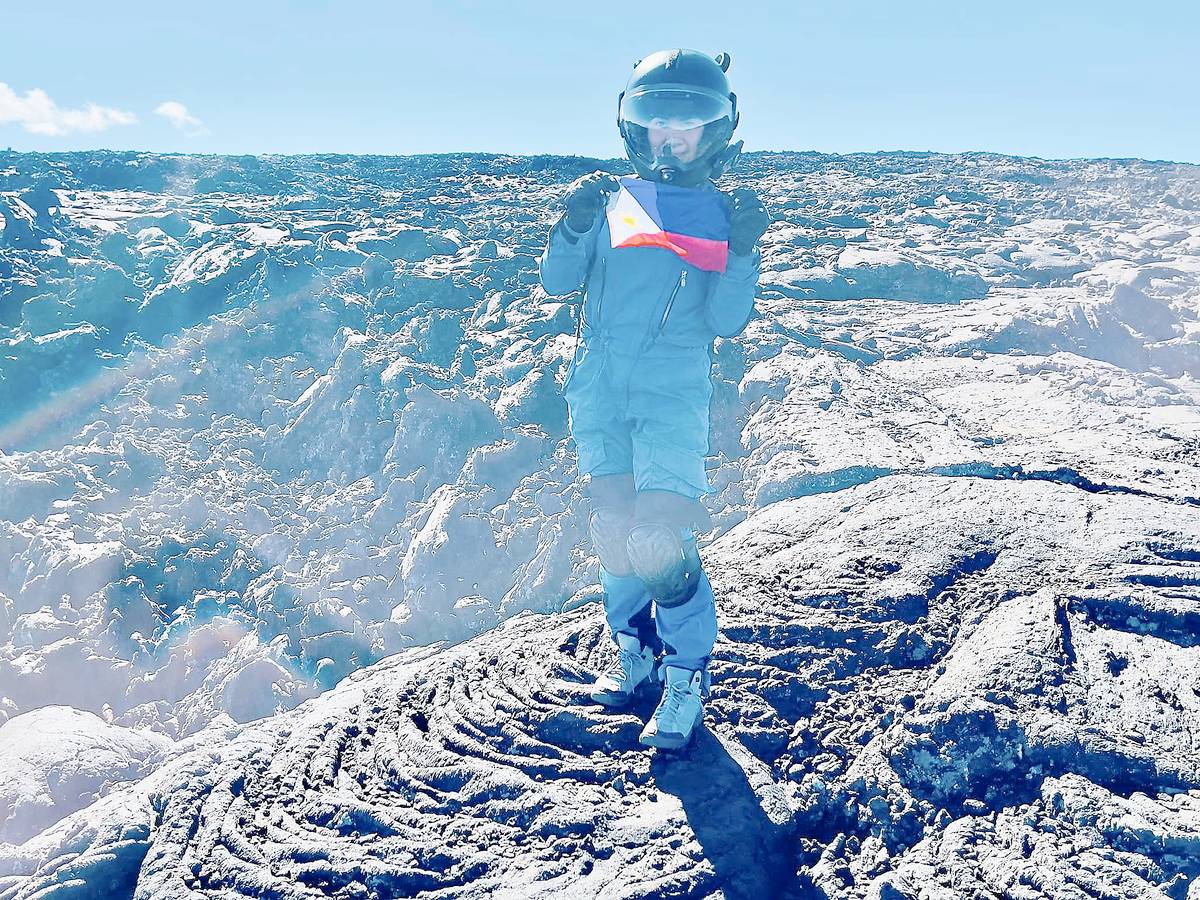
ATIENZA carried it all the way to the HI-SEAS analog mission in Hawaii.
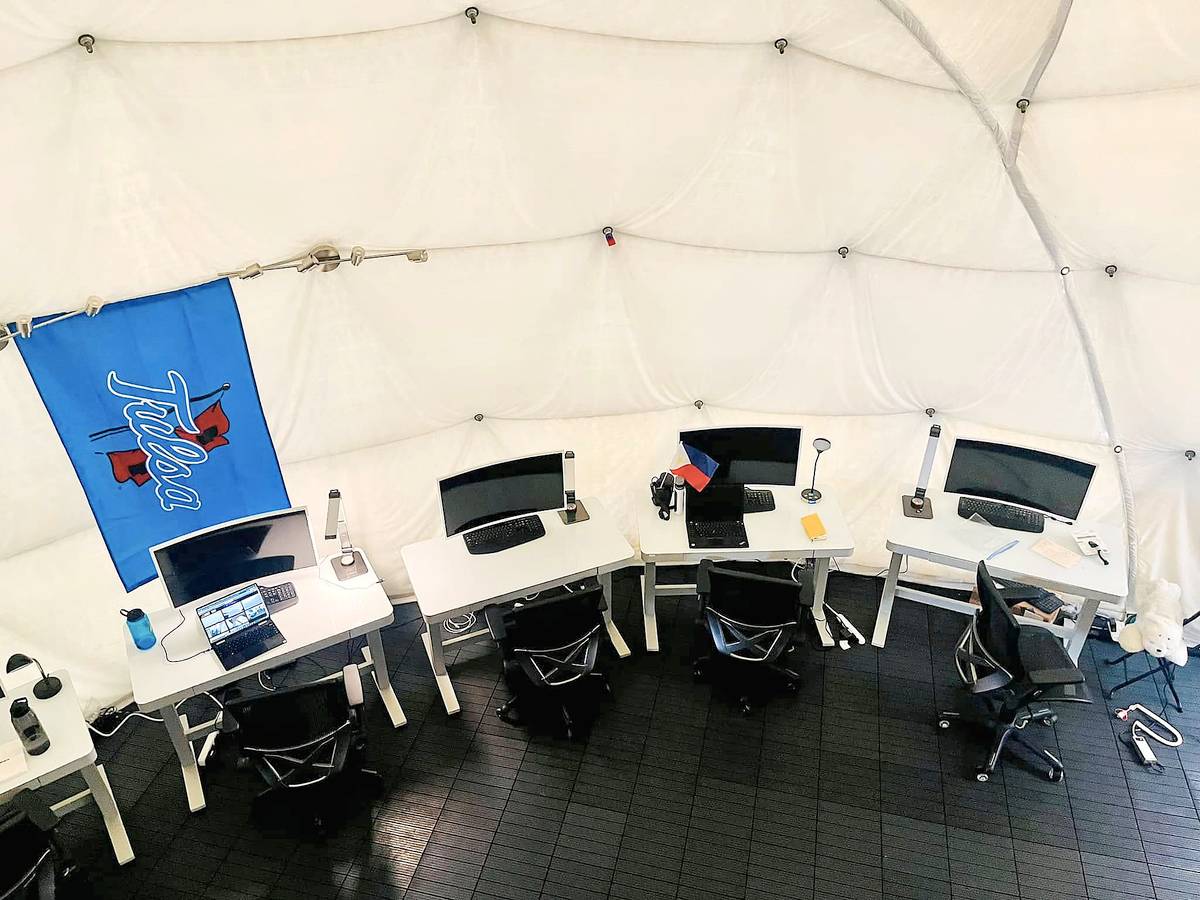
TAKING Filipino talent to new heights.
Atienza also recalled a particularly challenging moment during the mission, when she had to continue working despite being on her period. She shared that the experience, compounded by physical discomfort, tested her resilience and self-awareness as she carried out demanding tasks such as extravehicular activities.
“It’s a quiet burden that we carry as women; we still need to perform and show up even when we’re not at our best,” she recalled.
Looking back
Inside the HI-SEAS dome years later, Atienza’s childhood dream came full circle in an unexpected way.
“From outside the dome, in my space suit, I could see the Keck Observatory, high and mighty and quiet,” she said. “I would look at it, marvel and chuckle to myself at a joke that only I can understand.”
Atienza’s path to the mission was anything but straightforward. She described it as a mix of persistence, timing and what she calls “probably luck.” Even after shifting careers, she remained active in the space community, eventually focusing on space nutrition and collaborating with international researchers.
“I couldn’t remove astronomy from my system,” she said. “Astronomy then became my literal nightlife.”
Before joining HI-SEAS, she had worked as an investigator for analog missions and even applied to the Lunares Research Station, though scheduling conflicts prevented her from participating as a crew member.
By the time she applied to HI-SEAS, expectations were low.
“I didn’t expect anything, honestly,” she said. “I couldn’t get into HI-SEAS, could I?”
Yet she did — joining a highly accomplished international crew that included scientists, engineers and a pilot. Atienza remembered feeling out of place at times, particularly during quiet moments shared over meals.
“There were awkward silences during mealtimes,” she said. “Maybe because I’m one of the quiet ones… and then there’s me, the smallest crew member from the Far East, from the Philippines with its space agency in its infancy.”
Looking back, Atienza views the experience not just as a personal milestone but as part of a broader narrative for Filipinos in space research.
What began as a childhood dream of studying the stars in an encyclopedia evolved into a lived experience of simulating life on another planet. “The universe kinda makes fun of you that way sometimes,” she said.