
DA moves to manage P20 rice demand

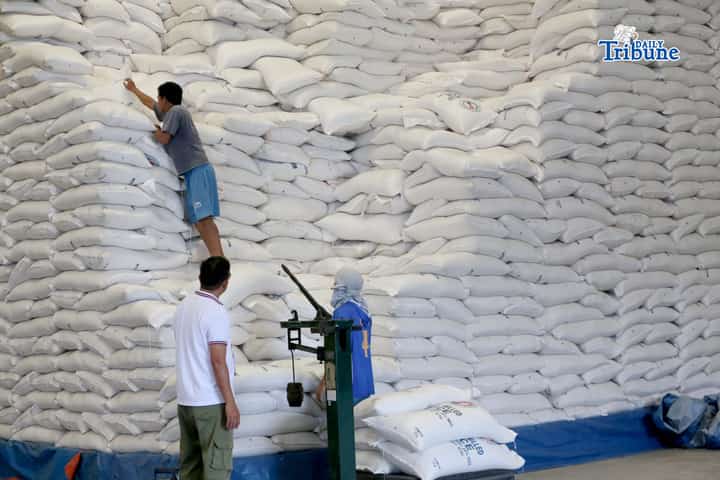
(February 19 2026) Personnel at National Food Authority (NFA) weighing the 20 peso per kilo a President Ferdinand Marcos Jr. rice program, before the beneficiaries arrive to buy rice at NFA warehouse in Valenzuela City, on Thursday February 19 2026, on February 20 the NFA will start an auction of 750, 000 sacks that have been stored at the warehouse in Valenzuela City. The minimum bid for stocks aged three to six months old will start at P25.16 per kilo. On the other hand, the minimum bid for rice stocks that are 18 months old is P22.52 per kilo. Photo/Analy Labor
Surging demand for subsidized P20-per-kilo rice has prompted the Department of Agriculture to tighten distribution through online registration, even as it assures the public that supply remains sufficient.
The agency said stocks held by the National Food Authority are stable, supported by strong procurement last year, allowing the government to sustain its flagship “Benteng Bigas, Meron Na!” program despite rising demand from low-income households.
“We implemented online registration to ensure that the most vulnerable sectors benefit from the P20-per-kilo rice, especially during these challenging times,” said Agriculture Secretary Francisco P. Tiu Laurel Jr. “For those who can pay slightly more, Food Terminal Inc. provides affordable rice through the Rice-for-All initiative, which has helped stabilize supply.”
Authorities said the registration system is also meant to prevent misuse, following reports of individuals attempting to access subsidized rice using fake identification. The move is expected to ease congestion at distribution sites while ensuring that benefits reach intended recipients.
To further secure supply, the DA allowed limited rice imports earlier this year ahead of the harvest season. This comes as global pressures, including higher fuel and shipping costs linked to tensions in the Middle East, continue to affect food logistics and prices.
“If necessary, we are ready to tap other rice-exporting countries to secure additional supply,” Tiu Laurel said.
The government is also preparing to implement a P50-per-kilo price cap on imported rice, part of broader efforts to keep food prices in check. Food inflation among the poorest households has recently accelerated, driven by increases in staple goods such as cereals, fish, and vegetables.
Officials said a mix of steady local procurement, calibrated imports, and controlled distribution will help maintain supply while keeping prices manageable. “Our goal is to ensure sufficient rice supply while keeping prices manageable,” Tiu Laurel said. “These measures help both consumers and farmers weather current challenges and safeguard food security.”