
In Cainta, senakulo begins, continuing a Holy Week tradition
Biblical stories and the Passion of Christ come alive as the practice of staging a traditional Filipino passion play endures.


On the evening of Palm Sunday, 29 March, marking the beginning of Holy Week this year, a senakulo started in Cainta. Staged by the Krus sa Nayon Incorporated (KSNI), the traditional Filipino passion play runs nightly until Easter Sunday, 5 April, at Tanghalang Cainta within the Cainta Municipal Grounds.

MOSESdelivering the tablets inscribed with the Ten Commandments.
PHOTOGRAPHS BY ROEL HOANG MANIPON FOR DAILY TRIBUNE
Fireworks signaled the opening of the presentation, a long-standing devotional tradition that has become a source of cultural pride for the town. KSNI began this year’s staging with the story of Moses and the Ten Commandments, which lasted for around four hours, from 9 p.m. to 1 a.m.
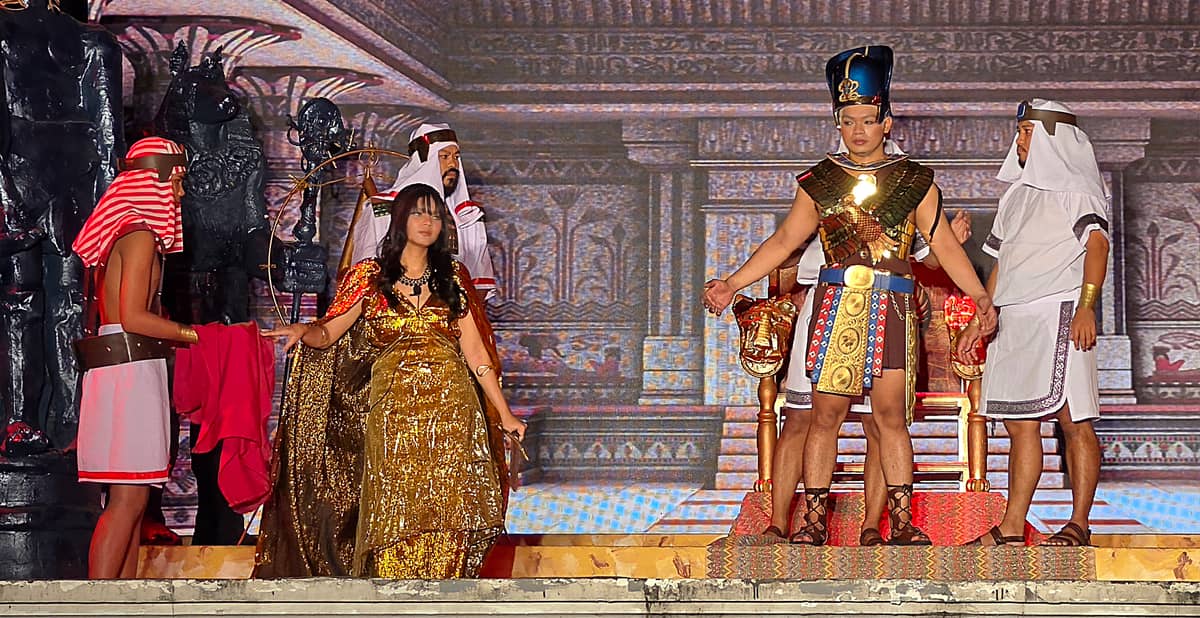
RAMSES gearing up to confront Moses.
PHOTOGRAPHS BY ROEL HOANG MANIPON FOR DAILY TRIBUNE
Dating back to the eighteenth century, the senakulo is a community-organized dramatization of Biblical stories, culminating in the suffering, death and resurrection of Jesus Christ during the Lenten season. It continues to endure in several towns across the Philippines. In Cainta, 18 senakulista and panata groups remain committed to sustaining the tradition, alongside other Lenten practices.
The senakulo in Cainta traces its beginnings to 1904 in the barrio of Dayap, now part of the barangays of Santa Rosa, Santo Niño, and Santo Domingo. According to local lore, residents once erected a cross to ward off what they believed were evil spirits. One night during Lent, a fragrant scent was said to emanate from the cross. In response, the community made a panata (vow or promise) to chant the pasyon and stage the senakulo as a devotional offerings every Lenten season.
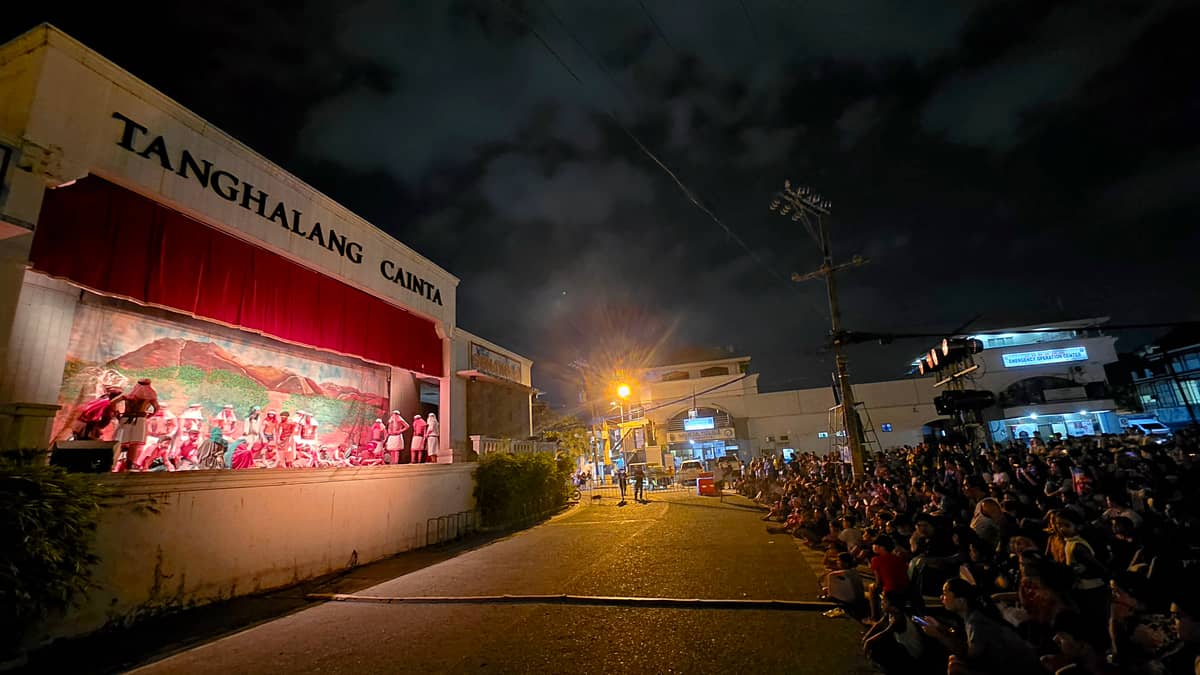
THE ‘senakulo’ is a Filipino Lenten tradition dating back to the 18th century.
PHOTOGRAPHS BY ROEL HOANG MANIPON FOR DAILY TRIBUNE
In his opening remarks, KSNI president Jordan Pingol recounted the group’s history: “Taong 1904 po na magsimula ang Samahang Krus sa Nayon sa isang bakanteng lupa dito po sa daan ng Catalino Cruz Street. At lumipas po ang maraming panahon, nagtuloy-tuloy po ang pagpapalabas ng senakulo. Ngunit pagdating po ng dekada sitenta, sandaling napatigil ang pagpapalabas ng senakulo, gawa ng politikal na kasaysayan ng ating bansa. Ngunit sa taong 1975, muling binuhay ng noong si councilor Norberto Fernandez ang senakulo. Kaya taong 1976, nagbalik ang pagpapalabas ng senakulo. Ngunit sa pagkakataong iyon — iyon po ‘yung tinatawag naming Marick Era — ito po ay ginawa muna sa compound ng Marick na kilala natin ngayong Marick Subdivision. Bale pinagdiriwang po ngayon ng samahang ito ang ika-limampung anibersaryo ng panahong iyon, simula 1976 hanggang 2026
(In 1904, the Samahang Krus sa Nayon was founded on a vacant lot along Catalino Cruz Street. As the years passed, the staging of the senakulo continued without interruption. However, in the 1970s, the performances were temporarily halted due to the political climate of the country at the time. In 1975, then councilor Norberto Fernandez revived the senakulo, leading to the resumption of performances in 1976. That period came to be known as what we call the “Marick Era,” as the presentations were then held in the Marick compound, now known as Marick Subdivision. Today, the organization celebrates the 50th anniversary of that period, from 1976 to 2026).”
He emphasized that their mission goes beyond performance, that the presentation is “hindi lamang pagpapalabas ng senakulo, kundi pag-aalay ng Mabuting Balita ng Panginoon — na nawa’y matutunan natin sa senakulong ito ay pagpapatawad at pagkababa ng loob (not merely the staging of the senakulo, but an offering of the Good News of the Lord — so that through this senakulo, we may learn forgiveness and humility).”
The senakulo continues to be observed as a panata by many participants, while also serving to bring Biblical narratives and Catholic teachings to the wider public, which is an original intention when it was introduced in the country.
Reverend Father Alexander V. Enhaynes, parish priest of the Parish of Our Lady of Light in Cainta, underscored the deeper spiritual role of the performers: “Bilang mga nagsasadula ng Misteryo Paskuwal ng Panginoon, mayroon po tayong napakahalaga na papel na ginagawa dito po sa aking bayan sa Cainta. Hindi ito dapat lamang isang pag-arte, kungdi ito ay daluyan ng biyaya ng Diyos para sa ating lahat (As those who portray the Paschal Mystery of the Lord, we carry a very important role here in my town of Cainta. This should not be merely an act of performance, but a channel of God’s grace for all of us).”
“Dahil sa ating masasaksihan at dahil sa kanilang pagsasadula, makikita natin muli ang pagbubunyi ng tao sa sakripisyo ng Panginoon para sa ating lahat at ang ating pakikiisa sa pagbubunying ito para sa ginawang ito ng Panginoon para sa ating lahat (Through what we witness and through their portrayal, we see once more the people’s rejoicing in the Lord’s sacrifice for all of us, and our own participation in that rejoicing for what the Lord has done for us),” he furher said.
“Tulad ng paalaala sa atin ng Simbahan, ang mga kuwentong ito ay kinakailangang humubog sa ating lahat — huhubog sa daluyan ng biyaya ang mga magsasadula at huhubog sa atin ang sasaksi sa mga pagsasadulang ito (As the Church reminds us, these stories must shape us all — those who perform as channels of grace, and those who witness these portrayals).”