
Holy Week 2.0
Because of that environment, I learned to expect change and to adjust without hesitation whenever a new update came in.


Your first job teaches you how systems change over time.
Back in the early 90s, at NEC, I joined as a new engineer, and I assumed that the systems and processes I learned on my first day would remain consistent. That assumption did not last long.
Mr. Ota, or Ota-san as we called him, handled human resources, and he made sure that any changes in policies or procedures were communicated clearly to the team.
When updates were introduced, he explained what changed and why it mattered. That process remained organized, and the adjustments improved how we worked.
Because of that environment, I learned to expect change and to adjust without hesitation whenever a new update came in.
Years later, I encountered the term “OTA” in a different context. In the motoring world, it stands for over-the-air updates, where changes are applied through software without altering the physical structure and without direct interaction from the driver.
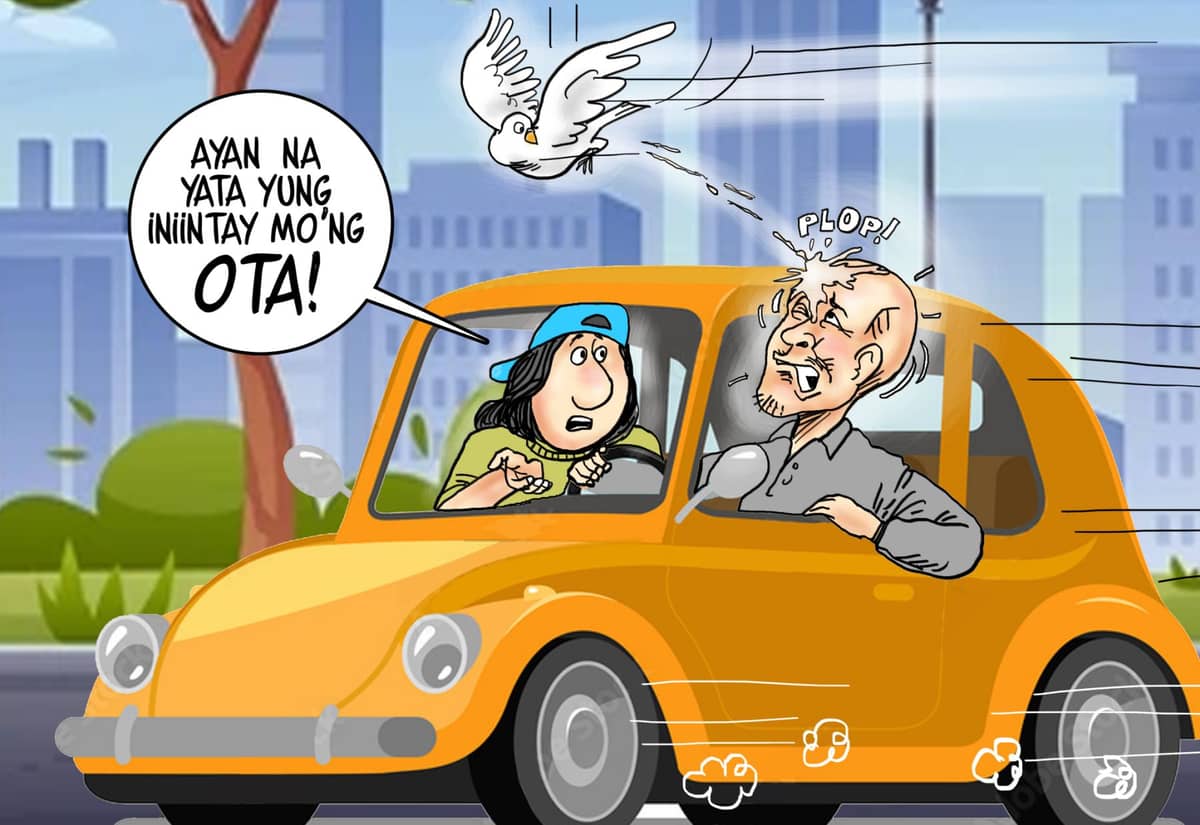
Illustration BY GLENZKIE TOLO
Several carmakers already use this system. Tesla built its lineup around it, and models such as the Model 3 and Model Y receive updates that can improve range and adjust acceleration response.
BYD applies similar updates to models like the Atto 3 and Seal, which receive improvements to infotainment and system stability.
BMW uses Remote Software Upgrade to update navigation, driver assistance, and selected vehicle functions without requiring a dealership visit, although some updates still depend on the system.
The process works like a smartphone update. The car connects to the internet through a built-in data connection or a Wi-Fi network. When a new software version becomes available, the system downloads it in the background.
The driver receives a prompt to install the update, or the car schedules it when parked. After installation, the system restarts and applies the changes.
The effects are not always obvious, but they become noticeable over time as the display responds faster and the navigation system works more efficiently, while the hybrid system also switches more smoothly between the engine and the motor.
There are also limits, since not every feature can be added through software. Physical systems such as suspension or braking hardware still depend on mechanical design.
There are risks as well, as an update may introduce a new issue or change a function that drivers have already learned.
An update can be downloaded overnight, depending on connectivity, and its effects may only appear the next morning, especially when the car is used for a longer trip.
This may come up during Holy Week, when many leave the city and drive to the provinces, as changes are easier to pick up on a long drive.
As the trip continues, small differences appear. The throttle may feel smoother when merging, and the display may look different when checking directions.
In the past, changes were visible. In a modern car, similar changes can happen through software without any physical or visible adjustment.
The car you drove yesterday still looks the same today, but it may not be exactly the same car anymore.
Let’s keep safe on the road this Holy Week, and may we come back a better version of ourselves, not just our car.