
Why Clark International Airport among world’s best
CRK was named a Prix Versailles Laureate by the United Nations Educational, Scientific and Cultural Organization (UNESCO), placing it among the most beautiful airports in the world.


Clark International Airport (CRK), Pampanga’s gateway to the world, proves it is far more than a transportation hub. It stands as a work of art — a testament to world-class Filipino talent in architecture and design. More than just a place for departures and arrivals, CRK reflects the country’s identity, history and creative spirit. It is, without a doubt, one of Pampanga’s finest landmarks.
This recognition is not without merit. In 2023, CRK was named a Prix Versailles Laureate by the United Nations Educational, Scientific and Cultural Organization (UNESCO), placing it among the most beautiful airports in the world. The prestigious award honors excellence in design, sustainability and cultural integration across airports, shopping centers, restaurants and campuses. That year, only two airports from Southeast Asia — including CRK — were included in the global list of 24, highlighting its exceptional standing on the international stage.
Inspired by Philippine natural identity
CRK’s design draws deeply from the Philippines’ natural landscapes and cultural heritage. The airport’s striking exterior was designed by BUDJI+ROYAL, while its interiors were crafted by Populous in collaboration with Casas+Architects. One of its most defining features is the arched roof, which mirrors the mountain ranges of Zambales. This structure is made using glulam (glue-laminated timber), a durable and versatile engineered wood material imported from Austria.
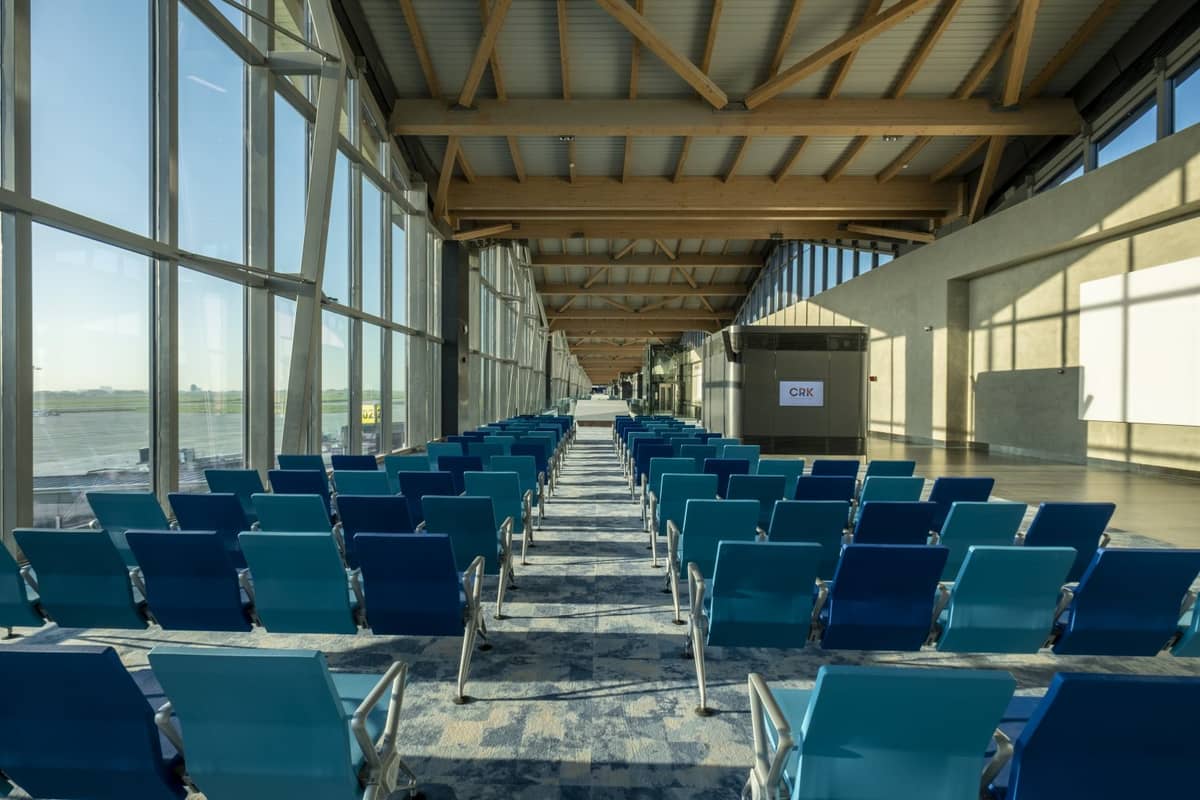
INTERNATIONAL gates feature green carpets and seating, while domestic gates are in blue.
Inside, the airport continues to tell a story. Its earth-toned palette reflects the country’s natural scenery — from caves and riverbeds to bodies of water like the crater lake of Mt. Pinatubo. The gray flooring, in particular, mimics the color of lahar, the volcanic debris from the 1991 eruption of Mount Pinatubo.
According to CRK, this design choice symbolizes a defining moment in Philippine history, one that tested the resilience and strength of the Kapampangan people.
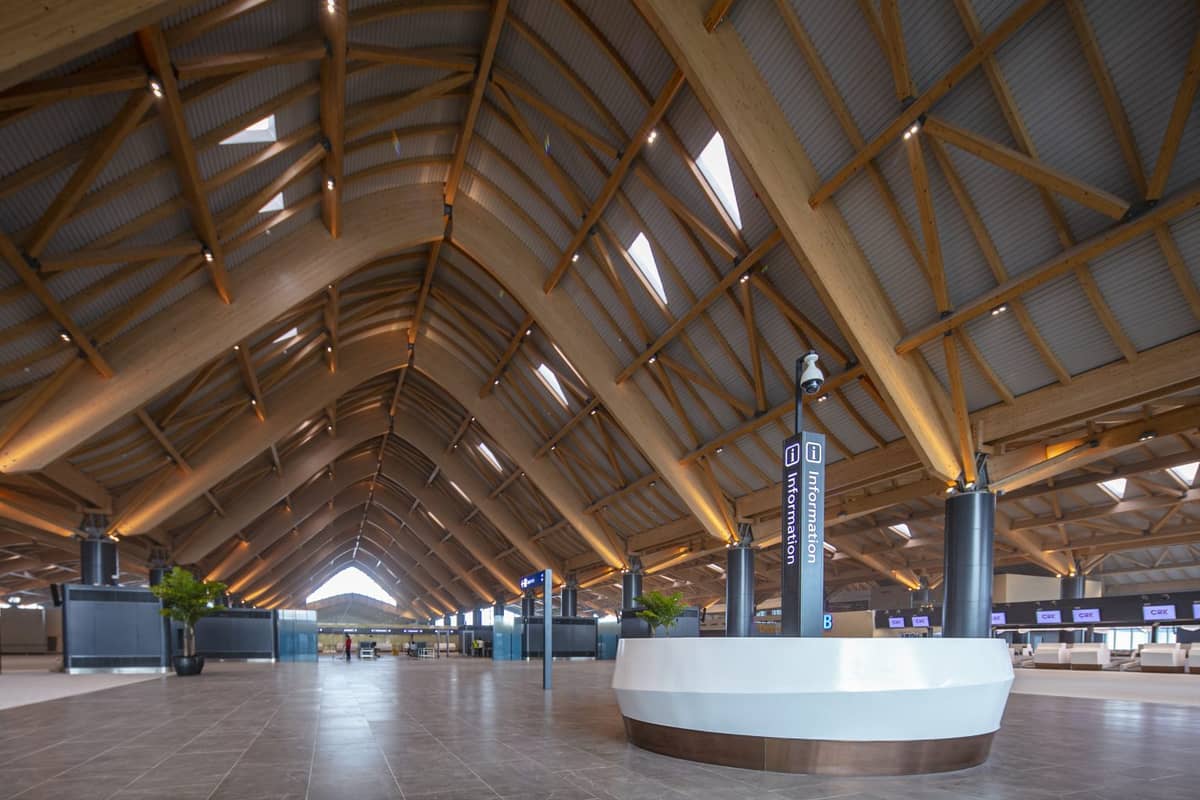
THIS roof is made using glulam from Austria.
Even the boarding gates are thoughtfully designed. To make navigation easier for passengers, they are color-coded: international gates feature green carpets and seating inspired by Mt. Arayat, while domestic gates are marked in blue, reflecting the waters of Manila Bay.
These details are not merely aesthetic; they are intentional reminders of the landscapes that shape Filipino identity.
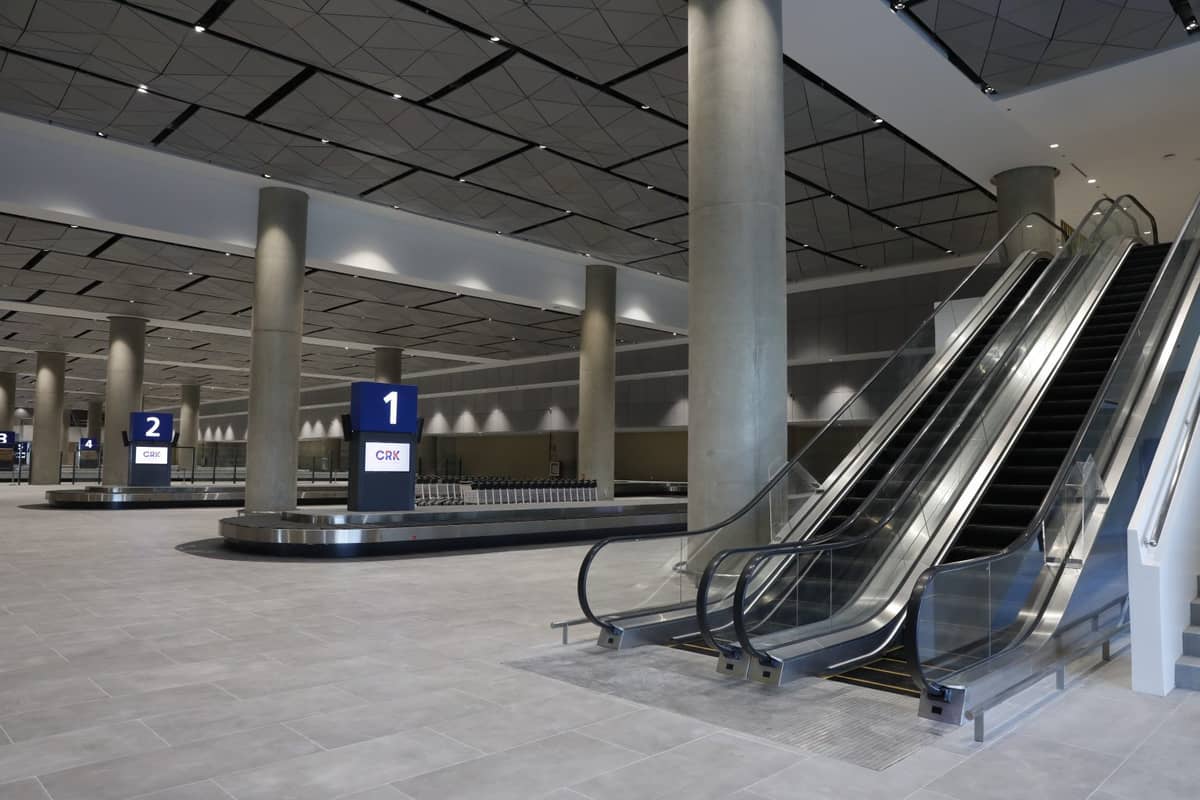
THE gray flooring, in particular, mimics the color of lahar of Mt. Pinatubo’s 1991 eruption.
More than just another airport
While many countries boast world-renowned airports, such as Singapore’s Changi Airport, famous for its lush indoor gardens and futuristic design, CRK offers something different. It does not rely solely on modern spectacle or technological grandeur. Instead, it invites travelers to look inward and backward, reconnecting with the nation’s roots rather than simply showcasing visions of the future.
CRK’s strength lies in its symbolism. Every corner tells a story, every design element carries meaning. For international visitors, it offers a glimpse into Filipino culture. For locals, it evokes a sense of nostalgia and pride. In a country known for its strong sense of community or pakikipagkapwa, CRK becomes more than just a transit point; it becomes an experience.
Ultimately, Clark International Airport does more than connect people to destinations. It connects them to the Filipino story; one defined by creativity, resilience, and a deep sense of shared identity.