
Beyond the postcard: Anchoring Philippine tourism in climate resilience
Tourism depends on stable coastlines, predictable weather, functioning infrastructure and healthy ecosystems.


The Philippines is not merely a destination. It is one of the world’s remaining ecological frontiers — one of only 18 megabiodiverse countries that together host most of the planet’s species. That distinction is an asset. It is also exposure.
Our beaches, coral reefs, forests and seascapes power a tourism industry that sustains millions. Visitors do not come for manufactured attractions; they come for living ecosystems. The postcard is real. But in a century defined by climate instability, beauty alone will neither sustain nor drive a growing economy.
In 2025, domestic tourism reached 134 million trips. International and returning Filipino visitors exceeded six million. Around 16.4 million Filipinos derive livelihood from the sector, which contributes more than six percent of GDP. In many coastal and island provinces, tourism is not supplementary income — it is fiscal backbone, employment engine, and small-enterprise lifeline.
Yet that is precisely the vulnerability.
Tourism depends on stable coastlines, predictable weather, functioning infrastructure and healthy ecosystems. Climate change alters these conditions slowly at first, then all at once. Sea levels rise until beachfronts retreat. Ocean temperatures climb until coral systems bleach. A single typhoon can undo years of investment and wipe out a season’s earnings.
We have seen this before. The rehabilitation of Boracay was not only an environmental intervention; it was an economic correction. When ecosystems degrade, revenues follow. Climate stress raises risks, narrows margins and complicates operations.
Across Southeast Asia, destinations are now competing not only on amenities but on resilience. Investors, insurers and even travelers increasingly assess climate exposure. Infrastructure that cannot withstand projected risks for 2050 or 2100 carries financial consequences today. Adaptation is no longer environmental preference. It is part of economic competitiveness.
The Philippines has begun to internalize this reality through its National Adaptation Plan (NAP). Completed under the administration of President Ferdinand R. Marcos, Jr., the NAP identifies tourism as a climate-sensitive sector intertwined with agriculture, fisheries, water systems and coastal infrastructure. When severe weather strikes, it does not isolate damage. It hits the harvest, the boat, the road and the resort in the same sweep. Recovery, if done piecemeal, only postpones the next loss.
For years, resilience in the Philippine context meant the capacity to rebuild. We have become practiced at that. But rebuilding what was lost, in the same place and under the same assumptions, is no longer enough. Anticipatory adaptation — planning before impact — must shape tourism development.
This means integrating climate projections into land-use and investment decisions. Building in high-risk zones without factoring sea-level scenarios is no longer defensible. It means strengthening coastal defenses not only with concrete but with mangrove belts that absorb storm surge. It also means protecting watersheds that secure both biodiversity and the water supply of communities and enterprises alike.
Protecting ecosystems is not sentimentalism. It is risk management. And increasingly, it is fiscal prudence.
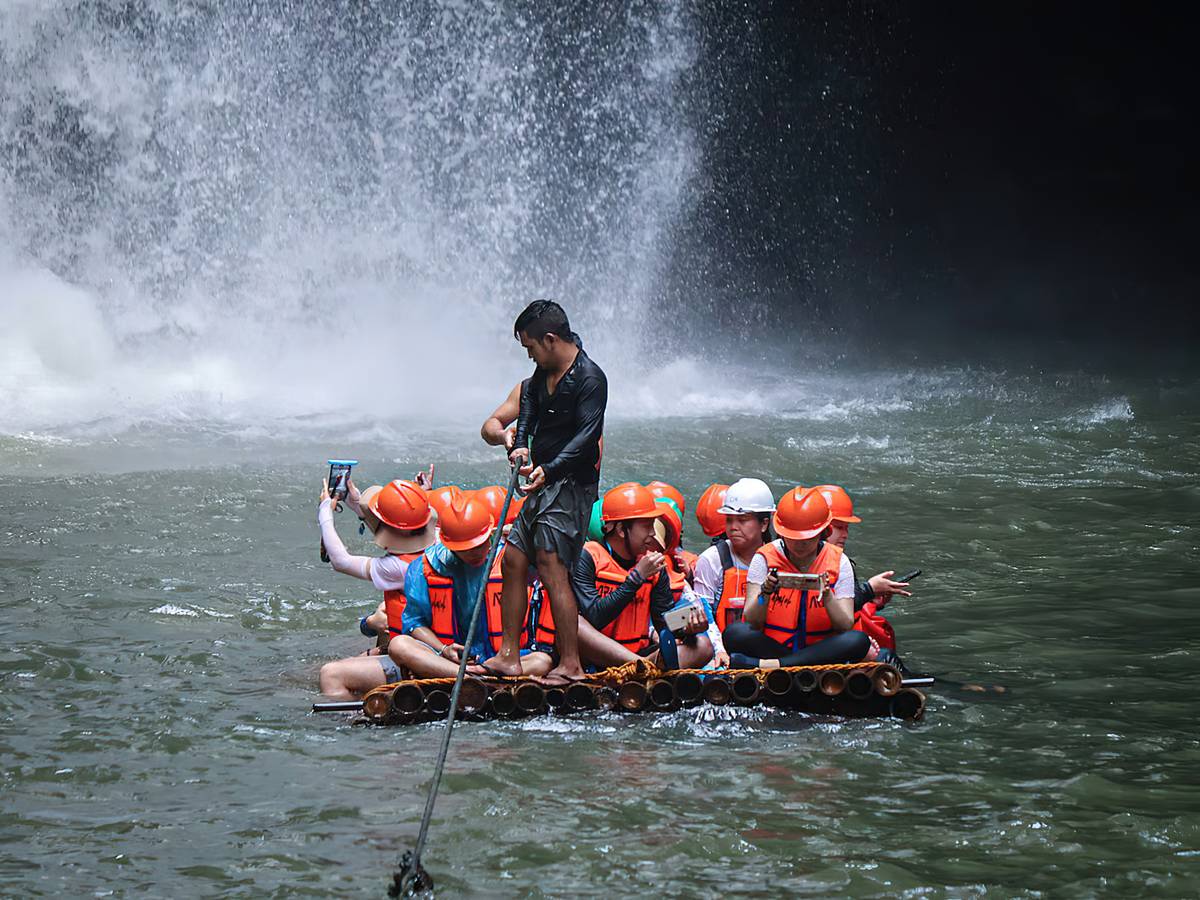
AROUND 16.4 million Filipinos derive livelihood from tourism.
DAILY TRIBUNE image
The human dimension is just as central. Millions of tourism workers operate in climate-exposed conditions — boat operators, dive guides, transport providers, small vendors. When flights are cancelled or towns are flooded, income stops immediately. Climate shocks widen inequality when social protections and economic diversification are weak.
True resilience must therefore be inclusive. Local governments need the tools and fiscal space to integrate climate risk into zoning, infrastructure planning, and enterprise development. Communities cannot remain dependent on a single climate-sensitive industry without buffers. Frontline workers are not just service providers; they are stewards of the ecosystems that sustain their livelihoods.
Tourism strategy cannot operate apart from climate policy. Economic growth, infrastructure investment, land-use planning, and adaptation policy must move in alignment. The private sector has a responsibility to adopt risk-informed operations. Government, for its part, must provide credible science, consistent policy signals, and long-term planning horizons that reduce uncertainty for investors and communities alike.
Resilient tourism is not about preserving an image. It is about protecting livelihoods, securing local economies, and safeguarding ecological capital in a climate-exposed nation.
That requires more than foresight. It demands science-based planning, risk-informed investment and disciplined implementation that aligns tourism with coastal protection, water security, land use and national adaptation policy. These are not parallel agendas. They are one system.
A postcard captures what is pleasing to the eye. It does not, however, reveal what it takes to protect that beauty from the forces that can undo it. In an era of stronger storms and rising seas, surface beauty is not enough. We do not need a postcard. We need a solid game plan that is grounded in science, carried through in policy, and built to endure.A