




This Donut doesn’t spike blood sugar
The EV world has heard bold claims before. Many of them. Skepticism comes free with the territory.


Text size
The EV world has heard bold claims before. Many of them. Skepticism comes free with the territory.
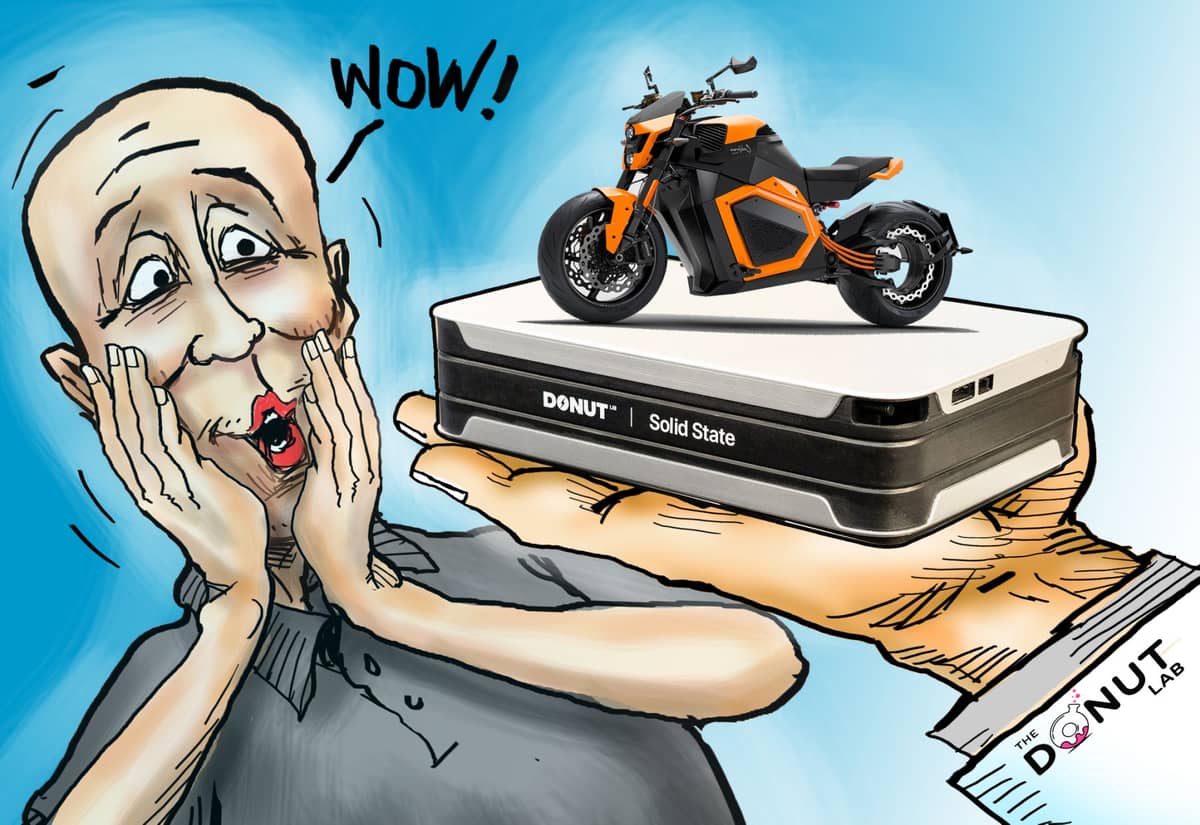
Illustration by GLENZKIE TOLO
Solid-state batteries for vehicles come up over coffee, usually among tech or car enthusiasts, right after someone says they are cutting back on sugar. People have heard the claims before. They are still waiting to see them work.
So when Donut Lab entered the conversation, expectations were low. The name alone sounded risky. But this donut skips the sugar. It discusses faster charging, cooler operation, improved safety, and longer battery life.
Then CES 2026 happened.
Donut Lab showed a battery that is already doing real work, not five years away, not waiting for a miracle factory to open.
Not a car. A motorcycle. And that matters.
Instead of debuting inside an electric sedan, Donut Lab’s solid-state battery is already powering the TS Pro from Verge Motorcycles. A real, road-riding electric motorcycle. Built for daily use.
That choice matters. Motorcycles allow little margin for error. Heat and vibration show up fast.
According to the company, the solid-state pack delivers quicker charging and improved safety compared to conventional lithium-ion batteries.
Let’s be honest. EV hesitation here is not because we love gasoline. It’s because it’s a struggle to look for stations to charge.
Charging stations are still scattered. Mall chargers are sometimes blocked by a car that can’t be moved. Home charging works, but only if your wiring is updated and your electric bill does not give you heart palpitations.
A battery that charges faster and lasts longer between charges is a game-changer. No range mathematics. Less planning. Less staring at apps. No mild panic when the battery drops below 20 percent.
If solid-state batteries deliver even part of what is being promised, EV ownership will shift from lifestyle adjustment to owning a normal vehicle. Plug in. Charge. Drive. Basic.
Donut Lab, together with WATT, likewise unveiled, at CES 2026, a lightweight skateboard platform using in-wheel motors. The motors sit inside the wheels themselves, hence there is no need for traditional drivetrains.
That opens up space. Vehicles designed around people and cargo instead of mechanical packaging.
It also opens doors for markets like ours. Smaller EVs, delivery vehicles, utility platforms, and even future public transport options become easier to design and cheaper to adapt. The platform does not dictate the vehicle. It supports it.
Is this finally the moment?
The EV world has heard bold claims before. Many of them. Skepticism comes free with the territory.
But this time feels different. A battery already in use. A platform already rolling. Less talk about someday. More proof of now.
If solid-state batteries scale the way companies like Donut Lab suggest, the biggest EV question in the Philippines may soon shift.
Not where to charge. Not how long it takes. But which one to buy.
And that would be a nice problem to have, preferably over coffee, without the sugar.
Housing is probably the biggest issue affecting people the world over.
Malacañang on Monday called for a more thorough investigation into the questioned flood control projects in Taguig…
The defense on Monday backed the move by senator-judges to exclude a prosecution witness who testified on the firearms…
