
Abad: Pangandaman’s hand prints all over

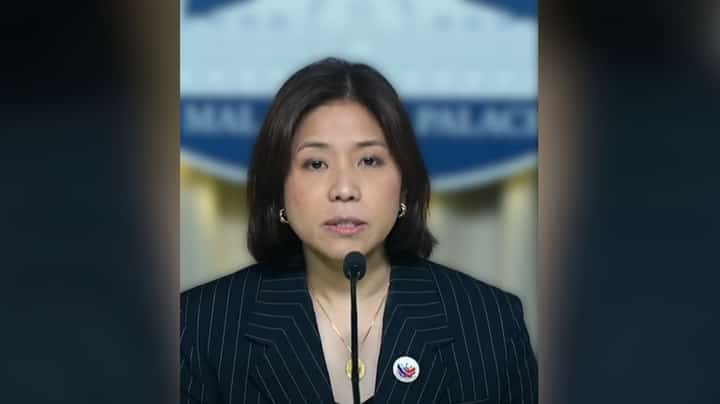
The role of resigned Budget and Management Secretary Amenah Pangandaman in the yearly budget manipulation has come to light, following revelations by a predecessor, Florencio Abad, who was the budget chief in the administration of the late President Benigno “Noynoy” Aquino III.
In an online interview, Abad said Pangandaman’s resignation was overdue, as the problem with the insertions started in 2023 and she allowed it to persist until 2025.
“If it had been stopped at around that point (2023), then it could not have gone through 2024 to 2025, and to what many observers now call the worst plunder of the budget ever,” Abad said.
Abad was referring to the 2023 bicameral conference committee (bicam) report, where the budget manipulation was evident, with a diversion of almost P400 billion.
“Some members of Congress have been asking for the bicam reports and the minutes of the small committee meetings to be produced to see where the cuts were made and the insertions happened. But they have not been produced so far,” Abad said.
“Had it (insertions) been stopped at around that point, then it could not have gotten worse at this stage,” he said.
“I saw copies of the summaries and a full copy of the bicam report of 2025, and you could very well see huge budget cuts were made and they were also moved or transferred to some other items like flood control infrastructure projects, ayuda and many other projects,” Abad said.
He said the Independent Commission for Infrastructure (ICI), which is looking into the flood control scandal, must obtain these documents so they can be fully exposed and the people apprised of what really happened.
“If you don’t get to the root of this problem, then there is no way for us to be able to understand what really happened,” he averred.
Culpable as President
Abad said that since the yearly budget is the financial expression of his development priorities for a year, President Ferdinand Marcos Jr. is responsible for it.
“Congress indeed has exclusive jurisdiction over the budget authorization process, but it is also true that it has an overwhelming number of allies in the supermajority,” he pointed out.
“Since they are part of the President’s coalition and are also committed to supporting him in providing a clear direction, if they undermine him, I think the President has the right to call on them to correct the budget misallocation,” Abad said.
The President had priorities he wanted to include in the budget, and he had all the time to direct the secretary of the budget, the secretary of finance, and the economic managers to include those priorities in the National Expenditure Program.
“So that is why many people are a bit confused why (former Ako Bicol Party-list Rep.) Zaldy Co is saying in a series of revelations that P100 billion worth of projects were inserted in the bicam,” Abad said.
“That was towards the end of December already. Why would the President request the inclusion of P100 billion in the bicam? So I think if Zaldy Co wants people to believe him, he has to come home and explain to us what were all these revelations he made,” he added.
Regarding Pangandaman, during the budget preparation stage, the secretary oversees it, which takes about six to eight months.
“Then, when the President and the Cabinet finally approve the budget, it is submitted to Congress, and it becomes the General Appropriations Bill (GAB), but the function and the responsibility of the secretary of the budget does not stop there.
“She has to monitor what happens to the budget as it goes through the budget authorization process because the responsibility of Congress is to find out whether the budget in fact reflects the priorities of the President,” according to the former budget department head.