




VICOAP urges mandatory brake testing for safer roads

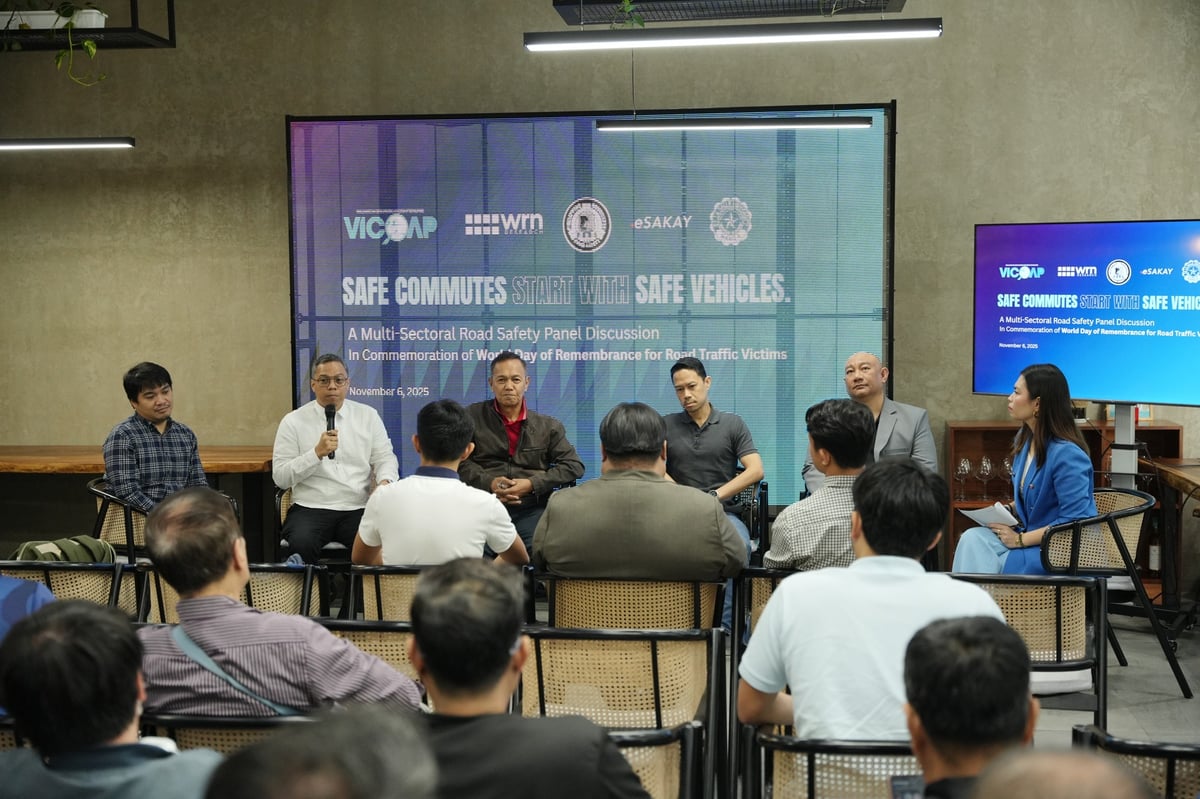
PANELISTS from VICOAP, e-Sakay, and road safety groups discuss the need for mandatory brake testing to ensure safer public transport.
Photograph courtesy of VICOAP
Text size
PANELISTS from VICOAP, e-Sakay, and road safety groups discuss the need for mandatory brake testing to ensure safer public transport.
Photograph courtesy of VICOAP
Three decades after the Marcopper mining disaster devastated Marinduque’s waterways, the province is again pressing the…
Housing is probably the biggest issue affecting people the world over.
Malacañang on Monday called for a more thorough investigation into the questioned flood control projects in Taguig…
The defense on Monday backed the move by senator-judges to exclude a prosecution witness who testified on the firearms…
Nearly half of the country’s public utility vehicles (PUVs) failed brake inspections this year, according to data shared by the Vehicle Inspection Center Operators Association of the Philippines (VICOAP). The group, joined by road safety advocates, is calling for mandatory brake testing to help prevent crashes and save lives.
At a roundtable discussion in Taguig City, VICOAP revealed that from January to September 2025, 47.3 percent of inspected PUVs did not meet brake safety standards. The event, held in line with the World Day of Remembrance for Road Traffic Victims, gathered representatives from e-Sakay, De La Salle University, WRNumero, and the Philippine Advocates for Road Safety to talk about data-driven solutions to improve road safety.
“Behind every crash is a preventable failure, and many start with the brakes,” said VICOAP spokesperson Atty. Lester Cavestany. “We want to support agencies like the DOTr and LTO in creating standards that make vehicle safety a shared duty.”
WRNumero’s Surveys for Good 2025 also revealed that 8 in 10 Filipinos fear road accidents, with lower-income commuters expressing the most concern. Mikael Degilla of e-Sakay noted the urgency: “As roads get busier toward the holidays, we must ensure that PUVs are safe enough to take passengers home.”
The group urged stronger coordination between policymakers and transport operators to make brake testing a required part of vehicle inspections. This move aligns with the Department of Transportation’s Road Safety Action Plan, which targets a 35 percent reduction in traffic-related deaths by 2028.
“Brake testing isn’t bureaucracy — it’s a life-saving measure,” Cavestany said. “Every unsafe vehicle on the road is a risk we can prevent.”
