
When past and present live side by side

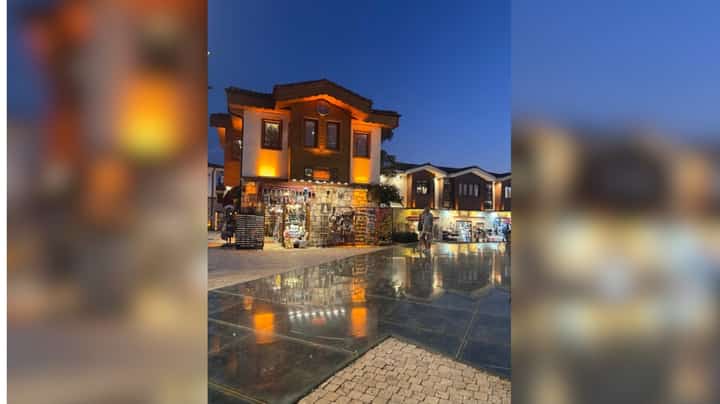
The ancient city of Side also welcomes visitors until 10 p.m. during the summer as part of Türkiye’s Night Museums Project.
An ancient road excavated in the port city of Side, Antalya province in Turkey, looks like it leads to nowhere.
Yet underneath the floors trod by locals and tourists everyday, such remnants of history are allowed to see the light of day, perhaps to remind us to treasure our time in this world, and think about what it is we could be leaving behind when our time is done.
Life moves in a leisurely way in Side.
The ancient city is located 80 kilometers east of Antalya and seven kilometers southwest of Manavgat.
Considered as “Pamphylia’s most crucial port city in ancient times,” Side today gives visitors a peek into the past by building structures that meld with the old pathways, starting from the city’s main gate, meandering through streets with cafes and shops featuring glass-floored fronts underneath of which lie ruins from the sixth century BCE to the time of the Greeks and Romans.
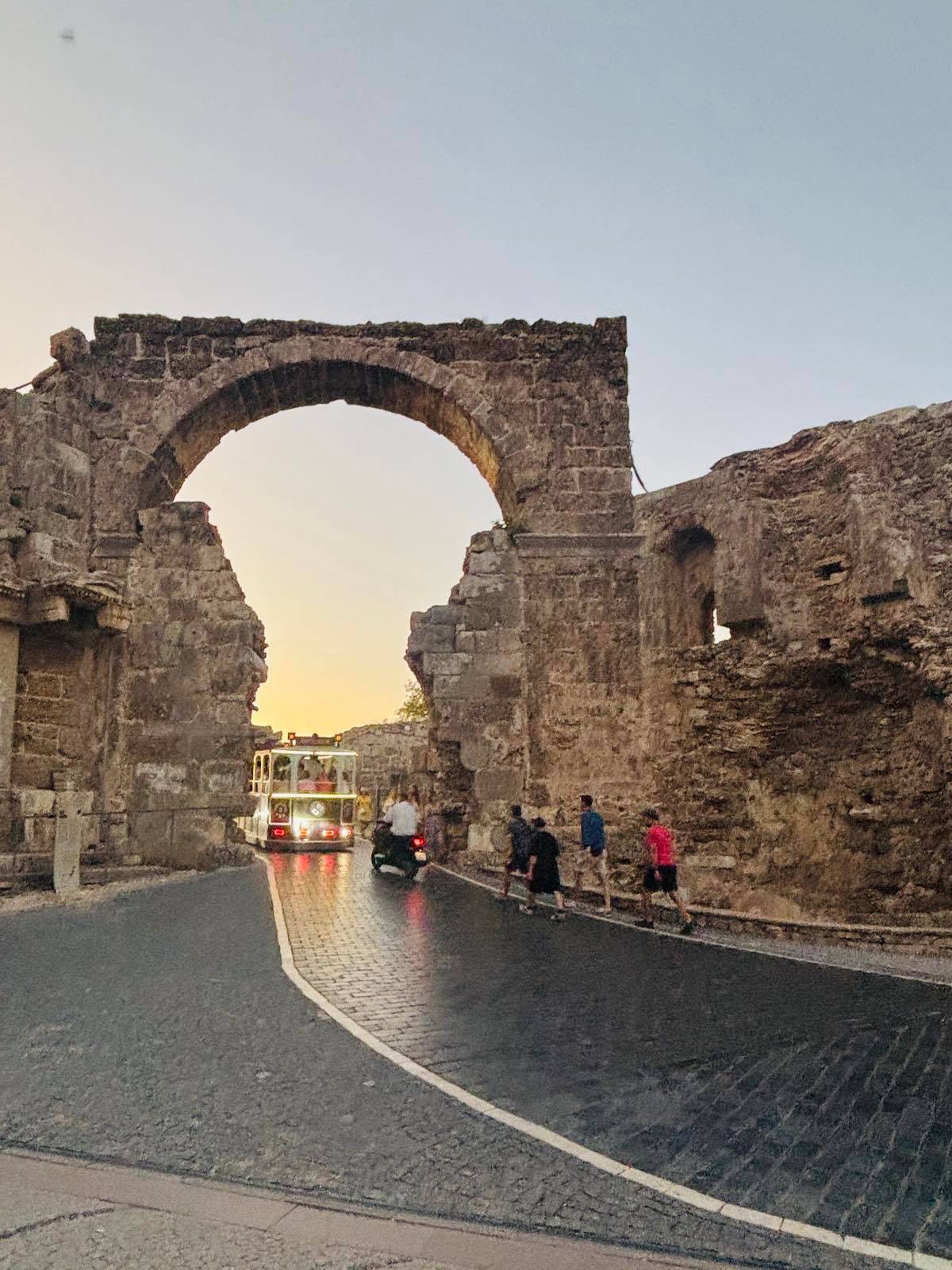
Built on a peninsula, Side runs along a monumental street that starts from the city’s main gate, as in other Pamphylia cities.
Photographs by Dinah S. Ventura for DAILY TRIBUNE
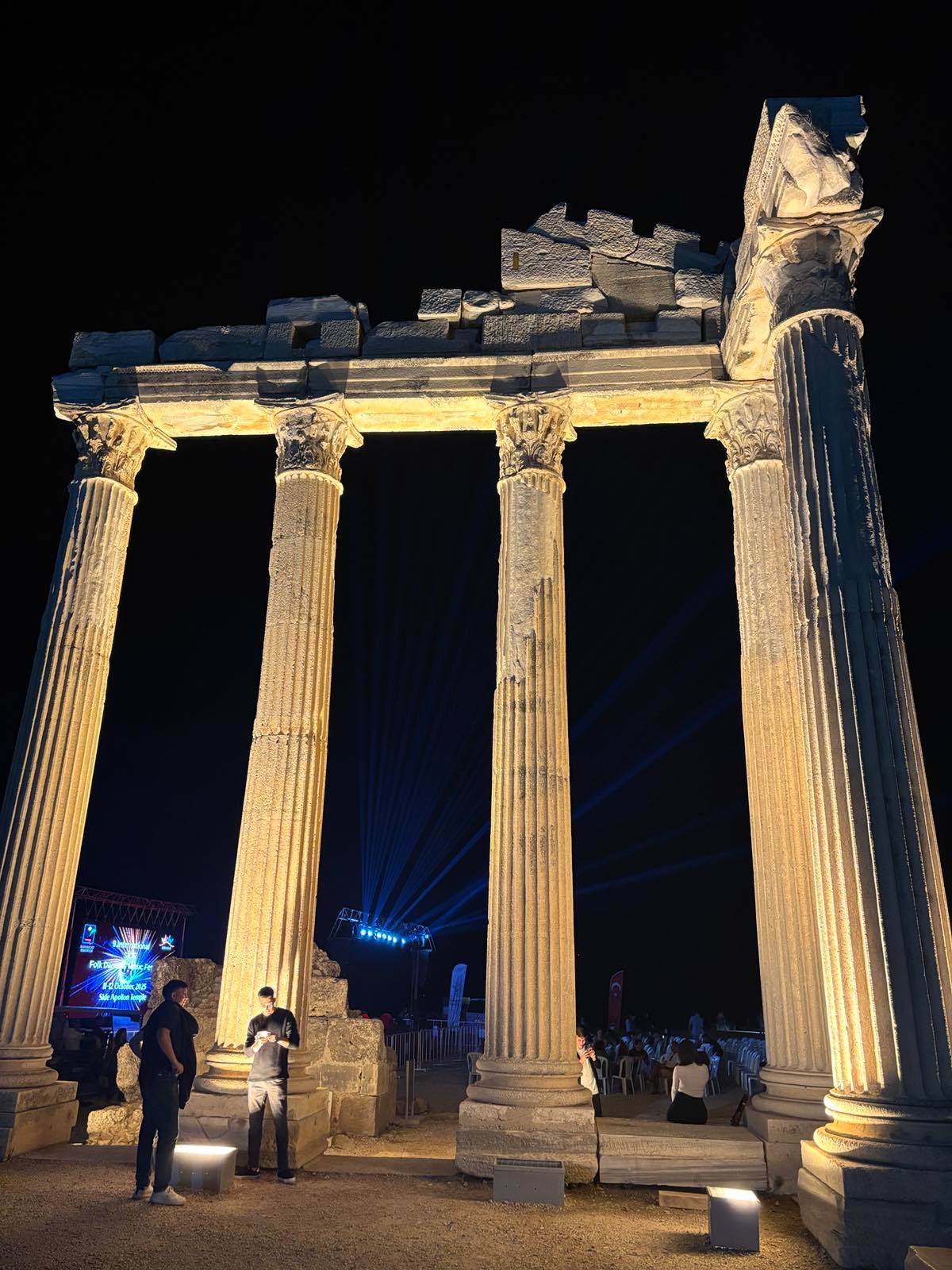
The Apollo Temple was built during the Roman period and looks magnificent lit up or against the colours of the sunset.
The walk ends with the soaring sight of what remains of the Temple of Apollo in the square towards the end of the columned street. Considered as “one of the most picturesque symbols of Antalya,” the temple is “dedicated to Apollo, a god associated with fire, light, sun and reality in Greek and Roman mythology,” according to information from the Turkish Airlines.
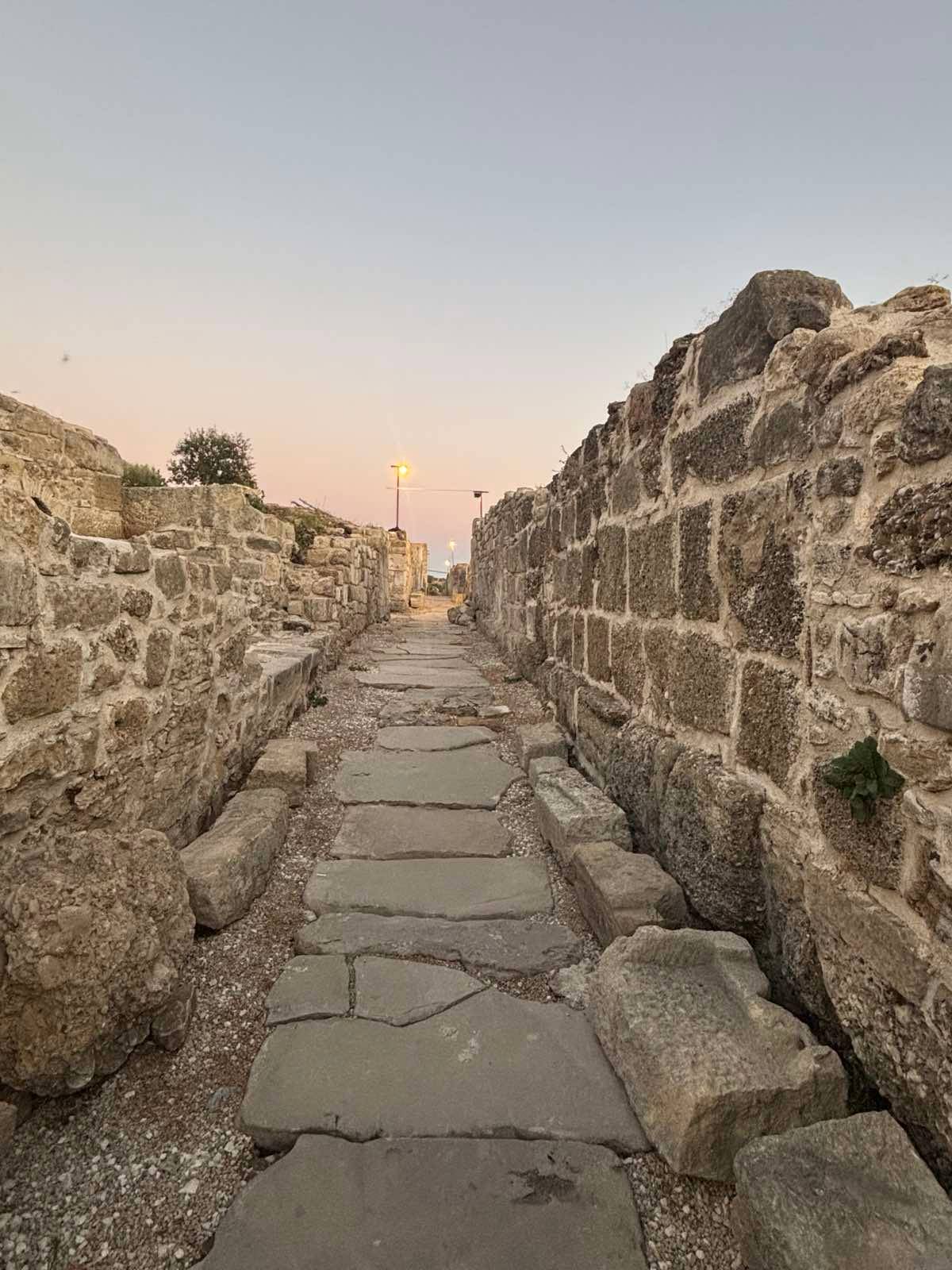
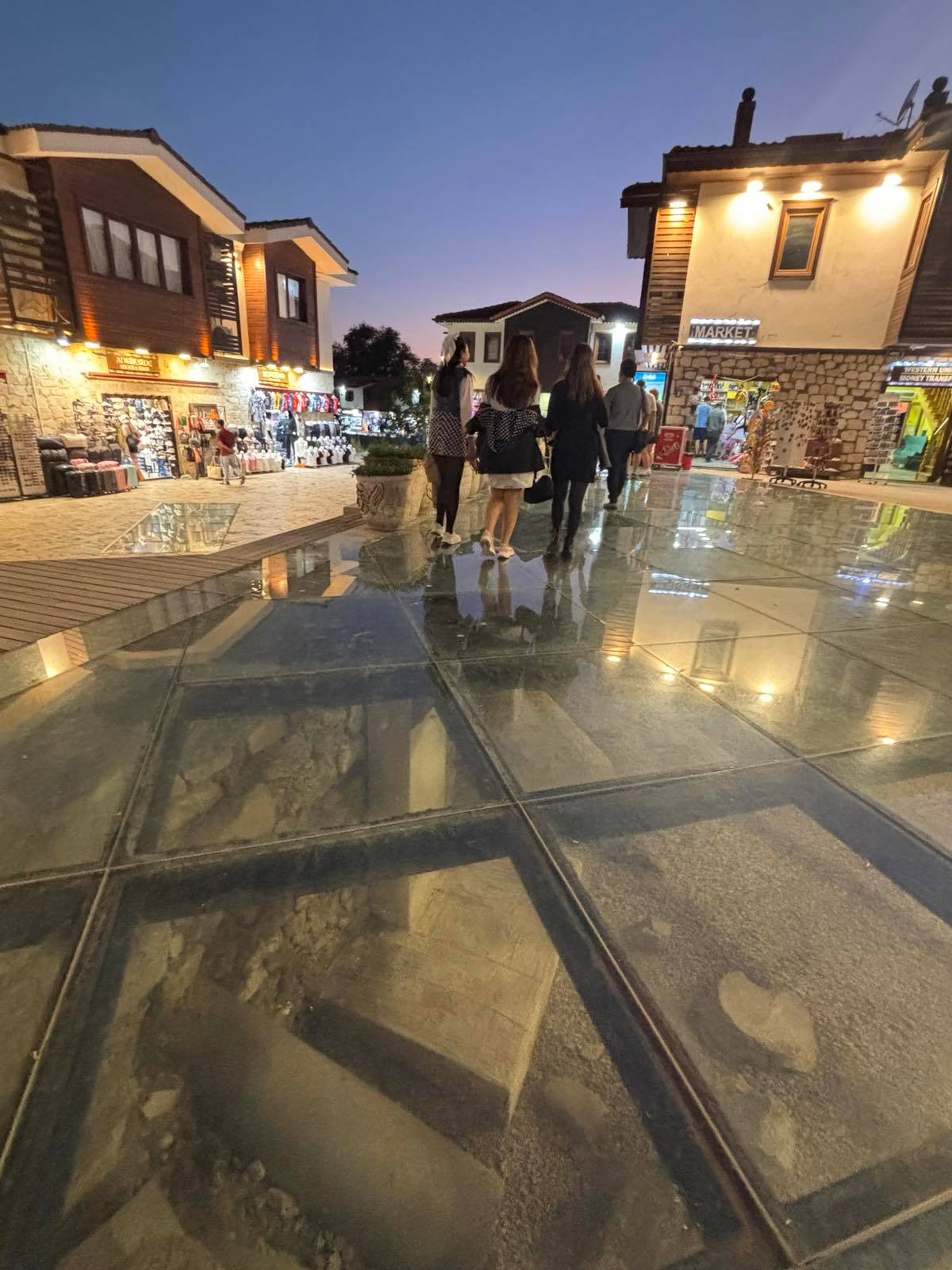
Excavations in Side make the town quite enjoyable, with several ruins and findings all mingled up.