




Vain imprudence
Building a palace signals stability while hiding instability — because a palace is easier to measure than policy, lost tax money, or the inflationary pain households endure.

Text size
Building a palace signals stability while hiding instability — because a palace is easier to measure than policy, lost tax money, or the inflationary pain households endure.
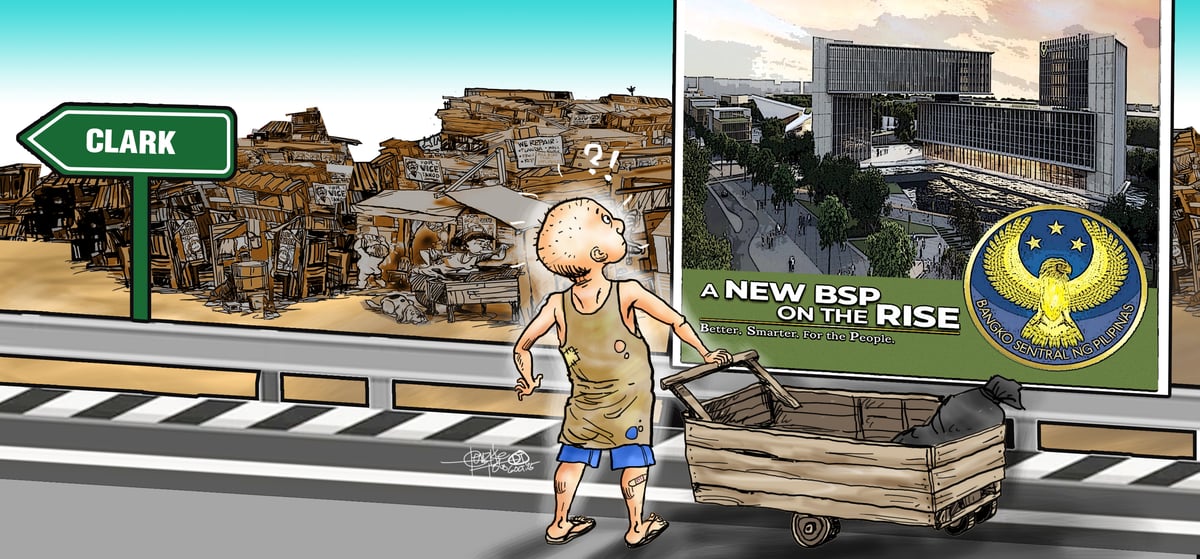
Something’s almost pornographic about the new Bangko Sentral headquarters, the glass-and-granite sermon on “stability” rising (some say in 2028, others 2031) in a country neck-deep in graft.
The Clark complex costs under P50 billion, “paid from its own reserves,” the BSP has insisted, as if cash ceases to be public the instant it passes through their hands.
It’s a moral misfire nonetheless, pushed while the country reels from crises squarely within the BSP’s remit to anticipate, manage and mitigate.
The same system that can’t track flood funds somehow finds the generosity to pay its Monetary Board members millions a month to approve such a project that does little for taxpayers.
The BSP must stand for discipline and independence, a promise to the nation that money moves with purpose and that the poor will not pay for the ambitions of the powerful.
Yet nothing looks less disciplined or independent than the indulgence that then-BSP Governor Benjamin Diokno approved the project in 2022, while leaving the public to foot the bill.
The building tells the people, with architectural confidence, that the state no longer even pretends to be ashamed.
Elsewhere, the struggles that actually matter to citizens — the battles the BSP should fight instead of crafting marble palaces — call for the attention of someone in the Monetary Board who has worn every major fiscal hat.
Diokno’s erstwhile proximity to budgetary policymaking (first at the Department of Budget and Management and later at the BSP) gave him a unique obligation to weigh in on revelations like the “leadership fund,” where legislators allegedly slipped projects past congressional review.
He was close enough to the levers to know when the machinery started grinding the wrong way. Under his watch, the choice to spend billions on self-aggrandizement under the guise of “reserves” is a loophole pretending to be prudence.
The Monetary Board should have anticipated fiscal fragility, help curb corruption, and cushion citizens from inflation. Instead, it sanctioned vanity. The same board that approves multimillion salaries for itself remains silent as trillions vanish in phantom projects.
Money meant to steady markets and shield ordinary Filipinos from rising prices and debt flows into every marble slab, every manicured lawn taxpayers never asked for.
The real deficit, while fiscal, is also ethical. Every peso misallocated writes a credit line on the lives of the poor and a debit on the nation’s conscience.
The language of priorities has never been so clear. Other central banks avoid such excess because credibility lives in restraint, not pomp.
Building a palace signals stability while hiding instability — because a palace is easier to measure than policy, lost tax money, or the inflationary pain households endure.
Using BSP reserves doesn’t make this right. It’s a sleight of hand. The law may bow politely, but the cost is immediate. It is ours.
Erecting a palace is corruption’s quietest confession: an institution more concerned with vanity than functional vigilance.
