
Snow cloaks world’s driest desert
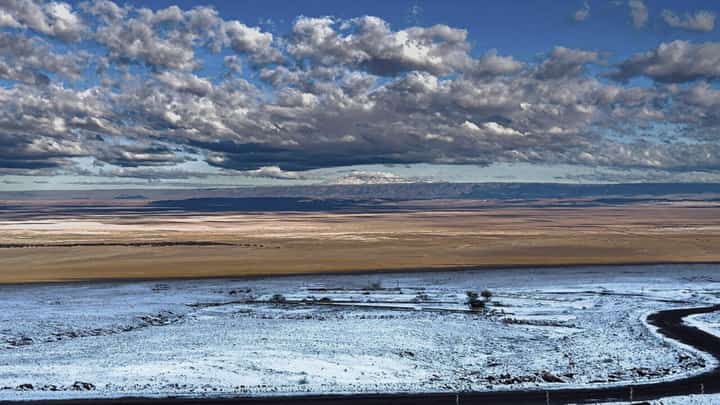
SANTIAGO, Chile (AFP) — Residents of the world’s driest desert, the Atacama in northern Chile, woke up Thursday to a jaw-dropping spectacle: its famous lunar landscape blanketed in snow.
“INCREDIBLE! The Atacama Desert, the world’s most arid, is COVERED IN SNOW,” the ALMA observatory, situated 2,900 meters above sea level, wrote on X, alongside a video of vast expanses covered in a dusting of white.
The observatory added that while snow is common on the nearby Chajnanator Plateau, situated at over 5,000 meters and where its gigantic telescope is situated, it had not had snow at its main facility in a decade.
University of Santiago climatologist Raul Cordero told Agence France-Presse that it was too soon to link the snow to climate change but said that climate modelling had shown that “this type of event, meaning precipitation in the Atacama desert, will likely become more frequent.”
The Atacama, home to the world’s darkest skies, has for decades been the go-to location for the world’s most advanced telescopes.
The ALMA telescope, which was developed by the European Southern Observatory, the United States National Radio Astronomy Observatory and the National Astronomical Observatory of Japan, is widely recognized as being the most powerful.