




Kindness remembers


Text size
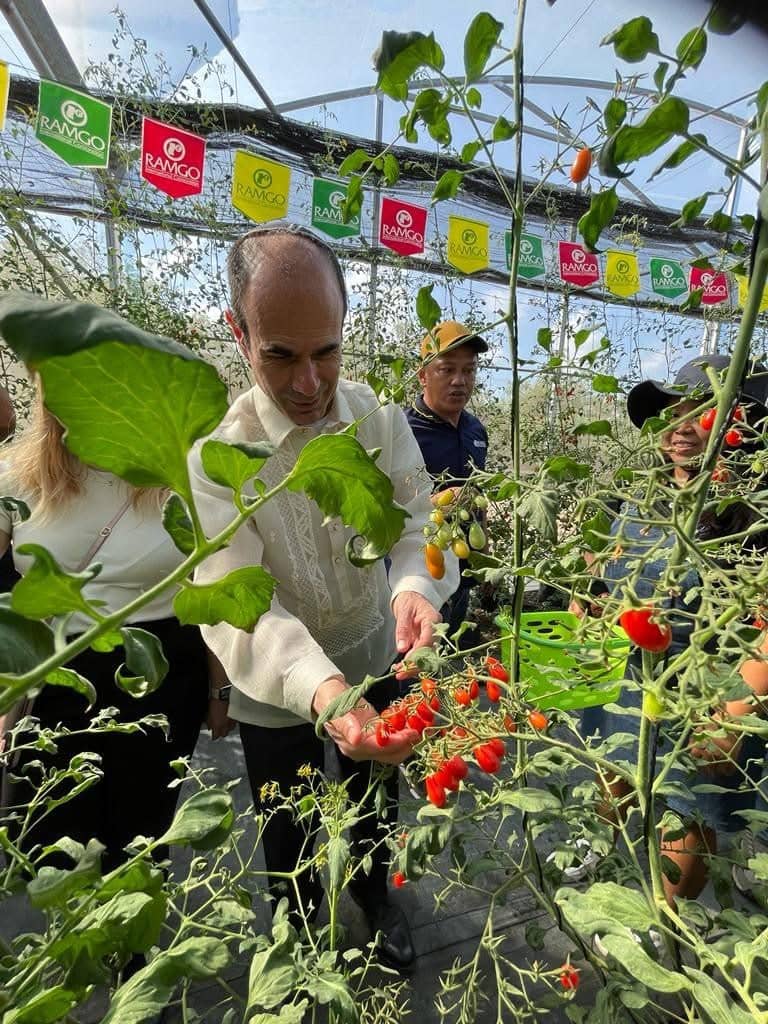
Fluss in a Filipino farm, symbol of Israel’s hands-on commitment to growing food security through innovation.
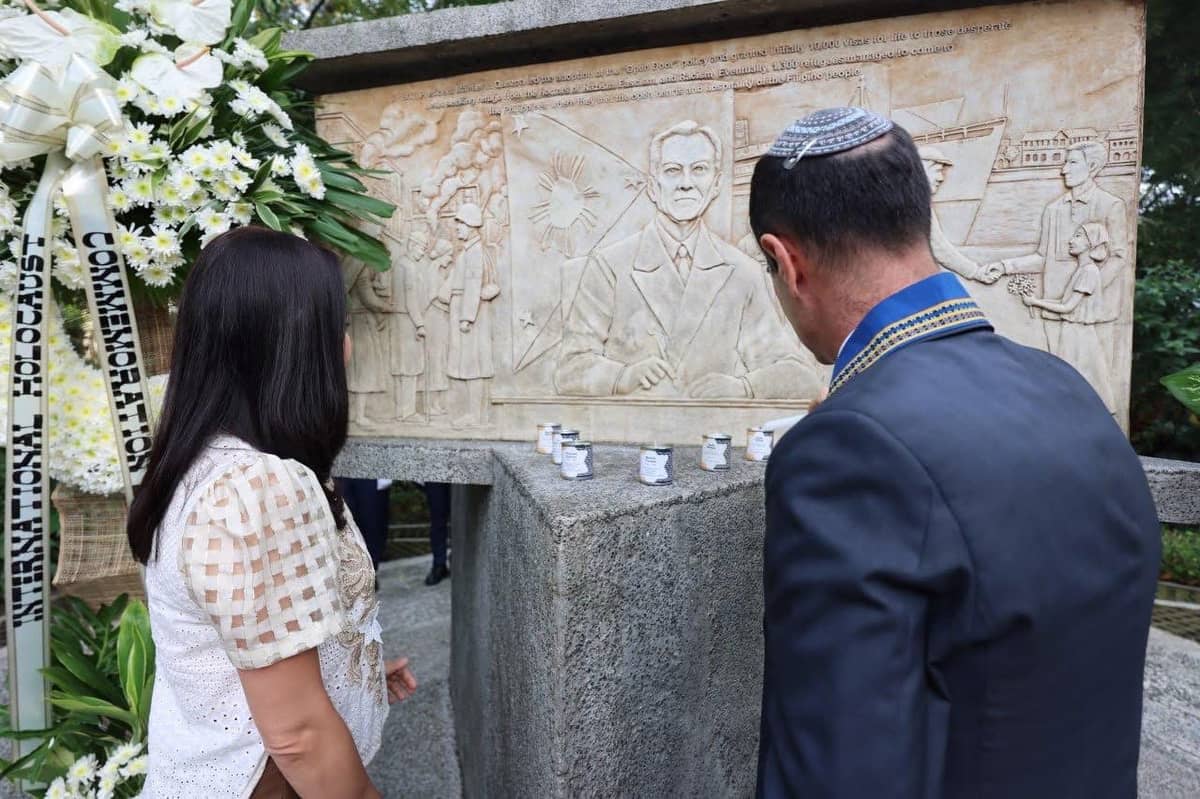
Fluss stands beside President Quezon’s memorial in Quezon City, where a quiet ‘yes’ once spoken still echoes through generations of gratitude.
Some embassies are fortresses. Curated for intimidation. Bulletproof glass. Bullet-point charm. Security as swagger. A place that commands you to knock.
Then there’s a white building on University Parkway in Bonifacio Global City. No flash. No bunker. Just a door that, more often than not, is open.
You’ll hear it. Hebrew and Tagalog. Softly and in tandem. Less protocol more pulse. A language of memory. Affinity. The quiet sound of two nations still choosing one another.
Inside, diplomacy is continuity. A 1947 vote. A typhoon-relief team. A pandemic airlift. A fig tree planted decades ago, still bearing fruit.
On Israel’s 77th Independence Day, that door stayed as open as it was even before Israel even had a flag.
Here, foreign policy is an expensive suit with dirt under the nail. A benevolent history paid forward.
In 1939, President Manuel Quezon was already a man on borrowed time.
Ravaged by tuberculosis. Presiding over a poor, colonized nation still under American oversight.
He had little to gain. Much to lose. Yet, as Europe’s Jews were being rounded up and borders clanged shut one by one, Quezon made a decision that defied the mood of the world.
He let them in. Over 1,200 Jewish refugees. In Manila. Stateless, desperate and, to most of the world, disposable.
The Philippines, barely a dot on the map of global politics, extended what the great powers would not: Refuge.
Not policy. Conscience. And it came at a real political cost. Anti-Semitism lingered even in US colonial circles. Immigration quotas were tight. Quezon faced pressure. Ridicule. Threats.
But he moved forward. Negotiating with Jewish leaders, working quietly with the US High Commissioner, and personally overseeing the building of a sanctuary on land he helped secure.
The gesture stood against a tide of indifference that had swept across the so-called “civilized world.”
“President Quezon’s gesture is a light in a very dark time for the Jewish people and for the world,” said Israeli Ambassador Ilan Fluss.
That act (quiet, costly, human) became the seed of an unlikely alliance.
Today, in Rishon LeZion, a monument named Open Doors honors it: Three white panels forming a shelter around a Star of David.
Ambassador Fluss speaks with an immigrant’s love of the place, like a man returning to a house he once called home, surprised to find the furniture still in place.
“Actually, 30 years ago,” he begins, “I stood in this very moment reflecting on the profound connections my wife Gila and I had forged with the incredible people of the Philippines during my tenure as deputy ambassador.”
“Our second son was born here,” he continues. “I celebrated my 30th birthday in Manila. We had wonderful trips to so many corners of the country. When there were no toll roads or the Skyway.”
The ambassador calls it a full circle. Not a posting. Not promotion. It’s a return to the soil of memory.
Under Fluss, Israel’s work in the Philippines hasn’t been the stuff of war rooms. It’s been the stuff of irrigation systems, agricultural internships, greenhouses the size of city blocks.
It’s a world where embassies talk missiles and markets. Israel and the Philippines, meanwhile, talk about greenhouses.
“Over the past four years, under my leadership, the embassy has remained committed to my vision of ‘building bridges of innovation and technology’ between Israel and the Philippines,” Fluss said.
It is a vision rooted literally in soil.
“A few weeks ago, we inaugurated a 3.5-hectare greenhouse facility in Bulacan province. It is the largest greenhouse project in the Philippines, fully based on Israeli technology and expertise.”
It isn’t mere economic cooperation. It’s co-survival.
“This is the best example of smart farming based on the Israeli model adjusted to the Philippines.”
The Israeli drip irrigation systems in Tarlac. The solar-powered irrigation network in Pampanga.
The interns (700 Filipino students every year), who train in Israeli farms for 11 months, and return with skills and blueprints. For a new Philippine agriculture. For a different kind of diaspora.
“These initiatives are so important for me since they further enhance agricultural productivity, food security and rural development in the Philippines.”
It’s too big for charity. It’s co-creation. Strategic empathy. Fertile diplomacy.
In the brutal ledger of disaster, 2013 was a year written in blood and disaster.
Typhoon “Haiyan” leveled Tacloban and turned the word itself into shorthand for annihilation. Aid came. Checks were cut. Flags were waved. Logos slapped onto relief goods.
But Israel didn’t send a slogan. It sent soldiers.
The IDF landed 148 strong. Medics, engineers, search dogs, trauma teams. No entourage. No press scrum. Just boots in the mud and hands in the wreckage.
They erected a field hospital while the air still smelled of salt and death. Treated thousands. Brought light to the dark. Filtered water for strangers they’d never meet again.
No ribbon-cuttings. No staged hugs. Just help.
And when “Odette” tore through years later, they came again. Not with headlines. But shelter kits, food, medicine.
Presence. Not policy. Not posture. Just that rarest thing in diplomacy: Follow-through. Quiet. Steady. More real.
“We don’t only send money. We come. We carry. We stay.”
If Israel’s foreign policy in the Philippines has a superpower, it’s consistency. It’s the MASHAV-built learning spaces in public schools. The partnerships with the Technical Education and Skills Development Authority or Tesda, the Departments of Agriculture, and Interior and Local Government.
You don’t need to advertise compassion; you just need to practice it.
Even Israel’s support for shelters like the Laura Vicuña Foundation, where they help abused girls, is done without headlines.
In a country far removed from Europe’s killing fields, Israel has found a quiet, unwavering partner in remembrance.
Each year, in partnership with the Philippine Department of Education, the Israeli Embassy marks International Holocaust Remembrance Day in classrooms, where history is served as lesson.
Here, genocide is not abstract. It’s taught with intention, with names, with faces. In a land that once said yes to Jewish refugees, memory is a shared civic act.
“Remembering our past is so important. I want to commend our collaboration with the Department of Education in holding the annual commemoration of the international Remembrance Day of the Holocaust,” said Ambassador Fluss.
The events also honor the Quezon legacy.
“We remember how President Quezon allowed 1,200 Jewish refugees escaping death and murder by the Nazis in Europe enter into the Philippines. He made sure they lived.”
Tulfo advised the prosecution panel to be more mindful of the lawyers it assigns to present witnesses to keep the…
The audit identified 366 PPE items below CoA’s P50,000 capitalization threshold, including 195 items assigned a nominal…
The attempt to sabotage a flydubai airlines flight may have been intended not only to endanger its 174 passengers but…
