
The papal skullcap: A history of humility and hierarchy
From Roman practicality to papal symbolism, the zucchetto tells a centuries-old story stitched into every Catholic rank—right up to the white cap worn by Pope Leo XIV.


[FILES] Pope Francis adjusts his "Zucchetto" skullcap during the weekly general audience on 18 December 2019 at Paul-VI hall in the Vatican.
Andreas SOLARO / AFP
The zucchetto—Latin pileolus, Italian for “little gourd”—may be small, but it carries the weight of centuries of Catholic tradition. Worn by popes, cardinals, bishops, and clergy, the skullcap is more than an accessory; it's a visible sign of service, humility, and hierarchical identity within the Church.
Historically, the zucchetto traces its roots to the Roman pileus, a brimless cap worn for warmth and modesty. By the 13th century, it had become a mainstay among ecclesiastics, used initially to cover the bald spot from the tonsure, a ritual shaving symbolizing clerical commitment.
Over time, its practical origins gave way to symbolic purpose. Today, the zucchetto marks rank within the Church: white for the pope, scarlet for cardinals, amaranth for bishops and archbishops, and black—though now rarely seen—for priests and deacons. Pope Pius V, a Dominican, helped establish white as the papal color in the 1500s, continuing to wear his order’s habit even after ascending to the papacy.
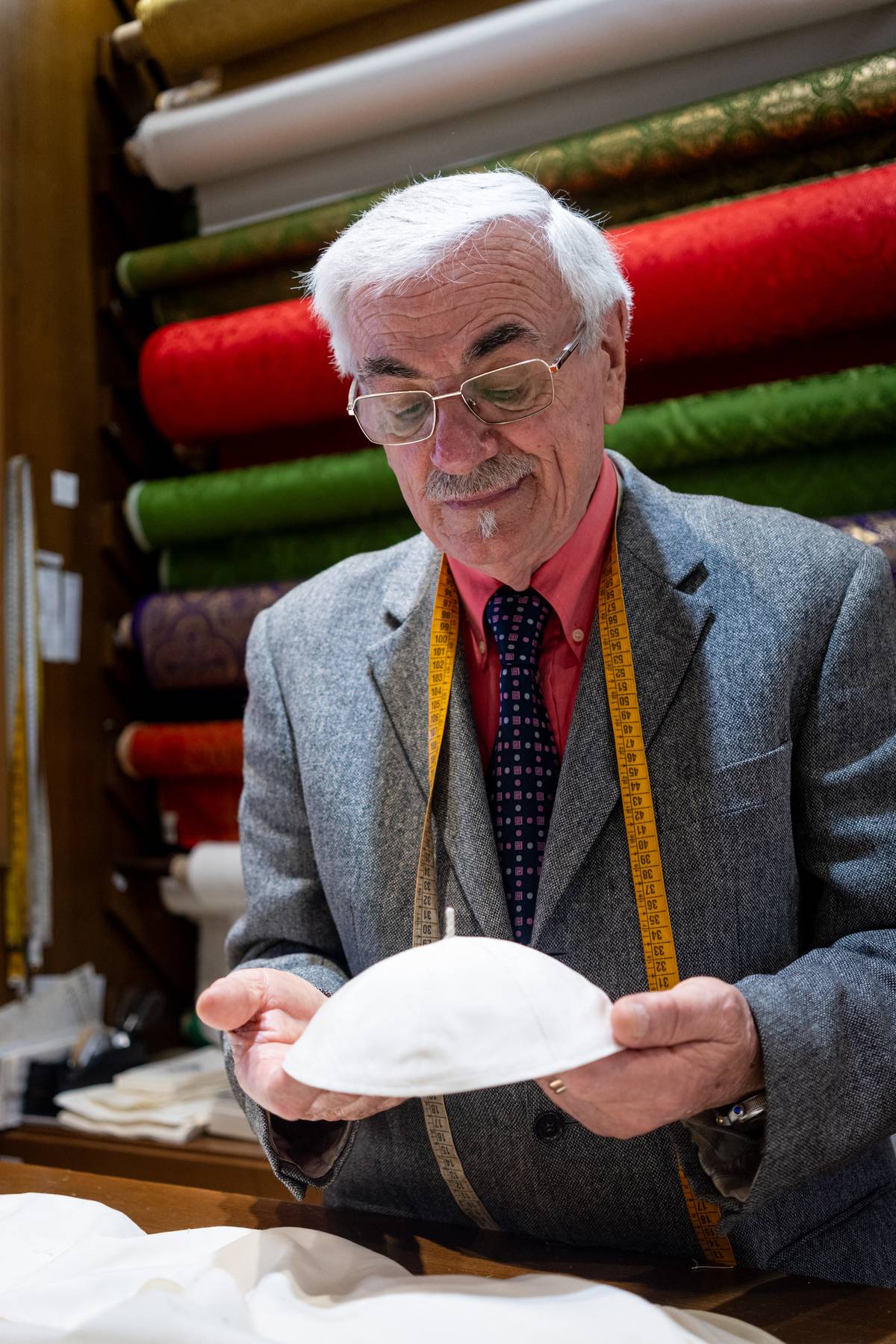
Italian tailor Raniero Mancinelli shows one of the white Zucchetto (skullcap) he prepared for the future Pope in his shop in Rome, Italy, on 5 May 2025. Raniero Mancinelli, 86, has personally handcrafted the cassocks for three Popes.
Stefano Costantino / AFP
Clerical etiquette governs when and how the zucchetto is worn. Bishops wear it during Mass except during the Eucharistic prayer, and all prelates remove it in the presence of the Blessed Sacrament. It’s also removed as a sign of reverence when addressing or referring to the pope, and during blessings with relics of the True Cross.
Despite its sacred function, the zucchetto also has a personal dimension. Tradition holds that friends or congregants might gift a newly appointed bishop his first zucchetto. In modern times, popes like John Paul II and Francis have popularized the custom of exchanging their zucchetto with a new one offered by a pilgrim.
While the zucchetto resembles the Jewish kippah or yarmulke in shape, the two differ in construction and usage. The Catholic version is made of eight triangular panels sewn into a dome with a distinctive “stem” on top—designed for easy handling. Some Franciscans have adopted brown zucchettos to match their habits, and Anglican and Syriac Orthodox clergy wear versions of it too.
The prominence of the zucchetto is especially visible during papal transitions. Gammarelli, the historic Roman tailor shop known for dressing popes, traditionally prepared three cassocks—small, medium, and large—plus a white zucchetto for the newly elected pontiff. This year, however, in a nod to simplicity and sustainability, Pope Leo XIV donned vestments from previous conclaves, echoing the frugality of his predecessor, Francis.
In fact, Leo XIV’s first public acts as pope—praying at Francis’s tomb and continuing his legacy of humility—were done wearing the white zucchetto. The skullcap, as ever, signified continuity, tradition, and the silent authority of one who now leads 1.4 billion Catholics around the world.
Even in popular culture, the zucchetto has had its moment. It was featured in Pawn Stars when a papal artifact expert authenticated one said to belong to Pope Pius XII. Whether displayed in a shop window or worn on the head of a newly elected pope, the zucchetto remains a timeless emblem of clerical identity—humble, symbolic, and unmistakably Catholic.